
Why your GLP-1 provider needs the whole list
Your provider can only work with what they know you are taking. If a supplement or an old prescription never makes it into the conversation, it never gets checked against your GLP-1 medication. That gap is where small problems start.
GLP-1 drugs like semaglutide and tirzepatide do a few things that make the full list matter more than usual. They slow how fast your stomach empties, they can stack with anything else that lowers blood sugar, and they often change appetite enough that your old vitamin habits stop fitting your new meals. A provider who can see everything at once can spot those overlaps. A provider working from half a list cannot.
There is a plain reason the responsibility lands on you. You are the only person who knows everything you actually take, including the magnesium you grabbed at the store and the greens powder a friend recommended. The Agency for Healthcare Research and Quality puts it directly in its patient guidance: bring every prescription, over-the-counter drug, vitamin, supplement, and herbal product, and note the name, dose, how often you take it, and what it is for in its patient fact sheet on managing medicines.
What actually goes on the list
Aim for one document that covers four things: what you take, the dose, how often, and why. That last column matters more than people expect, because "I take this for sleep" tells your provider something a bottle name alone does not.
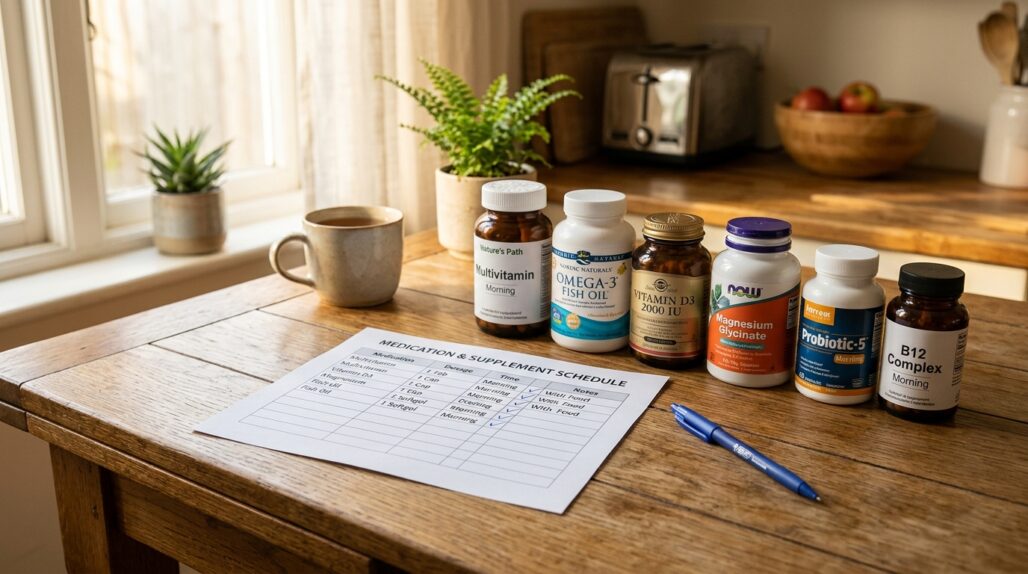
Here is the manual method. You can do all of it with a single sheet of paper and ten minutes at your kitchen table.
- Pull every bottle you take into one spot, including the GLP-1 pen, prescriptions, over-the-counter pills, vitamins, and any powder or gummy.
- For each one, write the product name, the strength on the label, how often you take it, and the reason.
- Add anything you take only sometimes, like an occasional sleep aid or a painkiller, and mark it "as needed."
- Note any allergies or past bad reactions at the top.
- Date the page. A dated list tells your provider how current it is.
The NIH Office of Dietary Supplements recommends keeping exactly this kind of record and even offers a printable "My Dietary Supplement and Medicine Record" form for it. The agency also makes a point worth repeating: update the record each time you visit a provider, so it never drifts out of date.
You can copy the layout below by hand or rebuild it in a phone note. It is meant to be photographed or screen-shared as easily as it is carried. If you are still deciding what belongs in your routine, our walkthrough on supplements people commonly add on a GLP-1 can help you fill in that last column honestly.
| Product | Dose / strength | How often | Reason you take it |
|---|---|---|---|
| GLP-1 medication (name) | As prescribed | Weekly injection | Weight / blood sugar |
| Multivitamin | 1 tablet | Daily, morning | Smaller meals lately |
| Magnesium | Check label mg | Daily, evening | Constipation |
| Electrolyte mix | 1 packet | As needed | Low energy / hydration |
| Berberine (example) | Check label mg | Daily | Blood sugar (flag this one) |
That last row is there on purpose. Some supplements deserve a star next to them, which is the next section.
The supplements worth flagging on a GLP-1
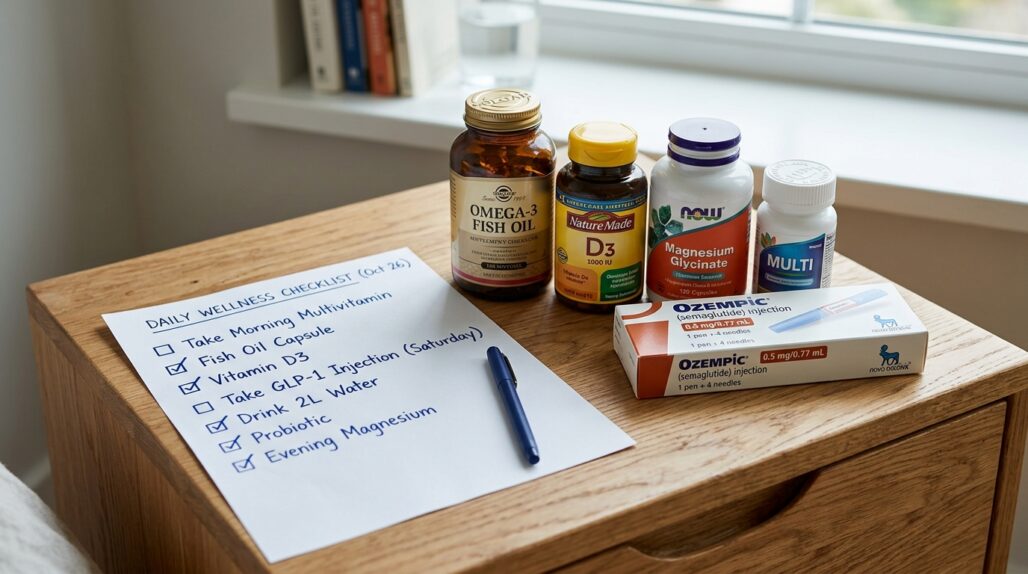
You do not need to sort out interactions yourself. The goal is the opposite: list everything so the people trained to judge it can do their job. A few categories are simply worth a clear flag so they do not slide past at intake.
Blood-sugar-lowering supplements top the list. Berberine, chromium, and cinnamon extracts can nudge glucose down on their own. Stacked with a GLP-1, and especially alongside another diabetes medication, that added effect may raise the risk of going too low. Reviewers note there are no formal interaction studies for several of these combinations, which is a reason to raise them, not to assume they are fine. This is a conversation to have with your prescriber or pharmacist, not a solo decision.
Stomach-heavy pills are the second group. Because GLP-1 medications slow gastric emptying, large or harsh supplements such as iron or high-dose magnesium oxide may sit heavier than they used to. The FDA prescribing information for semaglutide notes the drug delays gastric emptying and could affect how some oral medications are absorbed, so it advises caution. Timing or form sometimes helps, and that is a question your provider can answer for your specific routine.
"Natural Ozempic" products round it out. Once you are on the actual medication, some appetite or blood-sugar supplements you bought earlier may be doing redundant work. Whether to keep them is worth asking rather than guessing. Telling every provider about all of it is the standard advice from NCCIH on supplement and medication interactions, and it exists precisely so these overlaps surface early.
None of this means stop anything on your own. Bring the full list, mark the items above, and let the visit do the sorting. If you want to see how the combinations stack up before you ask, our drug and supplement interaction checker can show you what is worth raising, and the items it flags become good talking points for your provider.
A short side-effect log makes the visit sharper
Your list answers "what are you taking." A few lines about how you have felt answers "how is it going," and that second question shapes the medical decisions.
Keep it brief. For the week or two before the visit, jot down anything notable: nausea after a dose, constipation, low energy, a skipped meal because food felt unappealing, or any low-blood-sugar feeling. Note roughly when it happened relative to your injection day. If the timing of your pills and supplements seems tied to the symptoms, our guide to spacing supplements around meals and your injection is a useful thing to read before you go in.
This matters on a GLP-1 because side effects often guide whether a dose holds, rises, or pauses. A vague "I felt off sometimes" gives your provider little to work with. "Nausea for two days after each dose, easing by day three" gives them something real. You are not diagnosing anything; you are handing over a clearer picture.

Telehealth needs the same list, prepped a little differently
A virtual GLP-1 visit moves fast, and there is no nurse in the room to read your bottles for you. The fix is to have everything ready before the call connects, not while it is running.
Prep these in advance:
- Have the list open as a document, a clear photo, or a page you can hold to the camera, so you can share it in the first minute.
- Keep your actual bottles within reach in case the provider wants to read a label.
- Know your pharmacy name and location, since that is where any changes will go.
- Test your camera, microphone, and connection a few minutes early.
HHS telehealth guidance for patients recommends preparing your medication list, gathering your pharmacy details, and checking your device and connection ahead of time. Treating the virtual visit like an in-person one, list in hand, keeps it from turning into a scramble to remember bottles you cannot see.
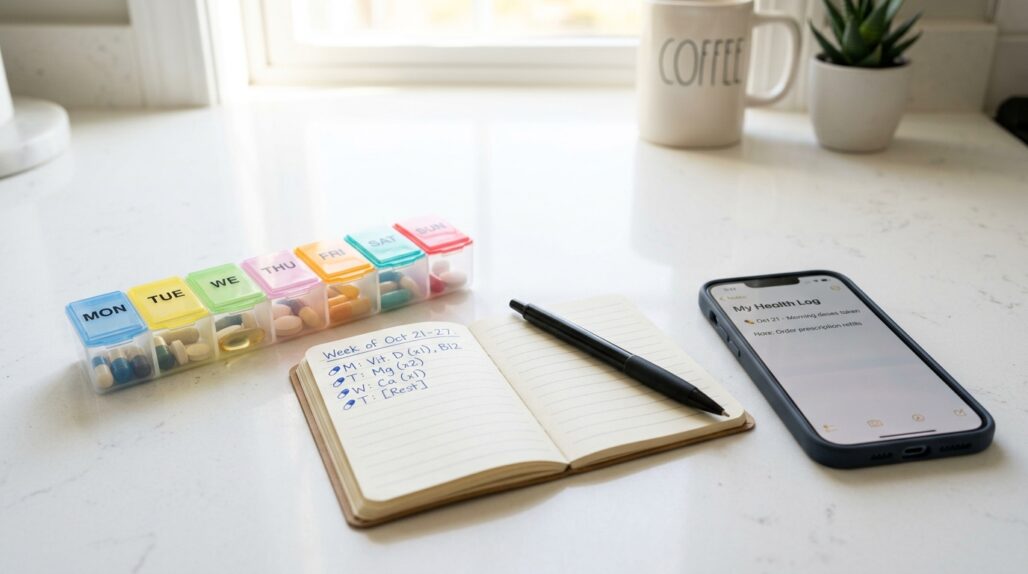
Once your list exists, the real work is keeping it current between visits so you never rebuild it from scratch. The low-tech route is to keep the dated paper page in a drawer and edit it whenever something changes, then snap a fresh photo before each appointment. If you would rather it live on your phone, StackMyMed (our own free app) lets you scan in each product and export a clean, current med-and-supplement list to share at intake, instead of trying to recall every bottle on the spot; for anything that looks like it might interact, it surfaces the item so you can raise it with your pharmacist rather than deciding alone. Paper or app, the point is the same: one list, always up to date, ready to hand over.
FAQ
Do I really need to list supplements, or just my prescriptions? List both. Supplements can lower blood sugar, sit heavily on a slowed stomach, or duplicate something else you take, and your provider cannot weigh any of that if it stays off the page. The AHRQ and NIH guidance both treat vitamins and supplements as part of the medication list, not an afterthought.
Should I stop my supplements before the GLP-1 appointment? Not on your own. The purpose of the list is to let your prescriber or pharmacist decide what stays, what pauses, and what can wait. Bringing everything and asking is the safe move; quietly stopping a prescribed item is not.
What if I cannot remember every dose? Write what you know and bring the bottles, in person or held to the camera on telehealth. The label fills the gaps, and your provider would rather read a real bottle than work from a guess.
How current does the list need to be? Current as of the visit. NIH guidance is to update the record each time you see a provider, so dating the page and editing it whenever something changes keeps each appointment starting from the real picture.
Is berberine safe with my GLP-1? That is a question for your pharmacist or prescriber, not a yes-or-no this page can give. Berberine can lower blood sugar on its own, formal interaction data is thin, and your other medications matter, so flag it on your list and ask directly.
Can I just tell the provider during the call instead of writing it down? You can try, but memory tends to drop the occasional and over-the-counter items, which are often the ones that matter. A written or photographed list catches what a quick recall misses.
The bottom line
Walk in with one dated list of every medication and supplement, the dose and frequency for each, a few lines of side-effect notes, and your questions. Star the blood-sugar-lowering supplements and the stomach-heavy ones so they get attention. The single most useful thing you can do is keep that list current so each visit starts from the truth rather than a reconstruction.
You organize the information; your prescriber and pharmacist make the medical calls. If anything on your list raises a question about your GLP-1, ask them before your next dose rather than working it out alone. And if you would rather hand the whole collection to a pharmacist in person, the same list works for a brown-bag medication review, where you bring every bottle for a fresh set of eyes.
This article is for general education and is not medical advice. It does not replace a conversation with your doctor or pharmacist, and nothing here should be used to start, stop, or change a prescription on your own. Talk to a qualified professional about your specific medications and supplements.
StackMyMed is made by UsefulVitamins. It helps you organize your list and flag things to discuss with a pharmacist or doctor; it is not a diagnosis or treatment tool and does not replace professional medical advice.
Reviewed by the UsefulVitamins Editorial Team.
