
Affiliate disclosure: this article contains affiliate links. As an Amazon Associate, UsefulVitamins.com earns from qualifying purchases at no extra cost to you.
Recurring canker sores are maddening because there is usually no obvious reason for them. One week your mouth is fine, the next you have a stinging crater on the inside of your lip that makes eating a chore. This page ranks the three supplements with the most credible evidence behind them, grades that evidence honestly, and tells you the no-cost change that often does more than any pill.
Why the same mouth ulcers keep coming back
Canker sores, or recurrent aphthous stomatitis (RAS) in clinical terms, are not herpes and they are not contagious. Despite the look-alike name of one subtype, StatPearls notes there is no connection to herpes viruses. They are driven by a local immune reaction in the lining of your mouth, layered on top of a genetic tendency.
One thread runs through a lot of the research: micronutrient shortfalls. People with recurrent ulcers are roughly twice as likely to be low in iron, folate or B12, and zinc deficiency shows up too. When those run low, the lining of your mouth gets thinner and more fragile, so the smallest trauma turns into an ulcer.
That is the logic behind supplementing. You are trying to rebuild a sturdier mucosal lining and calm the immune trigger. It helps to be realistic up front: most single sores heal on their own in one to two weeks, and supplements work on frequency over months, not on the sore you have today.
How we ranked these three
We weighted human trials in actual canker-sore patients far above lab theory or marketing claims. A pick earned a top spot only if there was randomized evidence in people with this exact condition. Where the evidence is thin or borrowed from a different problem, we say so plainly rather than dress it up.


As an Amazon Associate, UsefulVitamins.com earns from qualifying purchases at no extra cost to you.
Some links on this page are affiliate links. If you buy through them we may earn a small commission at no extra cost to you, and it never changes our ranking or our honest read of the evidence.
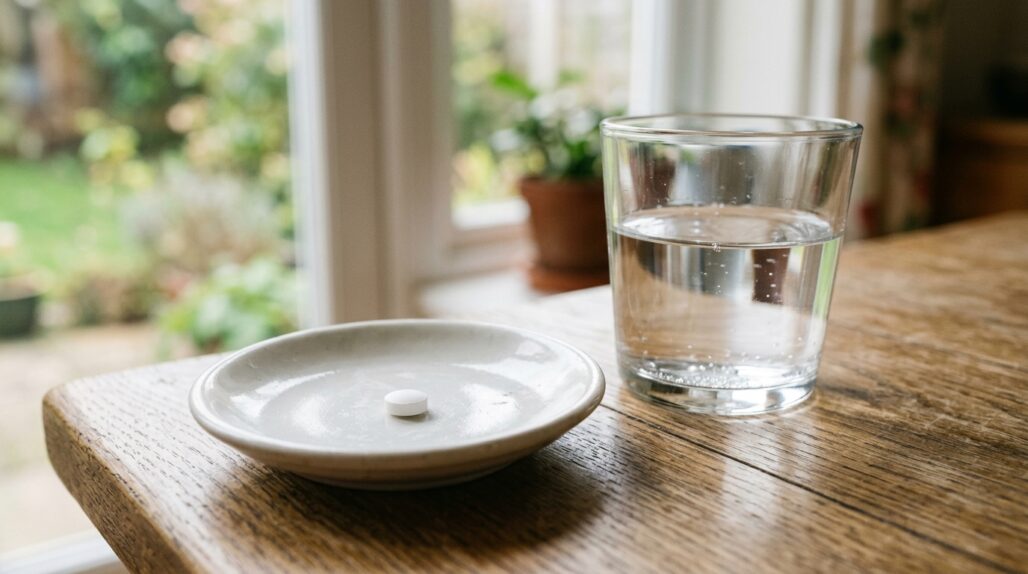
Pick 1: Sublingual methyl-B12, 1000mcg
This is the one supplement for canker sores with a genuinely encouraging clinical trial behind it.
Evidence grade: moderate (one good human RCT). A 2009 randomized, double-blind, placebo-controlled trial gave 58 patients either sublingual B12 at 1000mcg or placebo for six months. By months five and six the B12 group had fewer ulcers, shorter outbreaks and less pain, and 74% became essentially ulcer-free versus 32% on placebo. The striking part: it worked regardless of whether the person was low in B12 to begin with.
Dose: 1000mcg of sublingual methylcobalamin, once a day, held under the tongue until it dissolves so it absorbs through the mucosa rather than the gut. The trial ran for six months, so judge it over a couple of months, not a couple of weeks.
Who it suits: Anyone with frequent recurrences, and especially vegans, older adults, people on metformin or long-term acid reducers, who are more likely to run low on B12 anyway. If you want to understand the form choice, our explainer on methyl versus cyano B12 absorption walks through why the methylated, sublingual route is sensible here. For the broader picture, see our guide to choosing a B12 supplement.
B12 is water-soluble and very safe at this dose. The bigger caution is that taking it can mask a B12-deficiency anemia on bloodwork, so mention it to your doctor if you are being investigated for fatigue.
Pick 2: L-lysine, 1000mg
You will see lysine recommended for canker sores everywhere, so it deserves a place here, but its evidence needs an honest asterisk.
Evidence grade: weak, and partly the wrong target. Most of the good lysine research is for cold sores, which are caused by herpes simplex virus. Canker sores are not herpes. The proposed mechanism, shifting the lysine-to-arginine balance to starve the virus, simply does not apply to an ulcer that has no virus. There is some low-quality survey and observational data where canker-sore sufferers reported fewer outbreaks on lysine, but no strong randomized trial in true aphthous ulcers. Treat the "87% found it helpful" figures you see online as anecdote, not proof.
Dose: People who try it typically take 1000mg daily for prevention, and some push to higher split doses during an active sore. It is cheap and well tolerated, which is the main argument for a trial run.
Who it suits: Honestly, lysine makes most sense if you are not certain whether your recurring sores are canker sores or actual cold sores on the lip, since it has real evidence for the latter. If your sores are clearly inside the mouth on soft tissue, set your expectations low. People with kidney disease should check with a doctor before taking high-dose amino acids.
Pick 3: Zinc picolinate, 25mg
Zinc supports immune function and mucosal repair, and unlike lysine it has been tested in canker-sore patients specifically.
Evidence grade: moderate but mixed. A 2021 systematic review of seven trials in 482 patients found five of seven trials showed zinc significantly reduced recurrence, while two showed no clear benefit. Smaller placebo-controlled trials found zinc sulfate cut the number and duration of ulcers. The effect looks strongest in people who were actually zinc-deficient to start.
Dose: Around 25mg of elemental zinc as zinc picolinate, taken with food to avoid nausea. Do not stack it on top of a multivitamin that already contains zinc without checking the total.
Who it suits: People with frequent sores, restrictive diets, or signs of low zinc such as poor wound healing. Keep one safety number in mind: the NIH Office of Dietary Supplements sets the adult upper limit at 40mg a day. Long-term high zinc blocks copper absorption and can cause a copper-deficiency anemia, so 25mg is a sensible ceiling for ongoing use and is not something to double indefinitely. Our complete guide to zinc covers forms and timing in more detail.
How the three picks compare
| Supplement | Evidence | Typical dose | Best for |
|---|---|---|---|
| Sublingual methyl-B12 | Moderate – one good 6-month RCT, worked even in non-deficient people | 1000mcg daily under the tongue | Frequent recurrences; vegans, older adults, metformin/PPI users |
| L-lysine | Weak – strong data is for cold sores (herpes), not true canker sores | 1000mg daily for prevention | Cheap trial; or if sores might actually be lip cold sores |
| Zinc picolinate | Moderate but mixed – 5 of 7 trials positive, best if deficient | 25mg elemental daily with food (cap at 40mg) | Restrictive diets, slow healing, suspected low zinc |
You will notice B12 and zinc share a theme: they correct a likely shortfall and rebuild the mouth lining over weeks. For the wider context on how these nutrients work together, our complete guide to B vitamins is a good companion read.
The free fix that often beats the pills
Before you spend a cent, change two things that cost nothing.
Swap your toothpaste. Most mainstream toothpastes contain sodium lauryl sulfate (SLS), the detergent that makes foam. A systematic review of crossover trials found that switching to an SLS-free toothpaste cut the number, duration and pain of recurrent ulcers, although the studies were small and the authors urge caution. It is a low-risk experiment with a plausible payoff, so it is worth two months of your attention.
Cut your personal triggers. The usual suspects are acidic foods (citrus, tomatoes, vinegar), sharp or crunchy textures that nick the gum, and for some people toothpaste-adjacent irritants. The NHS advises avoiding spicy, salty and acidic foods while a sore heals. A warm salt-water rinse a few times a day soothes an active sore and keeps it clean.
A few other no-cost habits matter. Stress is a well-known flare trigger, so the stretch where you break out repeatedly is worth examining for sleep and pressure. If a rough filling or a sharp tooth edge keeps catching the same spot, a dentist can smooth it. None of this requires a supplement.
What does not work, and common mistakes
Mega-dosing does not speed things up. Doubling your zinc to "heal faster" mainly risks copper deficiency, and there is no ulcer benefit above the modest doses tested.
Treating every recurring mouth sore as herpes is the other frequent error. If it is genuinely a canker sore on the soft tissue inside your mouth, antiviral logic and most lysine claims do not fit the biology. Match the remedy to the right problem.
Finally, do not expect any of these to touch the sore you have right now. They are preventives. The realistic win is fewer and milder outbreaks over the next few months, not an overnight cure.
When to see a doctor
Canker sores are usually benign, but a few patterns are not, and this is where you stop self-treating. See a doctor or dentist for any mouth ulcer that lasts more than 2-3 weeks, that recurs alongside diarrhea, weight loss or genital ulcers, or that is a single non-healing sore. Those can signal celiac disease, inflammatory bowel disease, Behcet's disease, or, rarely, oral cancer rather than ordinary canker sores.
It is also worth a visit, and likely some bloodwork, if your outbreaks are frequent and severe, since the same hematinic deficiencies behind the ulcers can point to an underlying cause that needs treating directly. The NHS specifically flags any ulcer that is bigger than usual, sits near the back of the throat, or bleeds. Do not start, stop or change any prescription medication on your own; bring the supplement plan to your clinician, especially if you take other medicines.
FAQ
Do canker sores mean I am vitamin deficient? Not always, but recurrent sufferers are roughly twice as likely to be low in B12, folate, iron or zinc. If you break out often, ask your doctor for bloodwork rather than guessing.
How long until B12 reduces my outbreaks? Plan on a couple of months. In the main trial the clear difference showed up at months five and six, so judge it slowly and keep the dose consistent.
Is L-lysine actually proven for canker sores? Not really. Its strong evidence is for cold sores caused by herpes, which are a different thing. For true canker sores the data is weak and mostly anecdotal, so keep expectations low.
Can I take B12 and zinc together? Yes, they target different parts of the problem and do not conflict. Just keep total daily zinc at or below 40mg to protect your copper levels.
Will SLS-free toothpaste really help? Small crossover trials suggest it reduces how often and how badly ulcers flare. It costs little and carries no risk, so it is one of the first things to try.
Are canker sores contagious? No. They are an immune reaction in your own mouth lining, not an infection, so you cannot pass them to anyone.
The bottom line
If recurring canker sores are wearing you down, sublingual methyl-B12 at 1000mcg daily is the pick with the best human trial support, with zinc picolinate at 25mg a reasonable second, especially if you might be running low. Treat L-lysine as a cheap long shot, not a sure thing. Pair whatever you choose with an SLS-free toothpaste and a trigger-food cleanup, because that free change often does the heavy lifting. Expect fewer and milder outbreaks over months, not a cure tomorrow, and get any sore checked that lasts beyond 2-3 weeks or comes with gut symptoms.
This article is for general information and is not medical advice. Talk to a qualified clinician before starting a supplement, particularly if you are pregnant, breastfeeding, take prescription medicines, or are being investigated for anemia or a digestive condition.
Reviewed by the UsefulVitamins Editorial Team.
