
Affiliate disclosure: this article contains affiliate links. As an Amazon Associate, UsefulVitamins.com earns from qualifying purchases at no extra cost to you.
What it means when ferritin is low but hemoglobin is normal
Hemoglobin is the iron in your circulating red blood cells. Ferritin is the iron in storage – the reserve tank your body draws on when intake or absorption falls short. The two numbers fall in sequence, not together. Stores drop first. Hemoglobin only follows once the tank is close to empty.
So a normal hemoglobin with a low ferritin is a real and common pattern. It has a name: iron deficiency without anemia. You are not anemic yet, but the reserve is thin, and the body notices.
The standard lab cutoff is clear here. According to the NIH Office of Dietary Supplements, a serum ferritin below 30 micrograms per liter signals mild deficiency or storage iron depletion, and a ferritin below 12 micrograms per liter is close to proof of absent bone-marrow iron stores. Those are not "optimal wellness" numbers. They are the conventional clinical thresholds.
A quick note on units, because lab reports vary: ferritin is reported as micrograms per liter (mcg/L) or nanograms per milliliter (ng/mL), and the two are numerically the same. A ferritin of 18 mcg/L and 18 ng/mL are identical readings.
Why a "normal" hemoglobin can still leave you tired
This is where the "optimal versus normal" debate lives, and it deserves honest handling.
Many lab reports flag ferritin as abnormal only below roughly 11 to 15 mcg/L, so a person at 20 mcg/L can be told their iron is "normal" while their tank is clearly low. Some functional and integrative practitioners argue that ferritin should sit higher – often quoting a target of 40 to 50 mcg/L or above for fatigue and hair concerns. That higher target is an opinion, not clinical consensus. It is not endorsed by the major laboratory or hematology bodies, and it should be read beside the standard threshold, not in place of it.
What the evidence does support is more modest. A meta-analysis of randomized trials by Yokoi and Konomi (2017) found that iron supplementation produced a small-to-moderate, statistically significant reduction in fatigue in non-anemic, iron-deficient adults (pooled effect size 0.33). The same authors were careful: the cross-sectional data were weaker, and they called for better criteria to identify exactly which tired people respond to iron. So the takeaway is not "low ferritin always causes your fatigue." It is "low ferritin is a plausible, testable contributor that often improves when corrected – worth a structured trial with a re-test, not a guess."
Grade of evidence: moderate. Real human RCTs, real signal, honest uncertainty about who benefits most.
The catch: ferritin also rises with inflammation
Before you act on the number, one caveat that trips people up. Ferritin is an acute-phase reactant. Infection, recent illness, obesity-related inflammation, liver issues, and other inflammatory states can push ferritin up and mask a true deficiency. A reading taken while you are fighting a cold can look reassuring when your stores are actually low.
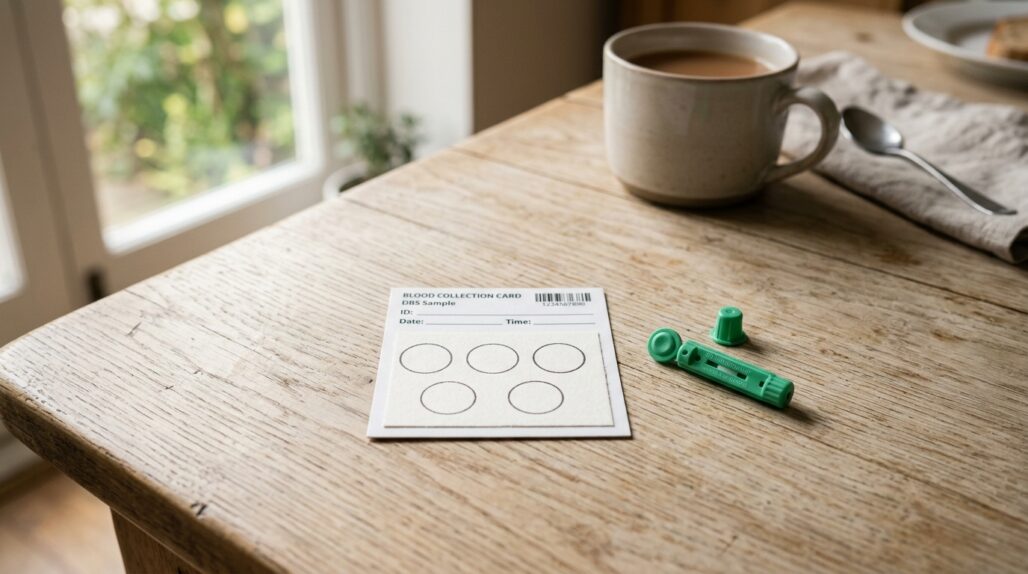
That is one reason to read ferritin alongside other iron markers (transferrin saturation, CRP) when the picture is murky, and a reason a doctor-ordered panel beats a single isolated number. An at-home finger-prick ferritin test is a useful screening aid, not a diagnosis. If the result will change what you do, confirm it with a clinic draw. Our sibling guide on how to read your ferritin result walks through the optimal-versus-normal question in more depth.
Free and low-cost levers first, before any pill
Supplements are not the first move. The biggest, cheapest levers usually sit outside the bottle.
- Find and fix the loss. Iron deficiency is a leak, not just an input problem. The NHS names heavy menstrual periods, pregnancy, and bleeding in the stomach or intestines as the common causes. Heavy periods are the single most common reason in menstruating people. Addressing the source is what makes any iron work last.
- Eat iron, and eat it smart. Heme iron from meat, poultry, and fish absorbs better than the non-heme iron in beans, lentils, tofu, spinach, and fortified grains. Pairing plant iron with vitamin C (citrus, peppers, tomatoes) improves uptake at the meal. Our explainer on heme versus non-heme iron covers the practical food swaps.
- Move the iron blockers off your iron meals. Coffee, tea, and calcium-rich foods or calcium supplements blunt iron absorption. You do not have to quit them – just separate them from your iron by an hour or two.
- Protect sleep. Tiredness has many drivers. Correcting iron will not fix a chronic sleep debt, and assuming it will is how people end up disappointed by a supplement that was never going to carry that load.
Do this groundwork for a few weeks. For some people with mild depletion and a fixable cause, that is enough.
The protocol: test, supplement, re-test
If your ferritin is low and food alone is not closing the gap, here is the realistic plan. Test first so you have a baseline number, then supplement, then re-test on a sensible clock.
The form and the schedule matter more than most people think. Two randomized trials in iron-depleted women by Stoffel and colleagues (Lancet Haematology, 2017) showed that taking iron every other day raised fractional absorption compared with daily dosing, because a large dose transiently raises hepcidin, the hormone that shuts the absorption door for about a day. A later double-blind RCT in eClinicalMedicine (2023) found alternate-day dosing caused fewer gastrointestinal side effects. So every-other-day, single morning doses are a reasonable, evidence-backed default – gentler on the gut and not obviously worse for refilling stores.
The products below are starting points, sold via Amazon. We may earn a commission, at no cost to you. They are aids, not a treatment plan – dose and duration are a conversation for you and your doctor.


As an Amazon Associate, UsefulVitamins.com earns from qualifying purchases at no extra cost to you.
| Step | What to do | Evidence grade |
|---|---|---|
| 1. Test (baseline) | Confirm a low ferritin (below ~30 mcg/L) with a doctor-ordered panel or an at-home screening kit; note the exact number and the date. | Standard practice (NIH ODS thresholds) |
| 2. Form and dose | Gentle iron, around 18 to 30 mg elemental (ferrous bisglycinate is well tolerated), taken every other day as a single morning dose. | Moderate (alternate-day RCTs, Stoffel 2017/2023) |
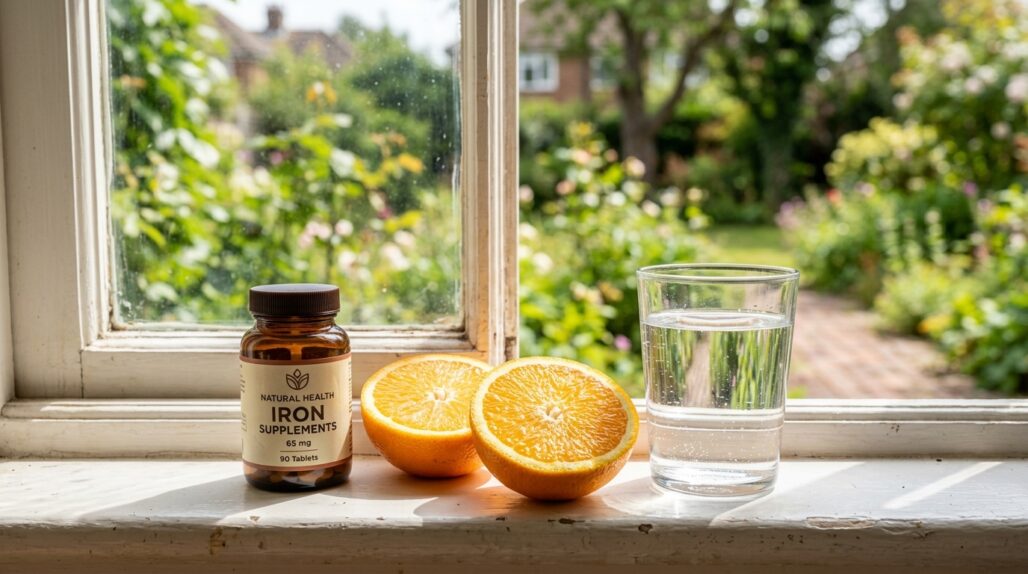
| 3. Pair with vitamin C | Take with ~100 to 500 mg vitamin C or a glass of orange juice; helps absorption at the meal, though it has not reliably raised stores on its own. | Mixed (boosts uptake; weak on long-term stores) |
| 4. Separate the blockers | Keep coffee, tea, and calcium 1 to 2 hours away from the iron dose. | Well established |
| 5. Re-test (checkpoint) | Recheck ferritin at 8 to 12 weeks. Compare to baseline. Stores can take 3 to 6 months to fully refill. | Standard practice |
On the vitamin C step, a fair note: ascorbic acid clearly helps you absorb non-heme iron in the moment, but a controlled study by Cook and colleagues (1984) found high-dose vitamin C had a negligible effect on actual iron stores over months. Use it to help each dose land, not as a stand-alone fix. For dialing in elemental iron from a product's stated dose, our iron dose calculator does the math.
The re-test checkpoint, and why patience matters
Here is the part people skip, and then they either quit too early or take iron for a year without checking.
Ferritin stores refill on a slow clock. Hemoglobin can respond in weeks, but the storage tank takes months. Re-test ferritin at 8 to 12 weeks, not sooner. A check at three weeks tells you almost nothing and invites a pointless dose increase. The honest timeline for fully topped-up stores is closer to three to six months, which our deeper piece on how long iron takes to raise ferritin lays out with the numbers.
The whole point of a re-test is to answer one question: did the number move? If your baseline ferritin was 16 and the recheck is 28, the plan is working – keep going and re-test again. If it has not budged, that is a signal to stop guessing and talk to a doctor, because either absorption or an ongoing loss is the real problem.
To keep the before-and-after honest, log your baseline ferritin and the date, then set a reminder for the 8-to-12-week recheck so you actually compare the same marker against itself. You can do that in StackMyMed (our own free app), or just as easily with a note in your phone or a circled date on a paper calendar. The tool does not matter. Logging the number and re-checking it does – that is the only way to know whether the iron earned its place, and any change to dose or duration is a decision for your doctor, not the app.

See a doctor if
This page is educational, not a diagnosis. Some situations need a clinician to find the cause before anyone settles into long-term iron.
- Heavy or worsening periods alongside a low ferritin – the bleeding source should be assessed, not just refilled.
- Any blood in your stool, black or tarry stools, or new gut symptoms. GI blood loss is a red flag, and the NHS uses a stool test (FIT) precisely to check for it. Do not paper over it with iron.
- Unexplained weight loss, breathlessness, or a racing heart.
- A very low ferritin with no obvious reason. Unexplained iron deficiency in an adult always warrants a workup.
- You are pregnant, have a known absorption condition (such as celiac disease), or take medications that affect bleeding or absorption.
Long-term iron without a known cause is not a fix. It can also mask a problem that needs attention, and excess iron is harmful in people who store too much. Test, find the why, then treat.
FAQ
How low does ferritin have to be to cause fatigue? There is no single magic line. The standard threshold for storage depletion is below 30 mcg/L per the NIH, and symptoms like fatigue can appear in that low-but-not-yet-anemic zone. Whether iron resolves the tiredness varies person to person, which is why a structured trial with a re-test beats assuming.
Can I just take iron without testing first? Better not to. Iron overload (including conditions like hemochromatosis) is genuinely harmful, and “tired” has many causes that iron will not touch. A baseline ferritin tells you whether iron is even the right lever and gives you a number to re-test against.
Why every other day instead of daily? A dose of iron briefly raises hepcidin, the hormone that limits how much iron you absorb for the next day or so. Trials found alternate-day, single morning dosing improved fractional absorption and caused fewer gut side effects than daily dosing.
Does vitamin C really help? It helps you absorb the iron from each dose, especially plant iron. The catch is that high-dose vitamin C on its own did not reliably raise iron stores in a controlled study. Treat it as a helper for the iron, not a substitute.
Is an at-home ferritin test accurate enough? At-home finger-prick tests run by certified labs are reasonable screening aids and fine for tracking a trend. They are not a clinical diagnosis. If a result is very low, very high, or would change a real decision, confirm it with a doctor-ordered venous draw.
How long until I feel different? Energy can shift in a few weeks for some, but iron stores refill over months. Judge the supplement by the re-tested ferritin number at 8 to 12 weeks, not by how you feel on day five.
The bottom line
A low ferritin with a normal hemoglobin is a real, common, and fixable pattern: your iron tank is low even though your blood count still reads fine, and that gap can be enough to drag your energy down. Sort the obvious losses and the food first. Then, if the gap holds, take a gentle iron every other day with vitamin C, keep it away from coffee and calcium, and re-test ferritin at 8 to 12 weeks to confirm the number actually moved. The most important step is not the supplement – it is finding why your iron is low in the first place, and that belongs with a doctor, especially if there is heavy bleeding, any blood in your stool, or no clear cause.
This article is for education only. It is not medical advice and not a diagnosis. At-home tests are screening aids, not a substitute for clinical testing. Talk to a doctor or pharmacist before starting, stopping, or changing any supplement or medication.
Reviewed by the UsefulVitamins Editorial Team.
