
If you're searching "ashwagandha side effects," you already suspect the botanical wellness narrative may be leaving something out. The honest answer is: ashwagandha is generally well-tolerated at clinical doses, but it carries a documented risk profile that most supplement marketing ignores — including thyroid disruption, liver injury case reports, autoimmune flare potential, and meaningful drug interactions. This article covers what clinical trials actually reported, what the case-report literature reveals beyond those trials, which drug combinations require a prescriber's sign-off, and who should not take ashwagandha at all. You will also get a plain-language drug-interaction table, a pregnancy contraindication with the underlying reasoning, and the specific populations where risk is more than theoretical.

Summary: the quick answer on ashwagandha side effects
Short answer: In double-blind RCTs, ashwagandha produced mostly mild, transient GI effects and drowsiness at rates comparable to placebo. The serious signals — thyrotoxicosis, hepatocellular injury, autoimmune flare — come from post-market case reports, not controlled trials, which means they are rarer but not negligible.
Best for (from a safety standpoint): Healthy adults not on any prescription thyroid, diabetes, immunosuppressant, or sedative medication, with no autoimmune diagnosis, who use standardized extract for 8–12 weeks.
Not ideal for:
- Anyone taking levothyroxine, methimazole, or other thyroid hormone drugs
- People with Hashimoto's thyroiditis, lupus, multiple sclerosis, or other autoimmune conditions
- Anyone using benzodiazepines, barbiturates, or anticonvulsants (additive sedation)
- People on immunosuppressants (cyclosporine, tacrolimus, biologics)
- Anyone who is pregnant or trying to conceive
What to check before starting: Your current medication list, your thyroid panel if you have any thyroid history, and your liver-function baseline if you plan extended use.
Decision shortcut: If you take any daily prescription medication, run the drug-interaction table in Section 5 of this article past your pharmacist or prescriber before starting.
What you'll find in this guide
- Side effects in clinical trials: what RCTs actually reported
- Case reports: the serious signals beyond the trials
- Autoimmune and immune-modulation risk
- Pregnancy and reproductive contraindications
- Drug interactions: the complete 2026 table
- Who should skip ashwagandha
- Frequently asked questions
Side effects in clinical trials: what RCTs actually reported {#side-effects-in-clinical-trials}
The best-quality safety data for ashwagandha come from placebo-controlled trials, not anecdotes. The benchmark study is a 2012 double-blind RCT (Chandrasekhar et al., n=64), in which participants took 300 mg of a high-concentration full-spectrum root extract twice daily for 60 days. Adverse effects in the ashwagandha group were mild and comparable to placebo — no serious adverse events were reported.
A 2019 double-blind RCT (Salve et al., n=60) tested ashwagandha at 250 mg/day and 600 mg/day for 8 weeks, again finding significant reductions in perceived stress and cortisol without dose-limiting side effects. Adverse event rates were low and similar across both doses and placebo.
But RCT populations are screened carefully. Participants on thyroid medication, immunosuppressants, or with active autoimmune disease were excluded before these trials even started. The safety signal in a curated trial population tells you something useful — but it does not tell you what happens when people with thyroid disorders or complex medication lists take ashwagandha unsupervised.
What the RCT adverse-event data does show
The side effects that appear consistently across trials and cohort reports:
- GI upset (most common): Nausea, loose stools, stomach irritation. Most common at higher doses or when taken on an empty stomach. Usually resolves within a few days of starting or when the dose is taken with food.
- Drowsiness and sedation: Reported at clinically meaningful rates. Per Memorial Sloan Kettering's integrative herb database, mild to moderate drowsiness is among the most consistently reported effects — a relevant caution for anyone operating machinery or driving.
- Headache: Reported less frequently, but noted across multiple cohorts.
- Nasal congestion, dry mouth, decreased appetite: Reported in smaller case series; rates not established in RCT data.
Think of the RCT profile like a cleared runway: it shows you the conditions are usually manageable, not that the plane can land anywhere.
Actionable takeaway: At the doses used in clinical trials (300–600 mg standardized extract daily), GI tolerance and drowsiness are the side effects most people encounter. Serious events are not seen in screened trial populations — but that screening matters.
Case reports: the serious signals beyond the trials {#case-reports-the-serious-signals}
Case reports are not RCTs. They establish signal, not frequency. But for uncommon serious events — thyrotoxicosis, liver injury — case reports are how the safety literature grows, and ignoring them because "the study wasn't randomized" is an error the supplement industry exploits.
Thyrotoxicosis
The most documented serious adverse event for ashwagandha is thyroid dysfunction. Two published case reports are cited in clinical safety references:
A 2005 Dutch case report (van der Hooft et al., PMID 16355578) documented a 32-year-old woman who developed clinical thyrotoxicosis after increasing her ashwagandha dose for chronic fatigue. Symptoms resolved fully after stopping the supplement and lab values normalized. The authors identified this as a potentially serious side effect, noting that animal studies had already indicated ashwagandha could elevate thyroid hormone concentrations.
A 2022 case report (Kamal et al., PMID 35475098) described a 73-year-old woman who presented with supraventricular tachycardia at 173 beats per minute and suppressed TSH after two years of self-treating low thyroid function with ashwagandha root extract. Full symptomatic and biochemical resolution occurred after stopping supplementation. The authors note the mechanism remains unclear but consistent with withanolide-driven thyroid stimulation.
For a deeper look at the HPT axis mechanism behind these cases, see Ashwagandha and Thyroid: The Real TSH Risk and Who Should Skip It.
Liver injury (hepatotoxicity)
A 2023 case series (Bokan et al., PMID 37631044) assessed two cases of herb-induced liver injury using the updated RUCAM causality scoring tool. Both patients — a 36-year-old male and a 30-year-old female — developed elevated bilirubin, elevated liver enzymes, itching, and nausea after ashwagandha use. Both cases scored RUCAM 7 ("probable" causality). Both resolved after discontinuation.
A 2024 case report (Almuzghi et al., PMID 39553154) documented a 22-year-old healthy woman who developed hepatocellular injury with cholestasis within 30 hours of starting ashwagandha — ALT peaked at 315 IU/L, total bilirubin reached 12.85 mg/dL. Viral and autoimmune hepatitis were ruled out. Recovery took 60 days.
The NCCIH ashwagandha fact sheet acknowledges the liver-injury signal and notes that "although it is rare, there have been a number of cases that link liver injury to ashwagandha supplements."
Actionable takeaway: These are not theoretical risks. If you develop unexplained nausea, jaundice, dark urine, or fatigue while taking ashwagandha, stop the supplement and see a clinician. Liver-function panels are reasonable for anyone planning extended use beyond 12 weeks.
Autoimmune and immune-modulation risk {#autoimmune-and-immune-modulation-risk}
Ashwagandha's withanolides modulate immune function — which is part of why it is studied for immune support, and exactly why it is a concern for people with autoimmune conditions. The NCCIH ashwagandha fact sheet explicitly states: "Ashwagandha is not recommended for people who have autoimmune or thyroid disorders."
This is not vague caution. Immune modulation in a system already dysregulated by Hashimoto's thyroiditis, lupus, rheumatoid arthritis, or multiple sclerosis can tip the immune balance in unpredictable directions — either amplifying the inflammatory response or interfering with prescribed immunosuppression.
Per Memorial Sloan Kettering's integrative herb database, at least one case of kidney transplant rejection was documented in a patient using ashwagandha concurrently with immunosuppressants — a serious outcome that illustrates the interaction is not theoretical.
The real question isn't whether ashwagandha "boosts" immunity or "modulates" it — the real question is whether the person using it has an immune system that is already calibrated by medication, and what disrupting that calibration could cost.
Pregnancy and reproductive contraindications {#pregnancy-and-reproductive-contraindications}
Ashwagandha is contraindicated in pregnancy. This is a hard stop, not a precautionary footnote.
Animal models have demonstrated oxytocic effects — ashwagandha stimulates uterine contractions — and abortifacient potential at higher doses. Human safety data in pregnancy are essentially absent; no RCT has tested ashwagandha in pregnant women, and the mechanism signal from animal studies is concerning enough that no ethical trial would.
The NCCIH fact sheet is unambiguous: "Ashwagandha should be avoided during pregnancy and should not be used while breastfeeding."
This applies to anyone actively trying to conceive, not only those who are already pregnant. The risk window includes the period before a confirmed pregnancy is detected.
Drug interactions: the complete 2026 table {#drug-interactions}
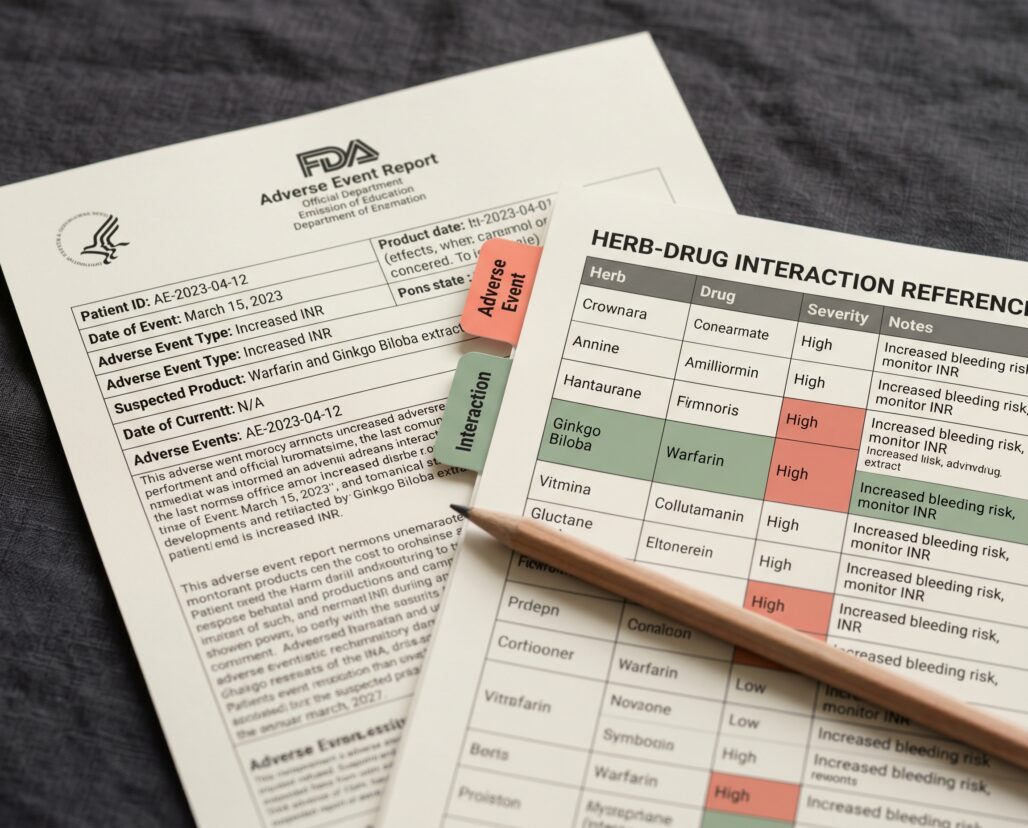
The following interactions are documented in published clinical references, including the NCCIH fact sheet and Memorial Sloan Kettering's integrative herbs database. This is not a list of theoretical biochemical overlaps — these are categories where clinical events have been observed or where the pharmacological mechanism is established.
| Medication class | Interaction mechanism | Clinical significance |
|---|---|---|
| Thyroid hormone replacement (levothyroxine, liothyronine) | Withanolides appear to stimulate T3/T4 secretion; case reports of thyrotoxicosis with concurrent use | HIGH — avoid without endocrinologist oversight and lab monitoring |
| Benzodiazepines and sedatives (diazepam, lorazepam, alprazolam, zolpidem) | Additive GABAergic/sedative effect; ashwagandha appears to potentiate CNS depression | MODERATE — increased drowsiness, impaired motor function risk |
| Anticonvulsants and barbiturates (phenobarbital, valproate, carbamazepine) | Possible additive CNS depressant effect; withanolide GABAergic activity | MODERATE — monitor if combined; avoid without prescriber coordination |
| Immunosuppressants (cyclosporine, tacrolimus, mycophenolate, biologics) | Withanolides modulate immune function; documented case of transplant rejection | HIGH — contraindicated without specialist supervision |
| Antidiabetic medications (metformin, insulin, sulfonylureas) | Ashwagandha may lower blood glucose; additive hypoglycemic risk | MODERATE — blood glucose monitoring required if combined |
| Antihypertensives | Ashwagandha may lower blood pressure; additive hypotensive effect | LOW-MODERATE — monitor blood pressure if combined |
| CYP3A4 substrates (many HIV drugs, statins, calcium channel blockers, immunosuppressants) | MSK database identifies ashwagandha as a moderate CYP3A4 inducer; may reduce plasma levels of CYP3A4-metabolized drugs | VARIABLE — consult pharmacist if on any CYP3A4 substrate |
| Alcohol | Additive CNS sedation | LOW — avoid combining; potentiates drowsiness |
Actionable takeaway: If you are on any prescription medication, this table is not a complete substitute for pharmacist review. Drug interactions are dose-dependent and individual — this table documents known categories, not every possible combination.
Who should skip ashwagandha {#who-should-skip-ashwagandha}
Some populations face meaningfully elevated risk. "Natural" does not mean risk-free — ashwagandha has pharmacological activity, which is what makes it useful, and what makes it consequential in the wrong context.
Skip if you:
- Take any thyroid medication (levothyroxine, methimazole, PTU, liothyronine) — thyrotoxicosis risk is documented in case reports
- Have Hashimoto's thyroiditis, Graves' disease, or fluctuating thyroid function — immune modulation adds unpredictability
- Use immunosuppressants for organ transplant, autoimmune disease, or cancer treatment — one documented transplant rejection case
- Are pregnant, possibly pregnant, or actively trying to conceive — oxytocic effects and abortifacient potential in animal models
- Take benzodiazepines, sedatives, or anticonvulsants daily — additive CNS depression
- Have a current or recent diagnosis of hepatitis or elevated liver enzymes — additive hepatotoxic risk
For context on how ashwagandha fits into the broader adaptogen safety picture, the Adaptogens Side Effects Master List covers all major adaptogens with the same level of specificity.
Frequently asked questions {#frequently-asked-questions}
Is ashwagandha safe to take every day?
In RCTs, daily use for 60–90 days was well-tolerated in healthy, non-medicated adults. The NCCIH fact sheet notes that short-term use (up to 3 months) appears to have a reasonable safety profile; data on use beyond 3 months are limited. For anyone on daily prescription medications, "safe to take every day" is a question for a prescriber, not a label claim.
Can ashwagandha cause liver damage?
Case reports document hepatocellular injury in previously healthy individuals, with RUCAM causality scores rated "probable" in at least two cases (Bokan et al., 2023, PMID 37631044). The frequency in the broader user population is unknown because supplement adverse events are vastly underreported. Stopping the supplement resolved liver injury in all documented cases. If you develop jaundice, dark urine, or unexplained fatigue while using ashwagandha, stop and see a clinician promptly.
Can ashwagandha affect your thyroid even if your thyroid is healthy?
Yes. The 2005 case report (van der Hooft et al., PMID 16355578) involved a woman with no prior thyroid diagnosis. Thyrotoxicosis can occur in individuals not currently classified as having a thyroid disorder. If you have no thyroid history and no thyroid medication, the risk is lower — but not zero.
Does ashwagandha interact with antidepressants?
Direct interaction data with SSRIs and SNRIs are limited. The main concern is additive sedation with sedating antidepressants (mirtazapine, trazodone). If you are on any psychiatric medication, treat this as a "discuss with your prescriber before starting" scenario.
How soon do ashwagandha side effects appear?
GI side effects typically appear within the first few days. Drowsiness may be noticeable within hours of the first dose. The thyrotoxicosis cases had latencies of weeks to two years. Liver injury in one 2024 report appeared within 30 hours. Adverse effects span immediate pharmacological responses to delayed idiosyncratic reactions — there is no single onset timeline.
Should I stop ashwagandha before surgery?
The NCCIH fact sheet explicitly recommends against ashwagandha use pre-surgery, citing CNS sedation interactions with anesthetic agents. Most surgical protocols advise stopping all herbal supplements 2 weeks before a planned procedure.
Conclusion: the bottom line on ashwagandha side effects
Ashwagandha is a clinically studied adaptogen with a generally favorable safety record in short-term RCTs involving healthy, unmedicated adults. But the trial populations are not representative of everyone who buys it. The case-report literature — thyrotoxicosis, hepatocellular injury, one transplant rejection — describes real people, not statistical noise. And the drug interactions with thyroid medications, immunosuppressants, benzodiazepines, and CYP3A4 substrates are pharmacologically grounded, not speculative.
Traditional use is not the same as RCT evidence. "Used for centuries in Ayurveda" tells you nothing about how ashwagandha interacts with levothyroxine or tacrolimus.
If you are healthy, not pregnant, and not on daily prescription medications, the risk profile at standard doses is manageable. If you belong to any of the contraindicated groups above, the risk-benefit calculation requires a clinician's input, not just a supplement label.
Next steps:
- For the full ashwagandha evidence picture (stress, cortisol, sleep, dosing), see the Ashwagandha Complete Guide
- For the thyroid interaction in detail, see Ashwagandha and Thyroid: The Real TSH Risk and Who Should Skip It
- For the same depth of safety analysis across all major adaptogens, see the Adaptogens Side Effects Master List
This article is for informational purposes and not medical advice. Herbal adaptogens — even traditional ones — can interact with thyroid medication, antidepressants, anticoagulants, immunosuppressants, blood-pressure drugs, and more. Consult a licensed physician before starting any adaptogen, particularly if you are pregnant, nursing, taking prescription medications, or managing a chronic condition.
