
If you're searching for lion's mane for ADHD, the honest answer is: there is no published ADHD-specific randomized controlled trial for this mushroom, and any source claiming otherwise is misrepresenting the literature. What does exist is a small number of human RCTs on lion's mane for general cognitive function and mild cognitive impairment in older adults, plus one attention-relevant trial in healthy adults. This article breaks down what those trials actually found, why they can't be directly applied to ADHD, and what a realistic picture of lion's mane as a cognitive supplement looks like for someone managing attention difficulties. You'll also get clear information on drug interactions, product selection criteria, and the specific reasons lion's mane is not a substitute for clinical ADHD care.
Affiliate disclosure: this article contains affiliate links. As an Amazon Associate, UsefulVitamins.com earns from qualifying purchases at no extra cost to you.
Summary: quick answer on lion's mane for ADHD
No ADHD-specific RCT data exists for lion's mane. Adjacent cognitive trials in older adults and healthy volunteers show modest, short-duration improvements in cognitive function and attention — but these populations differ meaningfully from ADHD, and the outcomes measured are not ADHD outcomes.
Best for: Adults curious about lion's mane as a general cognitive-support supplement who already have stable, clinically managed ADHD (if applicable) and are looking for a low-risk addition. Also relevant for people with age-related mild cognitive decline — Mori 2009 is the strongest trial for that specific population.
Not ideal for: Anyone expecting lion's mane to replace or reduce ADHD medication. Anyone with unstudied stimulant-combination use cases (no safety data exists). Anyone on anticoagulants or with diabetes on glucose-lowering agents without physician clearance.
Decision shortcut: If you have ADHD, the first question is not "which supplement?" It is "is my current clinical treatment optimized?" Lion's mane cannot answer that question for you.
What you'll find in this guide
- What lion's mane is and what it does in the brain
- The actual RCT data — and why it doesn't apply to ADHD directly
- Why the evidence gap matters for ADHD specifically
- Who might reasonably try lion's mane, and who should not
- Dosing ranges from clinical trials
- Side effects and drug interactions
- Product selection criteria and picks
- Frequently asked questions
What lion's mane is and what it does in the brain {#what-lions-mane-is}
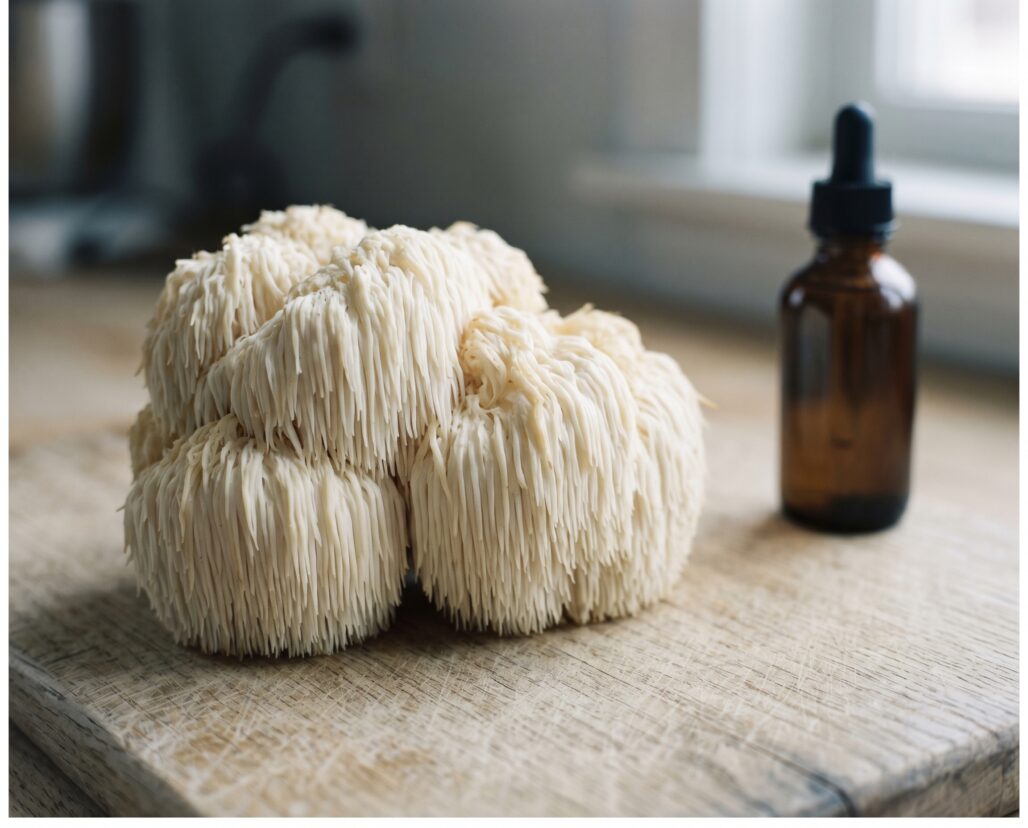
Lion's mane (Hericium erinaceus) is a culinary and medicinal mushroom distinguished by its cascading white spines — the characteristic that gives it the name. The active marker compounds relevant to neurological function are hericenones (found in the fruiting body) and erinacines (found in the mycelium). Both compound classes have shown, in laboratory and animal models, the ability to stimulate nerve growth factor (NGF) synthesis.
NGF is a protein that supports the survival, maintenance, and growth of neurons. The hericenone/erinacine hypothesis is that these compounds cross the blood-brain barrier and upregulate NGF production, which may support neuronal health and cognitive function.
Think of lion's mane's NGF effect less like a transplant and more like fertilizer for an existing plant. The mechanism doesn't create new cognitive capacity from nothing — it may support the health of neurons that already exist. In practical terms, that's a plausible pathway to mild cognitive maintenance support, not a mechanism for the kind of dopamine-and-norepinephrine modulation that underpins current ADHD pharmacotherapy.
The mechanistic data supporting this pathway comes primarily from in vitro and animal studies. Two foundational references are a 2009 paper by Mori et al. in the Phytotherapy Research journal, which established the NGF-stimulating properties of hericenone E and F in isolated rat cells, and a frequently cited 2020 review in International Journal of Molecular Sciences summarizing the neuroprotective mechanisms from both in vitro and rodent models.
In vitro and animal data tells you about mechanism. It does not tell you that a human taking X mg of lion's mane extract will experience Y cognitive outcome. The gap between "compound stimulates NGF in a petri dish" and "person with ADHD notices improved focus" is where most lion's mane marketing goes wrong.

What the research actually shows {#what-research-shows}
The human RCT record for lion's mane is thin but real. Here are the trials that matter, cited precisely, with their limitations stated.
Mori 2009: mild cognitive impairment in elderly adults
The most cited human RCT is the 2009 study by Mori et al. (PMID 18844328). Thirty Japanese men and women with mild cognitive impairment (MCI), aged 50 to 80, received either 3g per day of lion's mane fruiting body powder or placebo for 16 weeks in a double-blind, randomized design. Cognitive function was measured by the Revised Hasegawa's Dementia Scale.
At weeks 8, 12, and 16, the lion's mane group showed significantly higher cognitive function scores than placebo (p<0.01 at each time point). Scores declined after the intervention ended at week 16, and by week 28 (the follow-up) there was no significant difference between groups.
What this tells you: a 3g/day fruiting body dose produced measurable improvement on a dementia-scale instrument in elderly adults with MCI, and the effect reversed within 8 weeks of stopping.
What this does not tell you: how these results translate to adults with ADHD, who are typically younger, have a different neurological profile, and score very differently on dementia-screening instruments to begin with. MCI and ADHD involve overlapping but distinct neural systems and cognitive deficits. Applying Mori 2009 to ADHD is extrapolating across two different conditions, two different populations, and two different outcome measures.
Saitsu 2019: attention and cognitive function in healthy older adults
A 2019 RCT by Saitsu et al. (PMID 30978305) is the closest thing to an attention-focused human trial. Thirty-one healthy Japanese adults aged 50 and older received either 3.2g per day of lion's mane fruiting body powder or placebo for 12 weeks. Cognitive function was assessed by the Mini-Mental State Examination (MMSE) and a computerized test battery evaluating attention, processing speed, and memory.
The lion's mane group showed significant improvement in the attention-related subscales of the cognitive test battery versus placebo, while the MMSE total scores did not differ significantly between groups.
What this tells you: in healthy adults over 50, lion's mane at approximately 3g/day produced measurable improvement on attention-related test items over 12 weeks.
What this does not tell you: ADHD attention deficits are neurobiologically distinct from the age-related attention changes measured here. The Saitsu cohort had no ADHD diagnoses — they were screened as healthy — and the computerized attention tasks used are not validated ADHD outcome instruments. A positive attention signal in healthy 50-year-olds cannot be extrapolated to predict efficacy for attention-deficit disorder in younger adults.
Nagano 2010: anxiety and mood in perimenopausal women
One frequently referenced lion's mane trial is the 2010 RCT by Nagano et al. (PMID 20834180). Thirty women aged 40 to 60 with various complaints received either 500mg lion's mane fruiting body extract cookies (four cookies daily, equivalent to approximately 2g dried powder) or placebo for four weeks. The lion's mane group showed significant reduction in scores for anxiety, concentration difficulty, and irritability versus placebo.
The "concentration difficulty" subscale finding is why this study sometimes appears in ADHD-adjacent discussions. The limitation: the cohort was perimenopausal women with self-reported complaints, the duration was four weeks, and the extract-dose equivalence from cookies to standardized extract is not reliably calculated. The ADHD applicability remains indirect.
The gap that matters
As of 2026, no published randomized controlled trial has recruited adults diagnosed with ADHD, administered lion's mane, and measured ADHD-specific outcomes using validated instruments such as the Adult ADHD Self-Report Scale (ASRS) or clinician-rated ADHD rating scales. The trials above used MCI patients, healthy older adults, and perimenopausal women. They are indirect signals, not evidence for efficacy in ADHD.
Describing lion's mane as "effective for ADHD" based on these trials misrepresents both the evidence and the populations studied.
Actionable takeaway: The appropriate standard of evidence for an ADHD claim would be a trial recruiting adults with confirmed ADHD diagnoses, using validated ADHD instruments (such as the ASRS or a clinician-rated ADHD rating scale), run for at least 8 weeks, and pre-registered on ClinicalTrials.gov. Until that trial exists, lion's mane remains an interesting general cognitive supplement — not an ADHD supplement.
Why the evidence gap matters for ADHD specifically {#the-evidence-gap}
ADHD is a neurodevelopmental condition with documented dysfunction in dopaminergic and noradrenergic pathways, particularly in prefrontal cortex function. Current first-line treatments — methylphenidate, amphetamine salts, atomoxetine — work by modulating catecholamine signaling in these pathways. The effect sizes for approved ADHD medications in well-powered trials are substantially larger than the effects seen in any lion's mane cognitive trial.
Lion's mane's proposed mechanism (NGF stimulation, neuronal health support) operates through a different pathway and at a different timescale. There is no peer-reviewed evidence that NGF upregulation in adults produces the kind of catecholamine modulation that addresses ADHD symptomology. These are different mechanisms for different problems.
The real question here isn't whether lion's mane works in lab rats or in elderly adults with MCI. It's whether there is any human evidence for the population that actually has ADHD. That evidence does not exist. Seeking it out before supplementing is reasonable due diligence.
Actionable takeaway: If you have clinically diagnosed ADHD, the lion's mane decision belongs after — not instead of — a conversation with your prescriber about whether your current treatment protocol is working well.
Who might reasonably try lion's mane, and who should not {#who-its-for}
Reasonable fit:
Adults with stable, clinically managed ADHD who are curious about lion's mane as a general cognitive-health adjunct, have discussed it with their prescriber, are not on anticoagulants or diabetes medications, and have no mushroom allergy. They understand they are adding a supplement with indirect cognitive evidence, not a proven ADHD treatment.
Adults over 50 with age-related mild cognitive concerns — this is the population with the most direct human RCT evidence (Mori 2009, Saitsu 2019).
Skip if:
You are taking any anticoagulant (warfarin, rivaroxaban, apixaban, heparin) without physician clearance. Preliminary animal-model data suggests lion's mane may have antiplatelet activity. The NCCIH drug-supplement interaction guidance recommends consulting a prescriber before using any supplement with potential antiplatelet effects alongside anticoagulant therapy. The clinical significance of lion's mane antiplatelet activity in humans remains unstudied.
You are treating ADHD with stimulant medication and are considering lion's mane as a stack. No published safety or pharmacokinetic data exists for lion's mane combined with methylphenidate, amphetamine salts, or other ADHD stimulants. The combination is not contraindicated by available evidence, but it is also completely unstudied. Discuss with your prescriber before combining.
You have a known mushroom allergy. Allergic reactions to lion's mane have been reported in case literature.
You are pregnant or breastfeeding. No adequate safety data exists for any period of pregnancy or lactation.
Dosing ranges from clinical trials {#dosing-from-trials}
The clinical trial literature that exists uses these dose ranges:
- Mori 2009: 3g per day dried fruiting body powder, divided into three 1g doses with meals, for 16 weeks
- Saitsu 2019: 3.2g per day dried fruiting body powder, for 12 weeks
- Nagano 2010: approximately 2g per day equivalent, four weeks
These were the doses studied in the specific populations above. They cannot be translated directly into "the correct dose for focus in a 32-year-old with ADHD" because no trial has measured that outcome in that population.
For fruiting-body extracts (recommended over mycelium-on-grain products), beta-glucan content is the relevant standardization marker. Fruiting body extracts standardized to 20-25% beta-glucans are consistent with high-quality products. The dose used in commercial capsule products varies widely — most capsules are 250mg to 500mg, meaning the Mori 2009 trial dose of 3g/day corresponds to six to twelve capsules of typical products, which matters when reading serving-size labels.
In clinical trials, the dose was 3g+ of fruiting body equivalent per day, taken for at least 8 weeks. Products dosed at 500mg/day are not applying the trial dose. This is a practical limitation when evaluating supplement product claims.
For context on dosing strategy and timing, the lion's mane dosage guide on this site covers how trial doses translate to product selection.
Side effects and drug interactions {#side-effects-interactions}
Reported adverse effects
In the Mori 2009 and Saitsu 2019 RCTs, lion's mane was well tolerated with no serious adverse events reported. Mild gastrointestinal discomfort was noted by a small number of participants. Case reports in the medical literature have documented allergic reactions including contact dermatitis and respiratory symptoms in individuals with mushroom sensitivity.
Drug interactions
Anticoagulants (warfarin, rivaroxaban, apixaban, clopidogrel): Preliminary animal model data suggests lion's mane may have antiplatelet effects. The NCCIH general supplements interaction page recommends discussing any supplement with antiplatelet or anticoagulant potential with a prescriber before use. Human data on this specific interaction remains limited, but the theoretical mechanism warrants caution.
Diabetes medications (insulin, metformin, sulfonylureas): Some in vitro data suggests lion's mane may have hypoglycemic activity. The clinical significance in humans taking glucose-lowering medication is unstudied. Monitor blood glucose more carefully if combining; inform your prescriber.
ADHD stimulant medications (methylphenidate, dextroamphetamine, lisdexamfetamine, atomoxetine): There are no published pharmacokinetic or pharmacodynamic studies on this combination. The combination is not known to be harmful based on mechanism, but "not known to be harmful" is not the same as "studied and found safe." This is a meaningful gap for anyone with ADHD considering lion's mane alongside their standard treatment. Discuss with your prescriber before combining.
Immunosuppressants (cyclosporine, tacrolimus, biologics): Lion's mane is classified as an immune-modulating mushroom. Combining immune-active compounds with immunosuppressants is generally approached with caution. Physician clearance is required in this category.
Pregnancy and breastfeeding: No adequate human safety data. Avoid.
Actionable takeaway: The interaction profile for lion's mane is modest compared to adaptogens like ashwagandha or rhodiola, but not zero. The stimulant-combination question is specifically unresolved for ADHD users and deserves a direct conversation with a prescriber, not a community-forum answer.
Product selection: what to look for {#product-picks}
Buying mushroom supplements without checking fruiting-body content is like buying olive oil labeled "Mediterranean blend" — the label tells you everything except what's actually in it.
The critical distinction for lion's mane is fruiting body versus mycelium-on-grain. Most RCT evidence used fruiting body preparations. Many commercial products use mycelium grown on grain substrate (usually oats or rice), which results in a product with significant starch content from the grain, lower beta-glucan concentration, and a different phytochemical profile than the fruiting body. Products should disclose whether the source is fruiting body, specify beta-glucan content (not just polysaccharide content, which can include the grain starch), and carry third-party testing verification.
Third-party testing through sources like ConsumerLab and Labdoor is the verification mechanism — check whether the specific product you're evaluating has been independently tested before assuming the label is accurate.
For a full breakdown of which brands meet fruiting-body and third-party testing criteria, see the lion's mane complete guide which covers the full product landscape in detail.
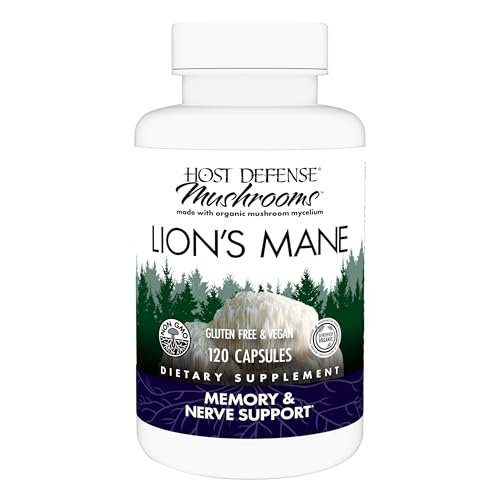
As an Amazon Associate, I earn from qualifying purchases. Product recommendations are based on real reviews and independent research.
Frequently asked questions {#faq}
Can lion's mane replace ADHD medication?
No. There is no evidence that lion's mane treats ADHD. Current clinical guidelines for ADHD rely on medications with multiple large-scale RCTs demonstrating efficacy — methylphenidate and amphetamine salts have effect sizes well above what lion's mane cognitive trials have shown in non-ADHD populations. Lion's mane is not a substitute for clinical ADHD care.
Is there any clinical trial for lion's mane and ADHD?
As of mid-2026, no published randomized controlled trial has specifically recruited adults with ADHD and tested lion's mane using validated ADHD outcome measures. The Mori 2009 and Saitsu 2019 trials used elderly adults with MCI or healthy older volunteers — not ADHD populations. Anyone citing "clinical evidence" for lion's mane in ADHD should be asked to name the specific trial.
How long does lion's mane take to work?
In the Mori 2009 RCT, significant cognitive score differences between lion's mane and placebo appeared at week 8, with the effect persisting through week 16 (the end of the intervention). Scores returned toward baseline by week 28 after stopping. Most cognitive trials used at least 8 weeks of continuous use before seeing any measurable signal.
Does the type of lion's mane extract matter?
Yes, substantially. Fruiting body extracts contain hericenones (the NGF-stimulating compounds from this plant part) and are the form used in the human RCTs cited here. Mycelium-on-grain products have a different phytochemical profile and are often diluted by starch from the grain substrate. Look for explicit "fruiting body" designation and verified beta-glucan content, not just a polysaccharide percentage.
Can I take lion's mane with my ADHD medication?
No published study has evaluated this combination. The interaction is not known to be harmful based on available data, but it is genuinely unstudied — particularly for stimulant medications. Raise this with your prescriber before combining. Community forums and supplement company websites cannot substitute for a conversation with someone who knows your full medication list.
What does lion's mane focus evidence actually show?
The most relevant attention data comes from Saitsu 2019, where healthy adults over 50 showed improvement on computerized attention tasks after 12 weeks of lion's mane at approximately 3g/day. This is a real positive signal in a specific population. It is not evidence that lion's mane treats focus problems in younger adults with ADHD, whose attention difficulties have different neurobiological roots.
Is lion's mane safe long-term?
The longest human trial above is 16 weeks (Mori 2009). There are no long-term human safety trials. In the published RCTs, lion's mane was well tolerated at 3g/day of fruiting body powder with no serious adverse events. For longer-term use, this remains a data gap — not a known risk, but an absence of evidence.
Conclusion: the bottom line on lion's mane for ADHD
Lion's mane has real human RCT evidence for cognitive function — in elderly adults with mild cognitive impairment and in healthy adults over 50. That evidence is legitimate, limited in scope, and honestly interesting for general cognitive aging support.
What it is not is ADHD evidence. No ADHD-specific trial exists. The populations, neurological profiles, and outcome measures in the available trials are different from ADHD in ways that matter. The proposed mechanism (NGF stimulation) is separate from the dopaminergic and noradrenergic pathways that ADHD pharmacotherapy targets. The attention signal in Saitsu 2019 is a real finding — in a different population, measured differently, for different reasons.
For someone with ADHD who is considering lion's mane: it is not contraindicated based on current data, it may provide modest general cognitive-health support, and the interaction with stimulant medications is unstudied but not flagged as harmful. The stimulant-combination caveat is the one that most warrants a direct conversation with your prescriber before adding anything.
For someone treating ADHD exclusively or primarily with lion's mane: this is not supported by any available evidence. Clinical ADHD care has a strong evidence base. Using lion's mane instead of engaging that evidence base is not a neutral choice.
Next steps:
- Review the full mushroom evidence and product landscape in our lion's mane complete guide
- Compare lion's mane with another evidence-supported cognitive herb in lion's mane vs. bacopa: which one fits your cognitive goals
- If your main concern is attention and focus, see lion's mane for focus: what the clinical trials actually measured
Related reading
- Lion's Mane Complete Guide
- Lion's Mane for Focus: What the Clinical Trials Actually Measured
- Lion's Mane vs. Bacopa: Which One Fits Your Cognitive Goals?
- Lion's Mane Dosage Guide
This article is for informational purposes and not medical advice. ADHD is a clinically diagnosed neurodevelopmental condition requiring evaluation and management by a licensed healthcare provider. Lion's mane is a dietary supplement, not an approved treatment for ADHD or any other psychiatric or neurodevelopmental condition. It has not been evaluated by the FDA for the diagnosis, treatment, or prevention of any disease. Herbal supplements can interact with anticoagulants, diabetes medications, immunosuppressants, and other medications. The combination of lion's mane with ADHD stimulant medications (methylphenidate, amphetamine salts, atomoxetine) has not been studied and cannot be declared safe based on current evidence. Consult a licensed physician before adding any supplement to your regimen, particularly if you are managing ADHD, taking prescription medications, pregnant, nursing, or managing a chronic health condition. Do not reduce or stop prescribed ADHD medication without physician guidance.
As an Amazon Associate, I earn from qualifying purchases. Product recommendations are based on real reviews and independent research.
This article is for informational purposes and not medical advice. Herbal adaptogens, even traditional ones, can interact with thyroid medication, antidepressants, anticoagulants, immunosuppressants, blood-pressure drugs, and more. Consult a licensed physician before starting any adaptogen, particularly if you are pregnant, nursing, taking prescription medications, or managing a chronic condition.
