
What actually changes when you come off a GLP-1
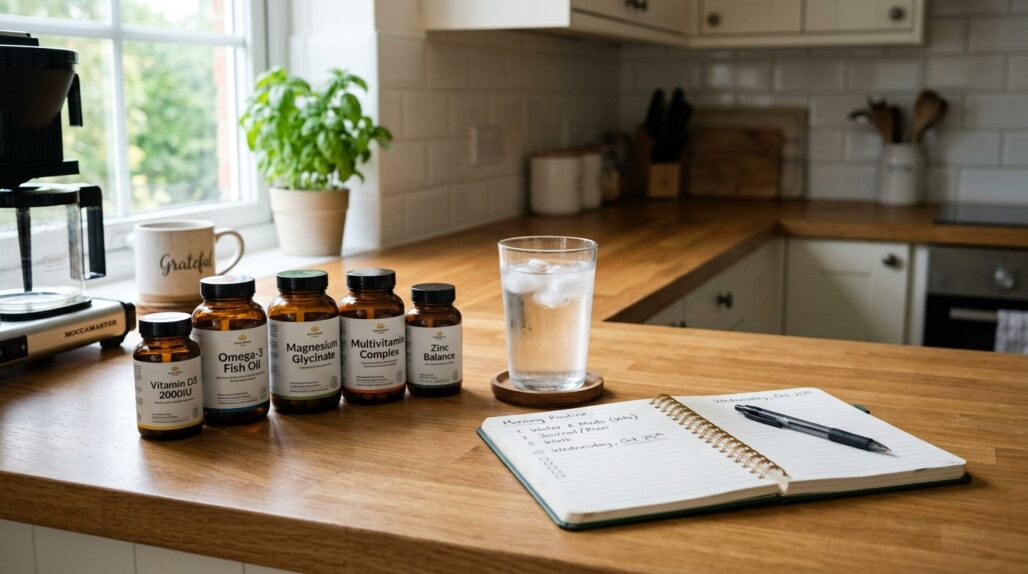
Coming off a GLP-1 is not the same as failing at it. Some people taper to a lower maintenance dose, some stop entirely with a clinician's plan, and a few stay on for the long haul. Whatever the path, your body and your routine shift, and the supplements that earned a place during the losing phase may not be the ones you need now.
Two things tend to change at once. Your appetite usually comes back, sometimes within days, so the easy fullness you got used to fades. And the gut side effects that came with the drug, like nausea and slowed digestion, often ease off once the medication is out of your system.
That matters for your stack because a lot of GLP-1 supplement routines were built around two goals: protecting muscle while you ate very little, and softening side effects. When the side effects go, some of those bottles have done their job. The muscle and nutrition piece, though, usually deserves to stick around.
This guide is about organizing that decision. It is not a taper plan, and it will not tell you to start or stop any prescription. That part belongs to the person who prescribed it.
First, know what the maintenance phase is fighting
Weight regain after stopping is common, and knowing that helps you set the routine up honestly rather than assuming the work is done.
In a narrative review of randomized trials, people regained a meaningful share of their lost weight after stopping these medications, with regain starting soon after the last dose. As a review of randomized GLP-1 discontinuation studies in NCBI's PMC library describes, semaglutide participants regained roughly 11.6% of body weight in the year after stopping, and tirzepatide participants regained about 14% over a similar window in the SURMOUNT-4 trial. The authors are blunt that lifestyle work alone is often not enough, and that maintenance usually needs a real plan and a care team, not willpower.
So the honest framing is this. Supplements support maintenance; they do not maintain weight on their own. Protein, sleep, movement, and a sustainable eating pattern do the heavy lifting. The bottles are there to back those up, mostly by protecting muscle and covering gaps.
The keep, maybe, drop method (works with zero apps)
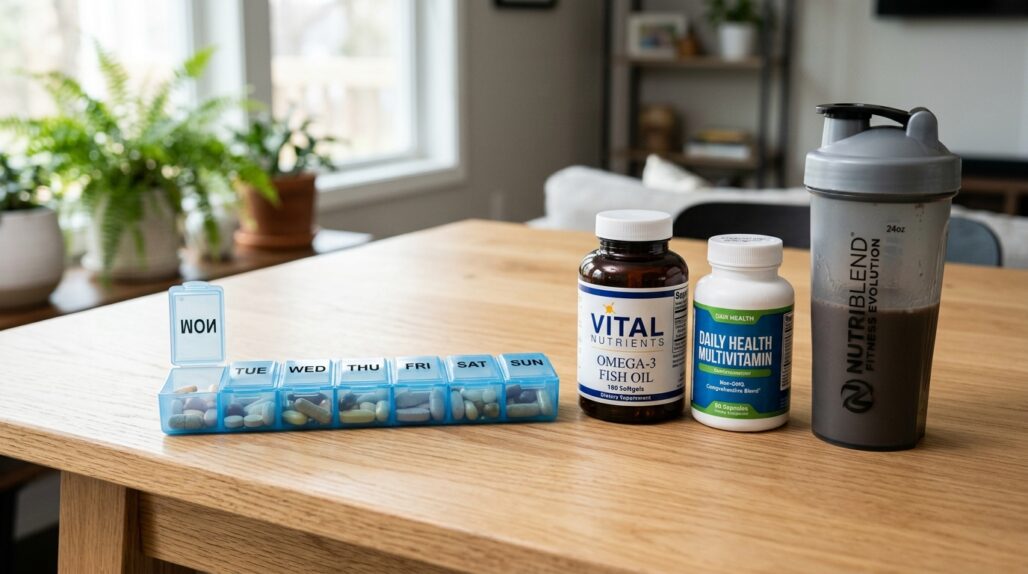
Here is a simple way to sort your stack on paper. Pull every bottle out, line them up, and put each one into one of three columns. You only need a sheet of paper and ten minutes.
- Keep if it supports muscle or fills a real nutrition gap. Protein is the headliner here. A general multivitamin can sit here too if your eating has been light and varied food was hard to manage.
- Maybe if you are not sure it is doing anything. Park it, set a date to decide, and ask a pharmacist whether it still has a job now that your eating is changing.
- Drop if you only added it to handle a side effect that has now eased, like heavy electrolyte powders or anti-nausea supports.
For each bottle, write three things: what it is, why you started it, and whether that reason still applies. The "why" column is where habit gets exposed. If you cannot finish the sentence "I take this because…", that bottle probably belongs in Maybe.
A few notes as you sort. Anything correcting a confirmed deficiency, like iron or vitamin D that a blood test flagged, stays in Keep until your clinician says otherwise. And nothing prescribed goes in the Drop column on your own; prescriptions are a conversation, not a kitchen-counter decision. If the line-up feels long no matter how you cut it, our self-audit for taking too many supplements is a longer version of this same exercise.
A printable sort sheet
| Column | What goes here | The test question |
|---|---|---|
| Keep | Protein, a multivitamin if intake was low, confirmed-deficiency items | Does this support muscle or fill a real gap right now? |
| Maybe | Items you are unsure about, anything bought on a recommendation you never tested | Can I finish the sentence “I take this because…”? |
| Drop | Side-effect supports for symptoms that have eased, duplicates, expired bottles | Was this only for a GLP-1 side effect I no longer have? |
What is usually worth keeping
A short list tends to survive the sort, and it is built around protecting what you kept.
Protein comes first. Muscle is easy to lose during fast weight loss and easy to lose again if you eat lightly out of habit, and protecting it helps with both strength and weight maintenance. The standard adult reference intake is about 0.8 grams of protein per kilogram of body weight, and many clinicians and groups suggest higher amounts, often in the range of 1.0 to 1.6 grams per kilogram, for adults focused on holding onto muscle, especially as they age. Food is the best source, and a protein supplement is just a convenient way to hit the number on days when real meals fall short.
A multivitamin can be reasonable if your eating was limited. Months of small portions can leave gaps. The NIH Office of Dietary Supplements consumer fact sheet on multivitamin and mineral supplements is clear that nutrient needs should be met mainly through food, and that a multivitamin can help fill in when you cannot get enough from diet alone. As your appetite returns and your meals get fuller, this is one to reassess again later.
Anything correcting a confirmed deficiency stays. If bloodwork showed low iron, low vitamin D, low B12, or similar, that item is doing real work and is not tied to the medication. Your doctor decides when it has done its job, usually with a follow-up test.
Pair the keepers with the basics that no bottle replaces: enough protein-forward meals, regular muscle-strengthening activity, and steady sleep. The CDC's physical activity guidance for adults points to muscle-strengthening work on two or more days a week, which protects the lean mass you are trying to keep far more than any supplement can. If you are still taking other doses on a clock, the GLP-1 supplement timing schedule around meals and injection covers how to space them.
What you can probably let go
The Drop column is usually fuller than people expect, and clearing it is half the point.
Side-effect supports are the obvious candidates. If you leaned on heavy electrolyte powders, anti-nausea aids, or extra fiber mainly because the medication slowed your gut and dulled your appetite, those reasons fade as the drug clears. Gut symptoms tend to ease in the weeks after stopping, so a powder you took daily may become a thing you keep only for an occasional rough day, or stop entirely.
Watch for duplicates and quiet pile-up too. Two products with overlapping ingredients, a magnesium you forgot you were taking, or a bottle bought on a friend's tip and never evaluated. The maintenance phase is a good moment to thin the stack so the few things you keep are easy to take consistently.
One caution worth repeating. Letting go of a supplement is your call; letting go of a prescription is not. If a medication was paused alongside the GLP-1, or if you are tapering, that timing belongs with your prescriber.
Keep the stack current as your plan shifts
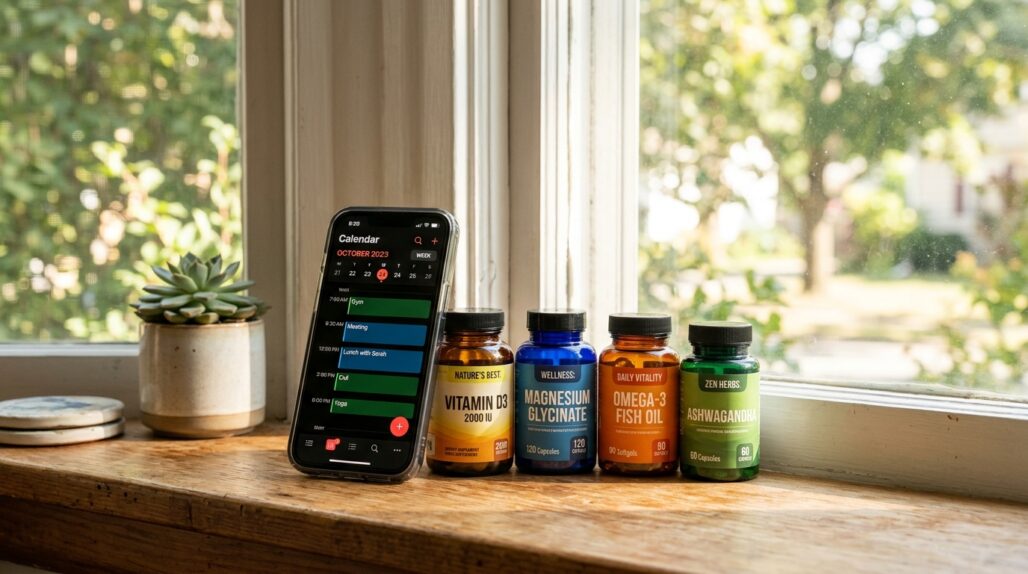
Re-auditing once is good. The harder part is keeping the list accurate as your dose tapers, items drop off, and your appetite changes month to month. Pick a low-tech anchor and stick with it: a weekly pill organizer you refill on the same day, a single note on your phone, or that same paper sort sheet pinned to the fridge and updated whenever a bottle changes.
If a paper list is hard to keep current, this is the one place a tool can help. As your plan changes you will keep some items and drop others, so StackMyMed (our own free app) makes it easy to update the stack and see what is still earning its place, and it can flag possible interactions for you to raise with your pharmacist rather than clearing anything as safe on its own. A pill organizer and a fridge list do the same job more simply; use whichever you will actually maintain. Either way, the point is the same: one current list, and a pharmacist who can see all of it.
Bring that list to your next visit. Supplements can change how medications work, and as the FDA's consumer update on mixing medications and supplements explains, combinations can make a drug stronger or weaker, so a pharmacist who sees the whole picture is your best safety check. A couple of companion pages help here too: our walkthrough on taming a GLP-1 supplement stack when there are too many bottles covers the organizing side, and the guide to keeping protein and muscle supplements on track during a GLP-1 goes deeper on the keepers.
FAQ
Should I keep taking protein after I stop my GLP-1? For many people, yes. Protein helps protect muscle, which matters both for strength and for weight maintenance. Aim to get most of it from food and use a supplement to fill the gap on light-eating days. The right amount depends on your body weight and situation, so it is a good question for a dietitian or your doctor.
Do I still need electrolyte powders once I am off the medication? Often not at the same level. Many people added them to cope with reduced eating and slowed digestion. As those side effects ease, you can usually scale back to occasional use or stop, while still drinking enough water day to day.
Can supplements stop me from regaining the weight? No supplement does that. Studies show weight tends to return after stopping unless protein, movement, sleep, and eating habits carry the maintenance work. Supplements support those efforts; they do not replace them, and they do not maintain weight on their own.
Is it safe to just stop everything at once? You can usually pause a supplement on your own, but a prescription is different. If you are tapering a GLP-1 or any other medication, or stopping one, that timing is a decision for your prescriber, not something to change at the kitchen counter.
What if I am not sure why I am taking something? Put it in the Maybe column, set a date, and ask a pharmacist. If you cannot finish the sentence “I take this because…”, that is a strong sign the bottle is running on habit rather than a current reason.
Do I need new bloodwork before changing my stack? It can help, especially for anything you started to correct a deficiency like iron or vitamin D. A follow-up test tells you and your doctor whether that item has done its job or still has work to do.
The bottom line
Coming off a GLP-1 is a good reason to rebuild your stack from scratch rather than carry it forward by default. Keep what protects muscle and fills real gaps, mostly protein and a multivitamin if your eating was light, and drop the side-effect supports you no longer need. The single most useful action is to re-audit on paper, sort every bottle into Keep, Maybe, or Drop, and keep that one list current as your plan changes. Then bring it to your pharmacist or doctor, who can check the combination and guide any taper. Supplements support the maintenance phase; the real work is food, movement, and a plan made with your care team.
This article is for general information and is not medical advice. It does not diagnose or treat any condition and should not replace guidance from your doctor, pharmacist, or other qualified health professional. Do not start, stop, or change any prescription or supplement based on this page without talking to a professional who knows your history.
StackMyMed is made by UsefulVitamins. It helps you organize your list and flag things to discuss with a pharmacist or doctor; it is not a diagnosis or treatment tool and does not replace professional medical advice.
Reviewed by the UsefulVitamins Editorial Team.
