
Affiliate disclosure: this article contains affiliate links. As an Amazon Associate, UsefulVitamins.com earns from qualifying purchases at no extra cost to you.
You got a lab result back and your hs-CRP is higher than you would like. Maybe a doctor mentioned it, or maybe you ordered the test yourself and now you are staring at a number with no obvious instructions attached. This page walks through what the number means, how to be sure it is real, and the realistic plan to bring it down – free changes first, supplements second, then a re-test to check your work.
A quick line before we start. This is education, not a diagnosis. hs-CRP is a screening and risk marker, not a verdict, and the real decisions belong to you and a doctor who knows your history.
What hs-CRP actually measures
C-reactive protein is made by your liver when there is inflammation somewhere in the body. The high-sensitivity version, hs-CRP, can pick up the low, grumbling levels of inflammation linked to cardiovascular risk, which the older standard CRP test was too blunt to see.
The catch is that CRP is sensitive but not specific. As the Cleveland Clinic notes in its CRP test overview, the test tells you inflammation is present, not where it is or why. A cold, a recent injury, dental work, a flare of an autoimmune condition, or even a hard workout the day before can push it up.
For cardiovascular risk, the long-standing cut points come from a CDC and American Heart Association consensus, summarized in this clinical review:
| hs-CRP level | Cardiovascular risk tier | What it usually means |
|---|---|---|
| Under 1 mg/L | Lower relative risk | Little measurable background inflammation. |
| 1 to 3 mg/L | Average relative risk | A common middle band; worth watching alongside other risk factors. |
| Above 3 mg/L | Higher relative risk | More inflammation; reasonable to confirm and act on. |
| Above 10 mg/L | Out of the risk-screening range | Suggests active infection, injury, or another acute cause; this is a doctor’s question. |
One framing you will see on wellness sites is that "optimal" hs-CRP is under 1 mg/L, or even under 0.5. Treat that as a functional-medicine opinion, not clinical consensus. The standard tiers above are what cardiologists actually use. A lower number is generally a fair goal, but do not let a result of 1.5 convince you something is wrong when it sits squarely in the average band that most healthy adults fall into.
Step one: make sure the number is real
Here is the single most important thing on this page. A high hs-CRP from one blood draw can be a passing infection, not a chronic state.
The same clinical guidance recommends repeating an elevated result rather than acting on it immediately. The AHA/CDC-derived practice review suggests rechecking values above 5 mg/L, and reassessing an initially high reading at least a month later, because someone in the middle of an acute-phase response can show a temporarily inflated level.
So before you change anything:
- Wait until you are well. No cold, no recent injury, no flare, ideally no hard workout in the last day or two.
- Re-test once. If the second reading drops back under 3 mg/L, the first one was probably a blip.
- If it stays high, that is your real baseline, and the plan below applies.
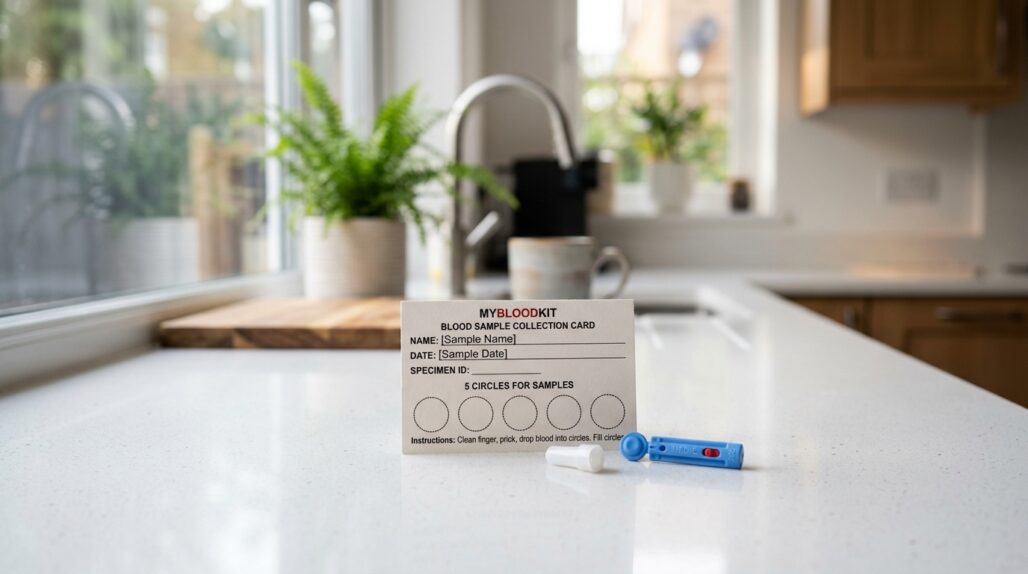
This is also why the at-home finger-prick hs-CRP kit in the cards below is best treated as a screening and tracking tool, not a diagnosis. It can flag a number and let you watch a trend cheaply, but a decision-changing or very high result should be confirmed with a doctor-ordered lab draw.
Step two: the free levers that move CRP the most
If you only do one thing, do this part. The lifestyle changes have larger and more consistent effects on CRP than any supplement, and they are free.
Lose some weight if you carry extra. Fat tissue is metabolically active and a major source of background inflammation, so weight loss is one of the most reliable ways to bring CRP down. Even modest loss helps; you do not need to hit an ideal weight to see the number move.
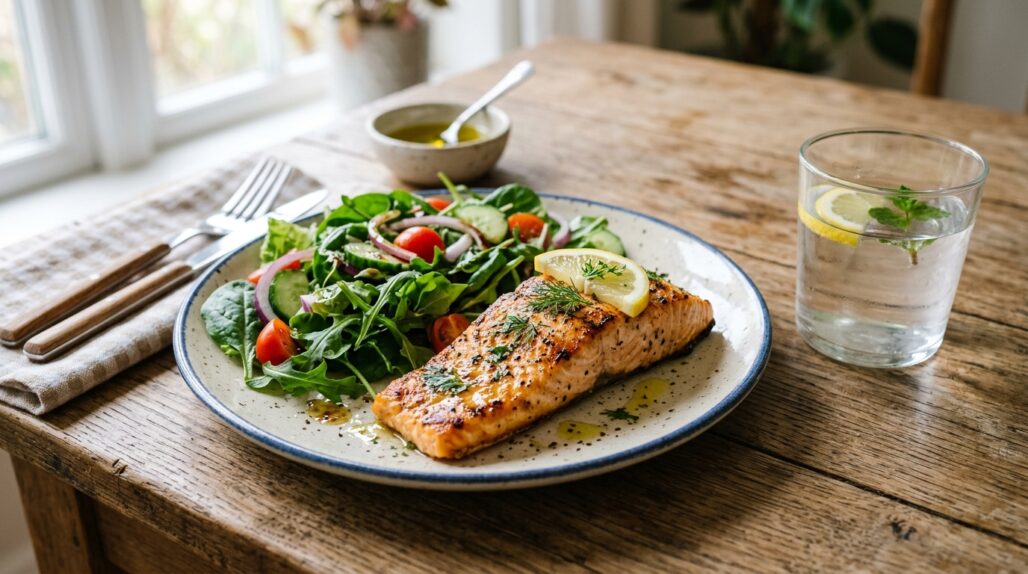
Eat a Mediterranean-style pattern. Trials of Mediterranean diets, rich in olive oil, fish, vegetables, legumes, and whole grains, have shown meaningful CRP reductions, with one controlled study reporting roughly a quarter drop in men with metabolic syndrome. The pattern matters more than any single food.
Move most days. Regular moderate activity lowers inflammatory markers over time. A daily walk after meals is a fine place to start; you are not training for anything, you are nudging your physiology.
Fix sleep and stop smoking. Short or broken sleep and tobacco both raise CRP. These are unglamorous, but they are real levers, and smoking cessation in particular tends to lower the number within months.
Stack these and you have done the heavy lifting. Supplements are the optional finishing touch, not the foundation. If you want to think about your overall anti-inflammatory regimen, our roundup of the best supplements for inflammation lays out the candidates with the same honest grading you will see below.
Step three: the supplements, graded honestly
Two supplements have human trial evidence specifically for lowering CRP. Both are modest. Neither replaces the lifestyle work.
Omega-3 (fish oil), evidence grade: moderate. A 2026 dose-response meta-analysis of randomized trials found that EPA and DHA lowered CRP in people with cardiometabolic conditions, with benefit seen up to about 1,200 mg/day of combined EPA and DHA. Worth noting: the same analysis did not find a clear CRP effect in otherwise healthy overweight participants, so the benefit is most reliable when inflammation is already elevated. For dosing in plain numbers, our guide on how much fish oil per day for inflammation walks through the EPA+DHA math.
Curcumin (from turmeric), evidence grade: moderate. An umbrella meta-analysis of randomized trials found curcumin significantly reduced CRP (effect size around -0.74), with the clearest benefit in people over 45. Plain turmeric powder is poorly absorbed, so the form matters; see our curcumin bioavailability comparator to understand why a standardized extract with an absorption enhancer is the version that was actually studied. If you decide to try it, our picks for the best turmeric and curcumin supplements stick to those studied, absorption-enhanced forms.
Vitamin D, evidence grade: weak to mixed. Some meta-analyses show a small CRP reduction, others show nothing, and the effect is heterogeneous. Worth correcting if you are genuinely deficient, but not a reliable CRP lever on its own.
What does not have the evidence to justify chasing CRP with it: most "anti-inflammatory" proprietary blends, high-dose antioxidants like vitamin E, and the long tail of trendy botanicals with only animal or test-tube data. If a product's CRP claim rests on a mouse study, treat it as a hypothesis, not a result.
Here is the realistic test-to-re-test plan, with doses anchored to the trials above.
| Step | What to do | Evidence and dose notes | Re-test window |
|---|---|---|---|
| Confirm | Re-test hs-CRP when well | Rules out a transient infection spike before you act. | After at least 2 to 4 weeks of feeling well |
| Free levers | Weight, Mediterranean diet, daily movement, sleep, no smoking | Largest, most consistent CRP effect; the foundation. | 8 to 12 weeks |
| Add (optional) | Omega-3 fish oil | Up to ~1,200 mg/day combined EPA+DHA; moderate evidence in cardiometabolic groups. | 8 to 12 weeks |
| Add (optional) | Standardized curcumin | Absorption-enhanced extract; moderate evidence, clearest over age 45. | 8 to 12 weeks |
This is where the test kit and supplements live if you want to act on the plan. The cards below are the at-home hs-CRP test plus the two best-evidenced supplements.

![NatureWise Curcumin Turmeric 2250mg - Advanced Absorption from 95% Curcuminoids & BioPerine Black Pepper Extract - Daily Joint and Immune Health Support - Vegan, 180 Count[60-Day Supply]](https://m.media-amazon.com/images/I/411R4B52c2L._SL160_.jpg)
As an Amazon Associate, UsefulVitamins.com earns from qualifying purchases at no extra cost to you.
Some links here are affiliate links. If you buy through them we may earn a small commission, at no extra cost to you. It does not change which products we list or how we grade the evidence.
Step four: re-test and check your work
The whole point of a protocol is the loop: get a baseline, change something, re-measure, and keep what worked. Without the re-test you are guessing.
Give it 8 to 12 weeks before you recheck. That is long enough for weight, diet, and the supplements to show up in the number, and it lines up with how the curcumin and omega-3 trials were run (most ran 4 to 12 weeks or longer). Testing again at two weeks tells you almost nothing.
When you do recheck, compare it against your confirmed baseline, not the first surprise reading. A drop from 4 to under 2 mg/L is a real, meaningful change. A drop from 3.1 to 2.9 is noise.
One practical habit: write down the result and book the re-test reminder somewhere you will actually see it, because a CRP plan falls apart when the recheck never happens. You can do this with a note in your phone or a calendar alert, or with StackMyMed (our own free app), where you can log the number and set a re-test reminder so you can see whether the supplement and the lifestyle changes actually moved it. Either way the goal is the same – a recorded before-and-after instead of a vague sense that you feel better. Any decision about what the new number means still belongs with your doctor.
When to see a doctor instead of a supplement
Some results are not a self-care project. Talk to a doctor, soon, if any of these apply:
- hs-CRP above 10 mg/L. That is outside the cardiovascular risk-screening range and usually signals an active infection, injury, or inflammatory condition that needs a cause found, not a fish-oil capsule.
- Chest pain, breathlessness, or fever alongside a high reading. Do not work a 30-day plan around symptoms like these; get assessed.
- Joint swelling, persistent unexplained pain, or feeling generally unwell. CRP cannot tell you the source, and these point toward something a clinician should evaluate.
- You take a blood thinner and want to start high-dose omega-3. Fish oil can affect bleeding, so clear the dose with your doctor or pharmacist first.
A high hs-CRP is information, not an emergency on its own, but the line between "improve my lifestyle" and "this needs a workup" is exactly the line you should not try to draw alone.

FAQ
Can I lower my hs-CRP without medication? Often, yes, if it is mildly elevated and driven by lifestyle. Weight loss, a Mediterranean-style diet, regular movement, better sleep, and not smoking all lower CRP in studies, usually more than supplements do. A very high reading is a different situation and needs a doctor.
How long until my hs-CRP goes down? Plan on 8 to 12 weeks before re-testing. Diet, weight change, and supplements need that long to register, and the trials behind the supplement advice ran on similar timelines. A recheck at two weeks is too soon to mean anything.
Is an at-home hs-CRP test accurate enough to trust? A finger-prick kit run through a certified lab is a reasonable screening and tracking tool, and it is good for watching a trend over time. It is not a clinical diagnosis. Confirm any very high or decision-changing result with a doctor-ordered blood draw.
Why is my CRP high when I feel fine? CRP is non-specific, so it can rise from things that do not make you feel sick, such as extra weight, poor sleep, gum disease, or a low-grade issue you have not noticed. It can also spike briefly after a recent cold or a hard workout, which is why one high reading should be repeated when you are well.
Does lowering CRP actually lower heart risk? The honest answer is partly. The CANTOS trial showed that an anti-inflammatory drug which cut hs-CRP also cut cardiovascular events, which supports inflammation as a real target. Whether lowering CRP with diet and supplements produces the same protection is not proven, so treat a falling number as a good sign, not a guarantee.
Should I take fish oil and curcumin together? You can; they work through different pathways and both have moderate evidence for CRP. Start one at a time if you want to know which is doing the work, and skip or clear high-dose fish oil with your doctor if you are on a blood thinner.
The bottom line
An elevated hs-CRP is a useful flag, not a diagnosis. The smart sequence is simple: confirm the number is real by re-testing when you are well, then spend your effort on the free levers that move CRP the most – weight, a Mediterranean-style diet, daily movement, sleep, and quitting smoking. Add omega-3 and a standardized curcumin if you want the moderate extra help the trials support. Then re-test in 8 to 12 weeks and keep what worked.
And keep the guardrail in view: a reading above 10 mg/L, or any chest pain, fever, or feeling unwell, is a doctor's question, not a supplement plan.
This article is for education and is not medical advice or a diagnosis. At-home tests are screening aids, not a substitute for clinical testing. Talk to your doctor or pharmacist before starting a supplement, especially if you take medication or are pregnant.
Reviewed by the UsefulVitamins Editorial Team.
