
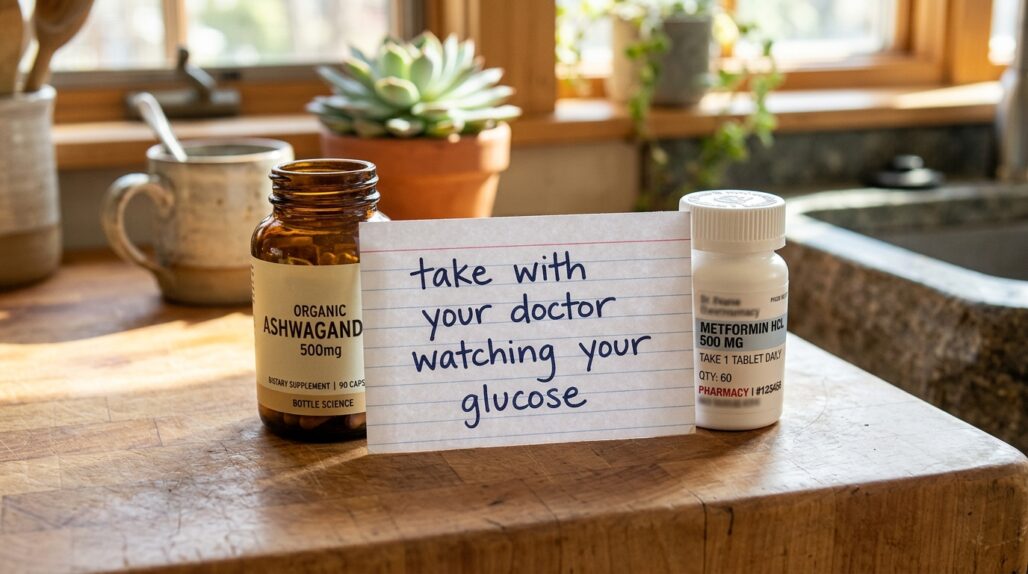
Affiliate disclosure: this article contains affiliate links. As an Amazon Associate, UsefulVitamins.com earns from qualifying purchases at no extra cost to you.
Do ashwagandha and metformin actually interact?
Short version: they can, mildly, and in the same direction. Both push blood sugar down, so the question is not whether they clash chemically (they do not), but whether the effects add up enough to matter for you.
Metformin is the most-prescribed first-line drug for type 2 diabetes. Ashwagandha (Withania somnifera) is an adaptogenic herb most people take for stress and sleep, not glucose. But it has a real, if modest, glucose-lowering effect of its own, which is why a standard interaction checker flags the pair at all.
This is not vitamin K and warfarin, where a swing can be genuinely dangerous. It is closer to "two mild brakes on the same wheel." For someone on metformin alone, the practical risk is low. For someone also on a sulfonylurea or insulin, the math changes, and that is the part worth slowing down for.
So the verdict is caution, with your prescriber's knowledge. It is not a flat no, and not a casual yes.
Why they interact: the mechanism, graded honestly
The interaction is pharmacodynamic, meaning both substances act on the same outcome (lower blood glucose), rather than one changing how the other is absorbed or cleared. That distinction matters because it tells you that spacing the doses apart by a few hours does nothing. You cannot dodge an additive effect with timing.
What does the evidence actually show about ashwagandha and glucose?
- In cell and animal work, ashwagandha's withanolides (notably withaferin A) increase glucose uptake into muscle and fat cells. One lab study reported roughly a 54% rise in glucose uptake at a fixed concentration, per the work on the hypoglycemic activity of withanolides. A broader review of ashwagandha in insulin resistance describes added mechanisms: inhibition of DPP-4 and alpha-glucosidase, modest effects on insulin secretion, and PPAR-gamma modulation tied to insulin sensitivity.
- In humans, a 2020 systematic review and meta-analysis in Phytotherapy Research (Durg and colleagues) pooled the available diabetes data and reported that ashwagandha lowered blood glucose and HbA1c, with no safety concerns flagged in the included trials. The human clinical trials behind that signal are small and short (roughly eight to twelve weeks).
So the mechanism is plausible and the direction is consistent. The strength of the clinical effect is another matter. Evidence grade: moderate for ashwagandha's own glucose-lowering effect; low, and largely theoretical, for a clinically meaningful additive interaction with metformin. There are no published case reports of ashwagandha plus metformin causing a hypoglycemic event that I could find.
On the drug side, Drugs.com lists ashwagandha and metformin as a moderate interaction, with the practical advice being more frequent glucose monitoring rather than avoidance. The physiology is reassuring here: metformin on its own rarely causes lows, because it works mainly by reducing how much glucose your liver releases, not by forcing your pancreas to dump insulin. That is why metformin-only patients almost never bottom out.
The NCCIH ashwagandha page backs the same conclusion from the herb side: it notes ashwagandha "might interact with some medications, including those for diabetes," recommends talking to your provider, and separately flags that rare liver injury has been linked to ashwagandha supplements (unrelated to metformin, but worth knowing if you are adding a daily extract).
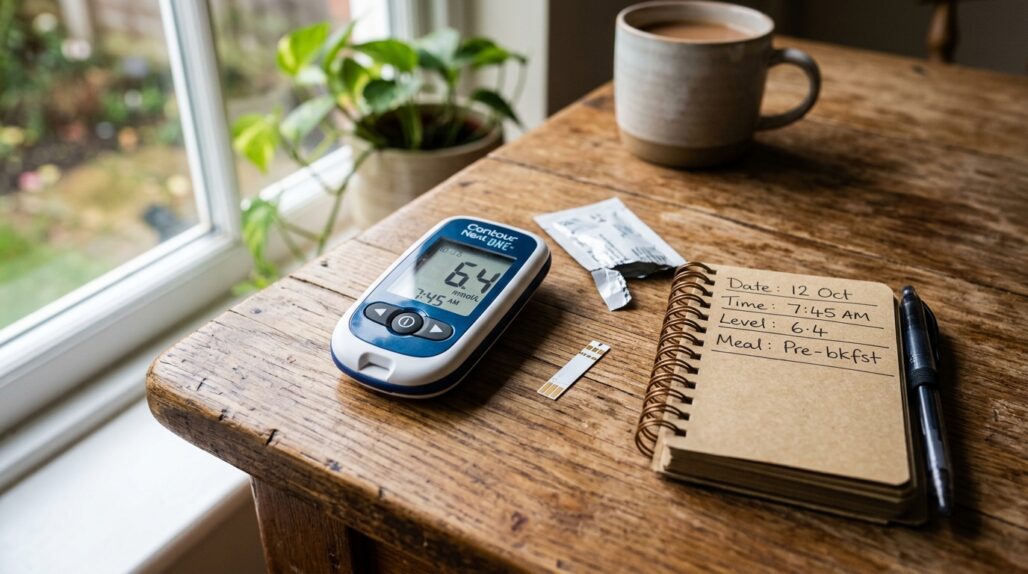
The practical rule: monitor, do not space
Because this is additive and not absorption-based, the instinct to "take them a few hours apart" does not apply. Spacing does not help here. It fixes binding problems (minerals and thyroid pills, for instance), but it does nothing for two things that both lower glucose. The real rule is about watching your numbers.
What that looks like in practice:
- Tell your prescriber first. Mention ashwagandha by name before you start, not at your next checkup a year from now.
- Keep your metformin exactly as prescribed. Do not lower it, skip it, or treat ashwagandha as a way to "need less" of your drug. That is not what this is.
- Check your glucose more often for the first two to four weeks. A few extra home readings, especially before meals and at any moment you feel off, give you and your prescriber real data instead of a guess.
- Use a standard studied dose. Ashwagandha trials generally land around 300 to 600 mg per day of a standardized root extract (KSM-66 is the most-studied). More is not better here, and high-dose extracts carry that separate, rare liver-injury signal NCCIH mentions.
Who is most at risk? Not the typical metformin-only reader. The people who genuinely need to slow down are those whose diabetes regimen also includes a sulfonylurea (glyburide, glipizide, glimepiride) or insulin. Those drugs actively drive glucose down and can cause real hypoglycemia, so adding a third mild glucose-lowering agent on top is a question for the prescriber, not something to decide alone. Anyone with liver disease should also clear it first, given the herb's rare hepatic signal.
If you want a sense of how a given extract on the label maps to the studied doses, our ashwagandha extract converter can help you sanity-check what you are actually taking.
What to actually do: the safe way to add it
If your prescriber is on board, here is the simple version of adding ashwagandha while you stay on metformin.
Start at a standard dose, take it at a consistent time each day (with or without food is fine; it does not need to be split from your metformin), and run a tighter glucose-monitoring routine for the first month. Log the readings. If they trend lower than usual or you get symptoms, that is information for your prescriber, who may decide to adjust the drug. You do not adjust it.
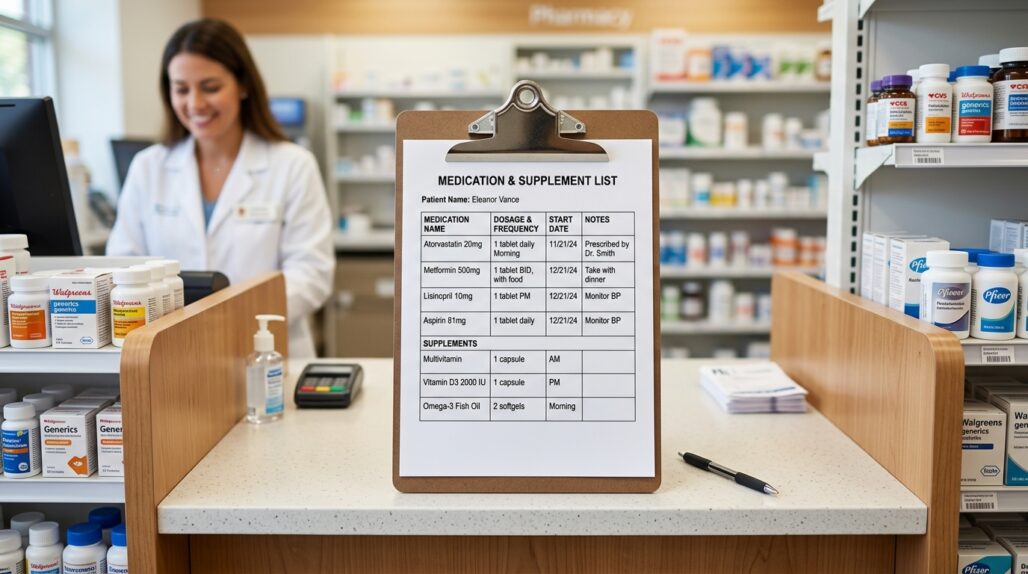
The best way to keep a drug and a supplement from quietly working against each other is to keep everything you take in one list, with overlaps flagged before you add anything new. You can do that the simple way (write your full medication and supplement list on paper and hand it to your pharmacist) or with StackMyMed (our own free app), where you log the metformin and the ashwagandha together and it flags the additive-glucose overlap as something to ask your pharmacist about. The app does not diagnose and it does not replace that conversation. It just makes sure the overlap is visible instead of forgotten. Either way you land in the same spot: a full list in front of a pharmacist before you start.


As an Amazon Associate, UsefulVitamins.com earns from qualifying purchases at no extra cost to you.
Some links below are affiliate links. If you buy through them we may earn a small commission, at no extra cost to you. We only point to products that fit the safe approach described here.
For more on building a stack around the drug itself, our roundup of the best supplements for metformin users covers the things metformin is actually known to affect, like B12.
To be clear about what these picks are not: ashwagandha is a stress-and-sleep supplement that happens to nudge glucose. It is never a substitute for metformin, and "natural alternative" framing has no place in a diabetes regimen.
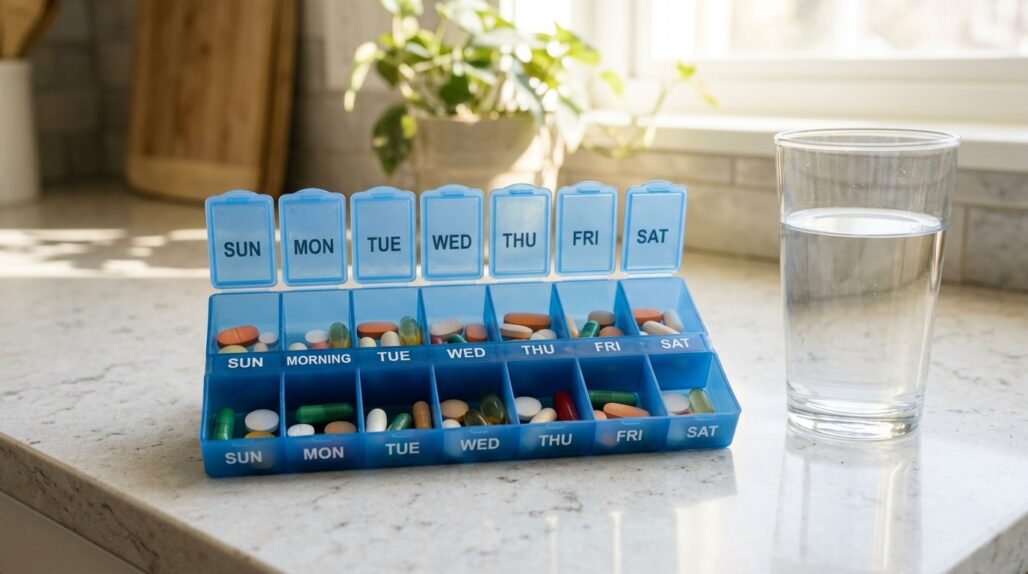
Related pairs and the wider class
Ashwagandha shows up in a lot of "can I take it with…" questions because it touches several systems at once. Two are worth flagging next to the diabetes question.
First, thyroid hormone. Ashwagandha can stimulate your own thyroid output, which is a different and arguably bigger deal than its glucose effect. If you take levothyroxine, that is its own monitoring situation. Second, the herb is mildly sedative and can stack with other calming agents, which is why the ashwagandha and sertraline question gets asked so often.
On the drug side, the metformin class (biguanides) is the gentlest of the diabetes drugs when it comes to hypoglycemia. The classes that change the risk picture are the insulin secretagogues (sulfonylureas, meglitinides) and insulin itself. If any of those are in your regimen, treat every glucose-lowering supplement, ashwagandha included, as a prescriber conversation, not a checkout-cart decision.
If you are also choosing a product, our guide to the best ashwagandha supplement walks through standardized extracts and what the label should actually say.
A timing reminder: none of this is about separating pills. It is about the combined effect on one number, your blood glucose, and keeping the right people watching it.
At a glance
| Question | Answer |
|---|---|
| Do they interact? | Yes, mildly and additively. Both can lower blood glucose. Graded a moderate interaction, with monitoring advised rather than avoidance. |
| How do I take them? | No spacing needed. Keep metformin as prescribed, add a standard ashwagandha dose (about 300 to 600 mg/day), and monitor glucose more closely for two to four weeks. |
| Who should be careful? | Anyone also on a sulfonylurea (glyburide, glipizide, glimepiride) or insulin, and anyone with liver disease. Those cases need direct prescriber oversight. |
| When do I call a doctor? | Hypoglycemia signs (shakiness, sweating, dizziness, confusion, hunger, fast heartbeat) or a symptomatic reading under about 70 mg/dL. Treat the low first, then call. |
FAQ
Does ashwagandha lower blood sugar enough to cause a low on metformin? On its own, ashwagandha’s glucose-lowering effect is modest, and metformin by itself rarely causes hypoglycemia because it does not force insulin release. So a metformin-only patient adding standard-dose ashwagandha is at low practical risk. The picture changes if you also take a sulfonylurea or insulin.
Should I take ashwagandha and metformin at different times of day? No, spacing does not help here. The interaction is additive, not an absorption clash, so separating the pills by hours changes nothing. The useful step is more frequent glucose monitoring when you start, not timing.
Can I lower my metformin dose because I started ashwagandha? Not on your own. Only your prescriber adjusts your medication. Bring your home glucose log to them and let them decide. Ashwagandha is not a replacement for metformin and should not be used to “make room” for less of it.
What dose of ashwagandha is reasonable while on metformin? Stick to the studied range, roughly 300 to 600 mg per day of a standardized root extract, taken consistently. Higher doses do not add benefit here and carry a separate rare liver-injury concern noted by NCCIH.
Is ashwagandha safe with diabetes generally? It is not a diabetes treatment, and the human evidence is limited and short-term. Used as a stress or sleep supplement at a standard dose, with your prescriber aware and your glucose monitored, most people on metformin tolerate it. People who are pregnant, breastfeeding, or have thyroid, autoimmune, or liver conditions should clear it first.
What if I am on metformin plus a sulfonylurea like glyburide? Treat that as the higher-risk scenario. Sulfonylureas can cause real hypoglycemia on their own, so adding ashwagandha on top genuinely warrants direct prescriber oversight and closer glucose checks. Do not start it without that conversation.
The bottom line
Ashwagandha and metformin are usually compatible for someone on metformin alone, but it is a caution, not a free yes. Both lower blood sugar, so the effect is additive, and the right response is monitoring rather than spacing. Keep your metformin exactly as prescribed, use a standard ashwagandha dose, tell your prescriber before you start, and check your glucose more often for the first few weeks. If you also take a sulfonylurea or insulin, that is a direct prescriber conversation, not a self-serve add. And watch for the lows: shakiness, sweating, dizziness, headache, confusion, hunger, fast heartbeat, or weakness, with a symptomatic reading under about 70 mg/dL meaning treat it and call.
This article is for education and is not medical advice, a diagnosis, or a prescription change. Talk to your doctor or pharmacist before combining a supplement with any medication, and never start, stop, or adjust a prescription on your own.
Reviewed by the UsefulVitamins Editorial Team.
