
If you're searching for the right lion's mane dosage, the honest answer is: the clinical evidence is sparse and the two best human RCTs used doses that most products on store shelves either exceed or fall short of, without always saying why. This article breaks down exactly what those trials found, why fruiting body and mycelium-on-grain products cannot be dosed interchangeably, and what drug-interaction risks are worth knowing before you start. You'll also get a clear look at how marketing claims outrun the available evidence, and what practical questions to ask before picking a dose.
Affiliate disclosure: this article contains affiliate links. As an Amazon Associate, UsefulVitamins.com earns from qualifying purchases at no extra cost to you.
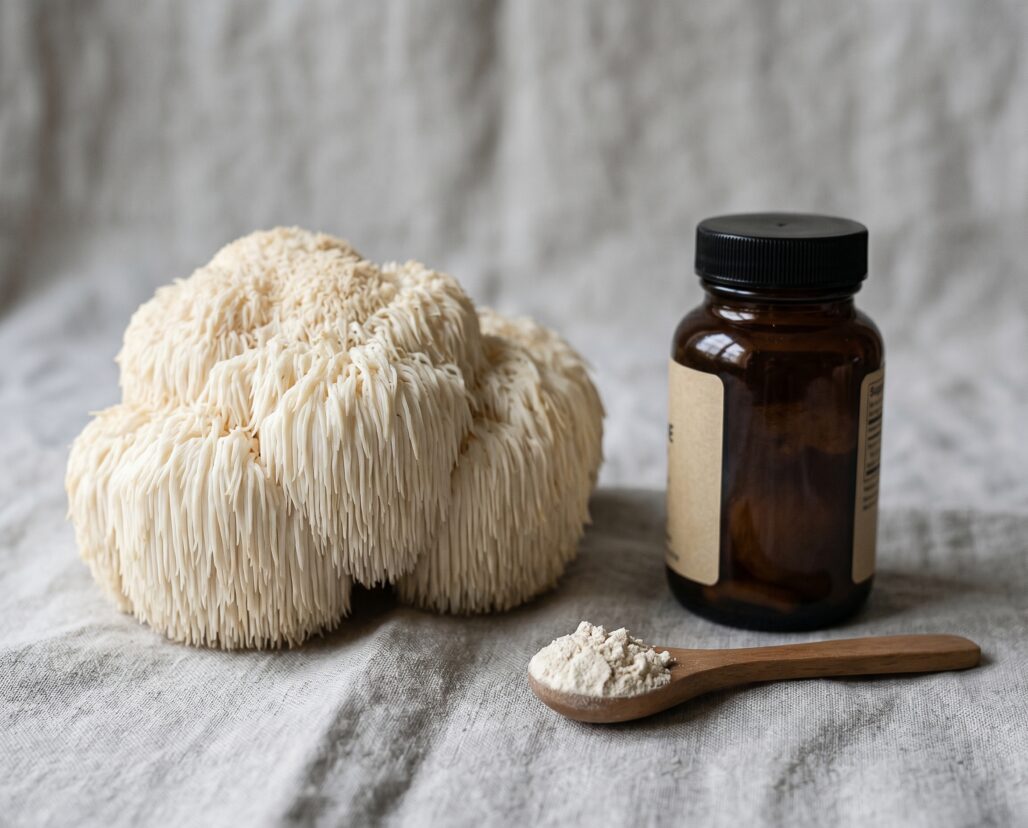
Summary / Quick Answer: what lion's mane dosage does research support?
The two human RCTs that showed statistically significant benefits used 750mg of fruiting body extract daily (Mori 2009, 30 participants) and 3.2g of fruiting body equivalent daily (Saitsu 2019, 31 participants) — and neither result has been replicated in a large independent trial.
- Best for: Adults aged 50+ interested in cognitive support, using a verified fruiting-body extract standardized to a disclosed beta-glucan percentage; adults who accept that available evidence is limited and early-stage
- Not ideal for: Anyone expecting a standardized "optimal dose" backed by large pharmaceutical-grade trials, users of anticoagulant medication (see interaction section), or buyers who cannot verify whether a product is fruiting body or mycelium-on-grain
- What to look at before buying: Fruiting body (not mycelium-on-grain), beta-glucan percentage disclosed on the label or COA, and the total daily dose in milligrams — not just the per-capsule amount
- Decision shortcut: If a product advertises a "500mg dose" without specifying fruiting body vs mycelium-on-grain or beta-glucan content, the label alone tells you nothing about how that dose compares to what clinical trials actually used
What you'll find in this guide
- What makes lion's mane dosage complicated
- The two RCTs and what they actually dosed
- Fruiting body vs mycelium dose conversion
- Who benefits at which dose range
- Side effects and drug interactions
- Product picks with Amazon cards
- Frequently asked questions
Why lion's mane dosage is more complicated than most marketing suggests {#why-dosage-is-complicated}
Lion's mane (Hericium erinaceus) is a medicinal mushroom, not a pharmaceutical compound. That distinction matters enormously for dosing. A pharmaceutical drug has a defined active molecule, a measured dose-response curve, and phase II and III trials that establish the minimum effective dose for a specific indication. Lion's mane has none of that — at least not in humans.
What it has is two families of bioactive compounds: hericenones (concentrated in the fruiting body) and erinacines (found in the mycelium). Both have been shown to stimulate nerve growth factor (NGF) synthesis in cell cultures and animal models. Whether dietary doses of these compounds produce meaningful NGF elevation in human neural tissue is a separate question that the current evidence does not definitively answer.
Most supplement labels cite a milligram dose per capsule. But milligrams of what? A 500mg capsule of mycelium-on-grain — a product grown on rice or oats and then powdered — contains a substantially different concentration of hericenones and beta-glucans than a 500mg capsule of fruiting body extract standardized to 25% beta-glucans. The number looks the same on the label. The biology is not the same.
Buying mushroom supplements without checking whether you're buying fruiting body or mycelium-on-grain is like buying an olive oil labeled "Mediterranean blend" — the label tells you everything except what's actually in it.
Actionable takeaway: Before evaluating any dose range, identify whether the product is fruiting body or mycelium-on-grain. If the label doesn't specify, or if it says "mycelium" without a beta-glucan or hericenone disclosure, you have no meaningful way to compare the dose to what clinical trials used.
What the two best RCTs actually dosed {#what-rcts-actually-dosed}
Mori 2009: 750mg/day in older adults with mild cognitive impairment
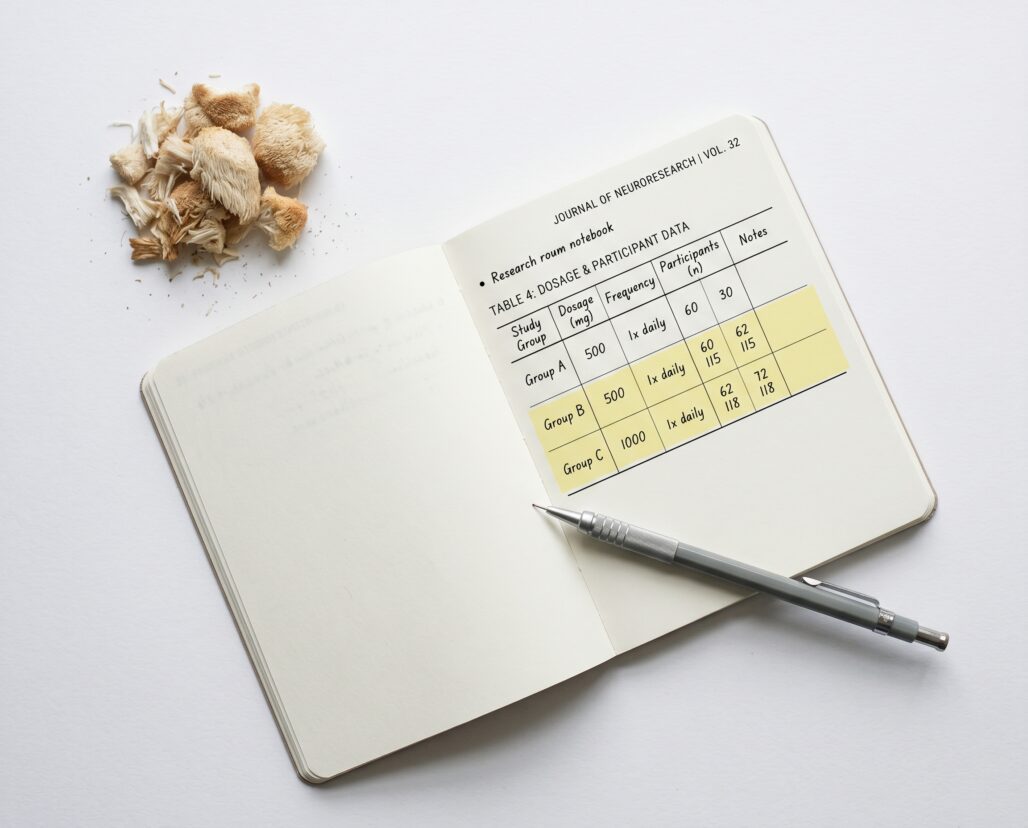
The most frequently cited human trial on lion's mane is Mori et al., 2009 (PMID 18844328), a double-blind, placebo-controlled RCT conducted in Japan (n=30, 16 weeks). Participants were older adults with diagnosed mild cognitive impairment. They received four tablets of dried fruiting body powder, each containing 250mg, taken three times daily — a total of 3g dried fruiting body powder per day. The researchers later reported the active dose as approximately 750mg hericenone-containing fruiting body extract, reflecting the concentration of active compounds in that powder form.
The primary outcome was the Hasegawa Dementia Scale (HDS-R). At weeks 8, 12, and 16, the treatment group scored significantly higher than placebo (p<0.01 at each timepoint). When the supplement was discontinued at week 16, scores declined over the following four weeks, suggesting the benefit did not persist after stopping.
Two important limits: this was a population of cognitively impaired elderly adults, and n=30 is a small sample. The result does not tell us whether 750mg fruiting body extract helps a healthy 45-year-old who wants sharper focus.
Saitsu 2019: 3.2g/day in healthy older adults
A second human trial (Saitsu et al., 2019 (PMID 31413233)) enrolled 31 older adults without cognitive impairment diagnosis (mean age approximately 60 years) and randomized them to 3.2g/day of lion's mane fruiting body powder or placebo for 12 weeks. Cognitive performance was assessed with the Kana pick-out test (a Japanese attention and processing-speed measure). The treatment group showed significant improvement on this measure versus placebo (p<0.05).
This trial is notable because it used a population of cognitively normal older adults, not a clinical MCI cohort. It suggests a possible dose-response signal: the 3.2g/day dose showed benefit in a population that did not already have cognitive impairment, where the 750mg dose in the Mori trial was tested in a more vulnerable population.
Both trials used dried fruiting body powder — not a concentrated extract. That distinction matters when you're comparing these doses to the milligram numbers on commercial capsules, which are often concentrated extracts standardized to a higher beta-glucan percentage.
What about the 3g+ doses in animal studies?
Animal studies have used doses ranging up to 5g per kilogram of body weight in rodents. Scaling those directly to humans is not valid — rodent metabolism, absorption, and body surface area differ enough that animal mg/kg doses are not transferable. The real question isn't whether lion's mane works in lab rats. It's whether the human dose proves out in clinical trials. As of 2026, the answer is: two small trials say possibly yes for cognitive outcomes in older adults, at doses between 750mg and 3.2g of dried fruiting body powder daily.
Actionable takeaway: The RCT evidence supports doses between 750mg and 3.2g of fruiting body powder daily for cognitive outcomes in adults over 50. Extrapolating these doses to younger, healthy populations or different extract concentrations is not supported by current human trial data.
Fruiting body vs mycelium: why dose conversion is not straightforward {#fruiting-body-vs-mycelium}
Both human RCTs above used dried fruiting body powder. Most commercial lion's mane products sold online are either:
- Fruiting body extracts standardized to a disclosed beta-glucan percentage (typically 20-30% in legitimate extracts)
- Mycelium-on-grain powders: the mycelium is grown on rice or oats and the entire substrate — including the grain — is dried and powdered. The grain content can constitute 30-70% of the final powder by weight
The practical implication: a 500mg capsule of mycelium-on-grain may contain as little as 150-350mg of actual mushroom material, with the remainder being grain starch. A 500mg capsule of fruiting body extract standardized to 25% beta-glucans contains a measurably higher concentration of the compounds that produced effects in the Mori and Saitsu trials.
For a deeper examination of how to read a COA and what the beta-glucan numbers mean, see Lion's Mane Fruiting Body vs Mycelium: Why the Label Matters More Than You Think.
There is no validated conversion factor that reliably equates a mycelium-on-grain dose to a fruiting body dose. If a product does not disclose beta-glucan content and does not specify fruiting body, the dosing information on the label is essentially uninformative relative to clinical trial doses.
Who is likely to benefit at which dose range {#who-benefits-at-which-dose}
Adults 50+ with mild cognitive concerns
The Mori 2009 trial supports the 750mg-range dose (as fruiting body equivalent) for this group. The Saitsu 2019 trial supports up to 3.2g/day dried fruiting body powder for cognitively normal older adults seeking to maintain processing speed and attention. Based on available human data, this population has the strongest case for trying lion's mane at a meaningful fruiting body dose.
For a broader look at the full evidence base for this population, see the Lion's Mane Mushroom: The Honest Guide to Hericium erinaceus and Cognitive Effects.
Healthy adults under 50 looking for nootropic effects
No RCT has tested lion's mane specifically in healthy adults under 50 for focus or cognitive enhancement. Marketing claims targeting this group — the "stack it for productivity" angle — are not grounded in human clinical evidence. Some buyers in this group report subjective benefit, but subjective reports are not clinical evidence, and placebo effects in nootropic self-experimentation are well-documented.
People exploring lion's mane for mood or stress
The Nagano et al., 2010 trial (PMID 20834180) enrolled 30 menopausal women who received lion's mane-infused cookies delivering approximately 0.5g fruiting body equivalent daily for 4 weeks. The treatment group showed lower scores on depression and anxiety subscales versus placebo (p<0.05 for both). The dose is considerably lower than the cognitive trials, and the delivery mechanism (baked cookie) raises questions about compound stability at elevated temperatures. This is a single small pilot, not a generalizable finding.
For the detailed evidence on lion's mane and mood or focus outcomes, see Lion's Mane for Focus: What the Mori 2009 RCT Showed and What It Didn't.
Actionable takeaway: Older adults (50+) with mild cognitive concerns have the strongest evidence base for lion's mane at 750mg to 3.2g daily fruiting body equivalent. Younger adults using it as a nootropic are extrapolating well beyond what the human evidence supports.
Side effects and drug interactions {#side-effects-and-drug-interactions}
Reported adverse effects in clinical trials
In the Mori 2009 and Saitsu 2019 RCTs, lion's mane was generally well tolerated. No serious adverse events were reported. Minor gastrointestinal discomfort (bloating, loose stools) has been noted anecdotally in higher-dose users, though these were not systematically measured in either RCT.
A small number of case reports describe allergic reactions — primarily skin reactions — in individuals with mushroom hypersensitivity. Anyone with a known mushroom allergy should consult a physician before trialing any fungal supplement.
Drug interactions
Anticoagulants and antiplatelet drugs (minor, preclinical signal): Per the Memorial Sloan Kettering integrative herbs database entry for lion's mane, animal studies have found that lion's mane extract may slow platelet aggregation. This raises a theoretical concern for additive bleeding risk in people using warfarin, heparin, aspirin, clopidogrel, or other anticoagulant or antiplatelet medications. Human pharmacokinetic data confirming this interaction do not currently exist, but the preclinical signal is sufficient that the MSK database flags this interaction explicitly. If you are on any blood-thinning medication, discuss lion's mane with your prescriber before starting.
Diabetes medications (preclinical only): Animal model research has found that lion's mane extracts may lower blood glucose. If you are using insulin, metformin, or other hypoglycemic agents, there is a theoretical risk of additive glucose-lowering effects. Human data are not available for this interaction. Flag this with your prescriber, especially at the higher end of the dose range.
Immunosuppressants: Lion's mane contains beta-glucans, compounds that can modulate immune function. In theory, this may interact with immunosuppressive drugs (tacrolimus, cyclosporine, biologics). No human pharmacokinetic data confirm this interaction for lion's mane specifically, but it is a general consideration with beta-glucan-rich supplements.
The NCCIH lion's mane fact page notes that while lion's mane is generally considered safe for short-term use in healthy adults, evidence on long-term use and drug interactions remains limited.
Pregnancy and breastfeeding
No human safety data exist for lion's mane in pregnancy or breastfeeding. In the absence of evidence, caution is warranted. Consult a physician before use during pregnancy or while nursing.
Product picks {#product-picks}
The three products below represent well-regarded fruiting body options with disclosed beta-glucan content. Amazon product cards with current pricing and ratings are below.
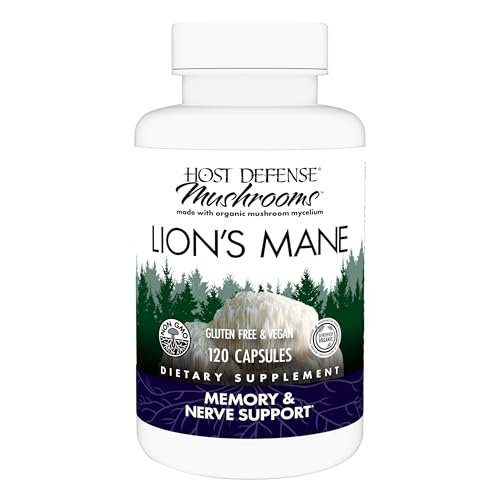
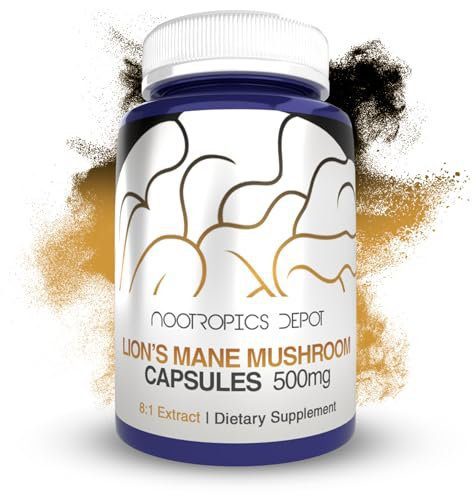
As an Amazon Associate, I earn from qualifying purchases. Product recommendations are based on real reviews and independent research.
Frequently asked questions {#faq}
How much lion's mane should I take per day?
The two human RCTs showing benefit used between 750mg and 3.2g of dried fruiting body powder daily. In the Mori 2009 trial, participants took 3g of dried fruiting body tablets (yielding approximately 750mg fruiting body extract equivalent) spread across three daily doses. In Saitsu 2019, the dose was 3.2g dried fruiting body powder daily for 12 weeks. Neither trial prescribes a universal dose — these were the doses tested in those specific populations.
Is 500mg of lion's mane enough?
It depends entirely on whether the 500mg is fruiting body extract or mycelium-on-grain powder. A 500mg fruiting body extract standardized to 25% beta-glucans represents a meaningfully different active-compound load than 500mg of mycelium-on-grain, which may contain 30-70% grain starch. If your product is fruiting body extract at 500mg, it falls below the doses used in both major RCTs but may still be worth comparing to your specific product's concentration disclosure.
Does higher dose mean better results?
Not necessarily. More herb is not always more useful — some bioactive compounds show a plateau or even biphasic effect at higher doses. For lion's mane, no human dose-response study has directly compared 500mg vs 1g vs 3g in a randomized design. The two RCTs used substantially different doses and populations, making direct comparison impossible.
How long does it take for lion's mane to work?
In the Mori 2009 trial, statistically significant cognitive improvement first appeared at week 8 of daily use. The Saitsu 2019 trial ran 12 weeks. Most functional adaptogen research suggests that 8-12 weeks of consistent daily use is the minimum timeline to expect any measurable effect. If no subjective benefit appears after 12 weeks of verified fruiting body extract at a meaningful dose, current evidence does not suggest continuing is likely to help.
Can I take lion's mane every day?
Both RCTs used daily dosing (no cycling protocol). No human trial has tested cycling versus continuous use for lion's mane. Some practitioners recommend cycling (e.g., five days on, two off) to reduce potential receptor desensitization, but this is speculative — no human RCT supports or refutes it.
What is the difference in dosing between fruiting body and mycelium products?
There is no validated conversion factor. Mycelium-on-grain products do not disclose how much of the capsule weight is grain starch versus fungal material. Without beta-glucan content disclosed on a COA, a mycelium-on-grain dose cannot be compared to a fruiting body dose. Treat them as incomparable unless you have COA data for both.
Is lion's mane safe long-term?
The longest human RCT ran 16 weeks (Mori 2009). No safety data exist beyond 16 weeks in controlled trials. Anecdotally, lion's mane has been consumed as food in East Asia for centuries with no documented toxicity at food quantities. For supplement doses (750mg to 3.2g daily), long-term safety data in humans is absent rather than reassuring.
Related reading
- Lion's Mane Mushroom: The Honest Guide to Hericium erinaceus and Cognitive Effects
- Lion's Mane Fruiting Body vs Mycelium: Why the Label Matters More Than You Think
- Best Lion's Mane Supplement in 2026: 6 Real-Mushroom Picks (and 4 Mycelium-on-Grain Skips)
- Lion's Mane for Focus: What the Mori 2009 RCT Showed and What It Didn't
- Lion's Mane for Nerve Regeneration: NGF Hype vs Actual Human Evidence
Conclusion: the bottom line on lion's mane dosage
The two best human trials on lion's mane used 750mg to 3.2g of fruiting body powder daily for 12-16 weeks, in adults over 50. Those are the only numbers in the clinical evidence base. Everything else — the "1000mg for productivity" capsules, the "two droppers twice a day" tinctures, the "5g powder for nerve repair" claims — sits outside what human data currently supports.
That does not make lion's mane useless. But it does make the marketing claims around dosing largely speculative. The real question is not whether lion's mane works in lab rats — it's whether the human dose proves out, and in what population. Right now the answer is: modestly, for older adults with cognitive concerns, at doses most buyers cannot easily verify because their product doesn't disclose fruiting body content or beta-glucan percentage.
Next steps:
- Confirm your product is fruiting body extract with disclosed beta-glucan content (not mycelium-on-grain)
- Match the daily dose to 750mg minimum fruiting body equivalent, or up to 3.2g dried fruiting body powder if you are following the Saitsu 2019 protocol
- Set a realistic timeline: 8-12 weeks of consistent daily use before evaluating any effect
- If you are on anticoagulant, diabetes, or immunosuppressant medication, discuss lion's mane with your prescriber before starting
- For a deeper look at how to evaluate supplement quality, see Lion's Mane Fruiting Body vs Mycelium: Why the Label Matters More Than You Think
This article is for informational purposes and not medical advice. Herbal adaptogens — even traditional ones — can interact with anticoagulants, diabetes medications, immunosuppressants, and other prescription drugs. Lion's mane specifically has a preclinical signal for interaction with antiplatelet and anticoagulant medications. Consult a licensed physician before starting lion's mane if you are pregnant, nursing, taking prescription medications, or managing a chronic condition.
As an Amazon Associate, I earn from qualifying purchases. Product recommendations are based on real reviews and independent research.
This article is for informational purposes and not medical advice. Herbal adaptogens, even traditional ones, can interact with thyroid medication, antidepressants, anticoagulants, immunosuppressants, blood-pressure drugs, and more. Consult a licensed physician before starting any adaptogen, particularly if you are pregnant, nursing, taking prescription medications, or managing a chronic condition.
