
If you work nights, rotating shifts, or unpredictable schedules, you have probably searched for something, anything, that helps your body cope. Adaptogens can partially blunt the physiological toll of shift work, particularly rhodiola for fatigue and cognition during night shifts, but they are not a substitute for the bigger interventions, and the evidence base has real limits. This guide breaks down what the RCTs actually show, which adaptogens have the most relevant data for your specific situation, and how to think about dosing timing when your schedule rotates week to week. You will also get the full picture on drug interactions, including the rhodiola-plus-caffeine combination most shift workers end up using without realizing the tradeoff.
Affiliate disclosure: this article contains affiliate links. As an Amazon Associate, UsefulVitamins.com earns from qualifying purchases at no extra cost to you.
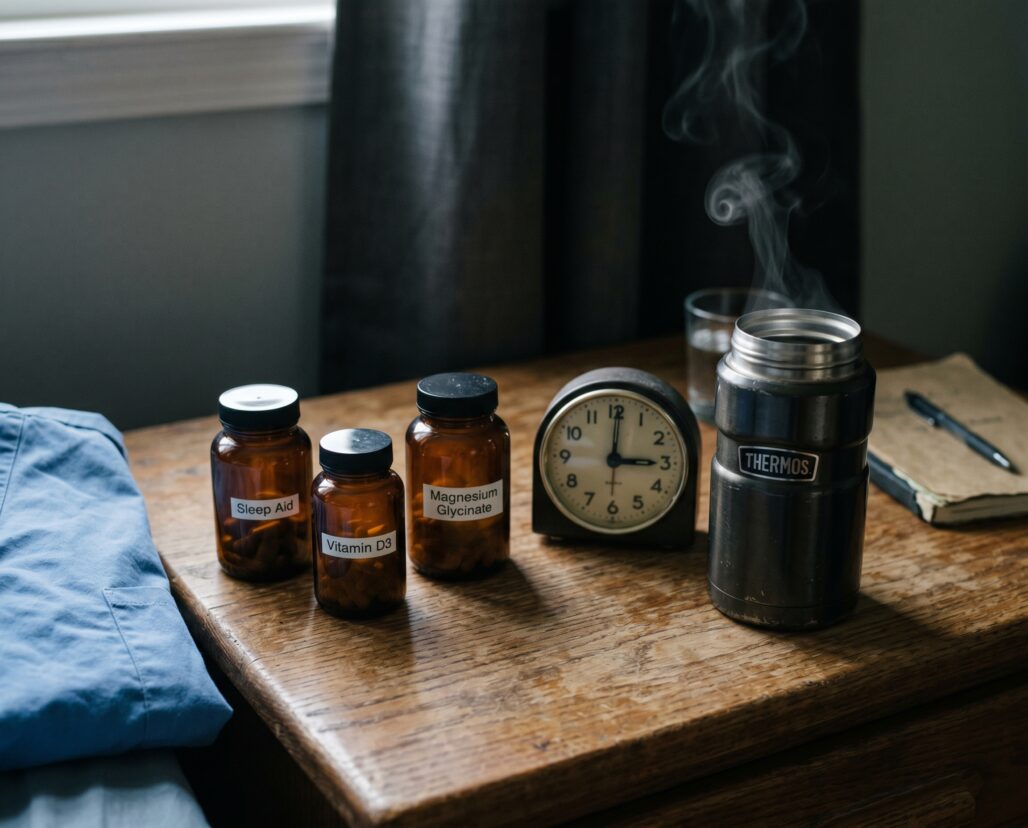
Summary: quick answer on adaptogens for shift workers
Shift work is classified by the International Agency for Research on Cancer (IARC) as a Group 2A probable carcinogen, largely because circadian disruption chronically suppresses melatonin and dysregulates cortisol timing. Adaptogens address some downstream effects of that disruption. They do not fix the disruption itself.
Best for: Shift workers with persistent fatigue and cognitive dulling during night shifts (rhodiola), poor daytime sleep recovery after night shifts (ashwagandha in an evening-timed dose), or difficulty staying calm during stressful handoffs and clinical environments (magnolia bark).
Not ideal for: Anyone hoping to replace sleep hygiene, melatonin, or structured light-exposure protocols with a supplement. Also not appropriate as a substitute for medical evaluation of shift-work sleep disorder, which is a recognized clinical condition.
What to look at before buying: For rhodiola, standardization to rosavins and salidrosides matters. For ashwagandha, look for KSM-66 or Sensoril with disclosed withanolide content. "Adaptogen blend" powders and unspecified extract ratios are not meaningfully comparable to the clinical-trial interventions.
Decision shortcut: Rhodiola is the most evidence-supported option for shift workers specifically, based on the Darbinyan 2000 and Olsson 2009 trials. Ashwagandha is a reasonable add for daytime sleep recovery. Magnolia bark has plausible anxiolytic mechanisms but limited human RCT data for this population.
What you'll find in this guide
- Why circadian disruption is the core problem
- What the research actually shows for each adaptogen
- How to time adaptogens around a rotating schedule
- Who should take these and who should skip them
- Side effects and drug interactions
- Product picks
- Frequently asked questions
- Related reading
Why circadian disruption is the core problem {#circadian-disruption}
Circadian biology runs on a roughly 24-hour cycle governed primarily by light exposure hitting the retina and transmitted to the suprachiasmatic nucleus in the hypothalamus. That nucleus drives virtually everything downstream: cortisol peaks, melatonin timing, core body temperature rhythms, inflammatory markers, and insulin sensitivity. Shift work forces the body to perform when the system says sleep, and to sleep when the system says wake.
The IARC's Group 2A classification for night-shift work, updated in their 2019 review, rests on evidence linking chronic circadian disruption to elevated breast cancer risk in nurses, increased metabolic dysfunction, and immune suppression patterns. Group 2A means "probably carcinogenic to humans" based on sufficient animal evidence and limited human evidence, a meaningful step below Group 1 (cigarettes, alcohol) but not dismissible. This is not a supplement article concern, but it frames why shift-work physiology is genuinely different from ordinary stress, and why any intervention needs to be realistic about what it can address.
Adaptogens work primarily on the HPA axis (cortisol regulation), cognitive resilience under stress, and some aspects of sleep pressure. That is a narrow slice of what circadian disruption does to the body. Think of it this way: if circadian disruption is a cracked foundation, adaptogens are interior repairs. They can make the interior more livable, but the foundation problem is still there.
Actionable takeaway: Before reaching for adaptogens, the highest-leverage interventions for shift workers remain structured light exposure management (bright light at the start of a night shift, darkness goggles on the commute home), melatonin timing (0.5mg to 3mg at your intended sleep time, not a higher dose), and consistent sleep-opportunity scheduling. Adaptogens layer on top of those, not instead of them.

What the research actually shows {#what-research-shows}
Rhodiola rosea: the strongest shift-relevant evidence
The most relevant RCT data for shift workers comes from rhodiola. In a 2000 double-blind crossover trial (Darbinyan et al., n=56), physicians on night duty received rhodiola SHR-5 extract at 170mg/day for two weeks. Compared to placebo, the rhodiola group showed statistically significant improvements on tests of mental fatigue, short-term memory, calculation speed, and concentration. The crossover design adds credibility because participants served as their own control.
A 2009 Phase III RCT (Olsson et al., n=60) using rhodiola SHR-5 at 576mg/day for 28 days in people with stress-related fatigue found statistically significant improvement on the Multidimensional Fatigue Inventory, with a 26% reduction in total fatigue score versus placebo. The population was not exclusively night-shift workers, but the fatigue phenotype, prolonged exhaustion with preserved sleep opportunity, maps closely to what many rotating-shift workers report.
A 2012 systematic review (Hung et al.) covering 11 rhodiola trials concluded that fatigue and cognitive performance outcomes showed the most consistent positive signals, while anxiety outcomes were more mixed. The review also flagged trial heterogeneity in extract standardization as a limitation throughout the literature.
The real question is not whether rhodiola works in lab conditions, but whether the human dose proves out when shift workers are using whatever form is available at their local pharmacy. Standardization matters: look for products standardized to at least 3% rosavins and 1% salidrosides, which is the marker ratio used in SHR-5 extract. Products that list only "rhodiola root extract" without the rosavin and salidroside percentage tell you nothing about comparability to the trial interventions.
Ashwagandha: useful for daytime sleep recovery
Ashwagandha's primary evidence stream is cortisol reduction and sleep quality improvement, which is directly relevant to shift workers trying to recover sleep during daylight hours. In a 2019 RCT (Salve et al., n=60), KSM-66 ashwagandha at 300mg twice daily for 10 weeks improved self-reported sleep quality, sleep onset latency, and wake-after-sleep-onset scores compared to placebo. Serum cortisol was also reduced.
The 2012 Chandrasekhar RCT (Chandrasekhar et al., n=64) remains the benchmark for cortisol outcomes: KSM-66 at 300mg twice daily for 60 days reduced serum cortisol by 28% versus a 7% reduction in the placebo group. For shift workers whose cortisol timing is already dysregulated, blunting chronic HPA axis overactivation matters.
The timing application matters here. Ashwagandha taken toward the end of a night shift or at the start of a daytime sleep window may support sleep pressure in a way that a morning dose would not. No RCT has tested this timing hypothesis directly in shift-worker populations, so this is extrapolation from the general sleep-quality evidence, not a specific trial finding.
Magnolia bark: anxiolysis without sedation
Magnolia bark (Magnolia officinalis) contains honokiol and magnolol, compounds with demonstrated GABA-A receptor activity in animal models. The anxiolytic effect without meaningful sedation at typical oral doses has been proposed as useful in high-pressure clinical environments where being calm and alert simultaneously matters.
The human RCT evidence for magnolia bark specifically is limited. A 2018 pilot study (Hepsomali et al., n=40) using a combination product that included honokiol showed reduced pre-sleep anxiety, but the combination design makes it impossible to attribute effects to magnolia specifically. Per Memorial Sloan Kettering's integrative herbs database, magnolia bark's human evidence for anxiety is described as preliminary, with no large-scale RCTs completed as of the database's most recent update.
That may be appropriate for shift workers in high-stress clinical roles who want mild anxiolysis without the residual grogginess of melatonin or antihistamines, but expectations need calibrating. The evidence for magnolia bark is mechanistically plausible but not RCT-established in humans. An adaptogen brand can have impressive marketing around honokiol and still lack the clinical data that would confirm the anxiety effect at the doses available in commercial capsules.
Actionable takeaway: Rhodiola is your most evidence-supported option for night-shift fatigue. Ashwagandha is a reasonable second layer for sleep recovery. Magnolia bark is the weakest-evidence of the three but has the most plausible niche (pre-shift anxiety in clinical environments) if you understand you are making a lower-confidence bet.
How to time adaptogens around a rotating schedule {#timing-around-shifts}
Adaptogen timing is an underexplored area in the literature. Most RCTs test fixed daily dosing without shift-work populations in mind. The following is extrapolation based on mechanism, not direct trial evidence.
Rhodiola: In the Darbinyan 2000 trial, the single 170mg dose was given before a night shift. For rotating schedules, taking rhodiola at the start of an active shift, rather than at a fixed time of day, aligns with the fatigue-reduction intent. Rhodiola has mild stimulating properties at lower doses, so taking it close to the start of an intended sleep window may interfere with sleep onset for some people.
Ashwagandha: The sleep-quality evidence used twice-daily dosing in both major trials. For shift workers, an evening-timed dose at the start of a planned sleep window (whether that is 8 a.m. or 10 p.m. depending on your rotation) may make more practical sense than a fixed AM/PM schedule.
Magnolia bark: GABA-A activity has a relatively short window of effect. A dose 30 to 60 minutes before a stressful shift environment or before a daytime sleep attempt is the typical pattern in small studies.
The honest caveat on all of this: no clinical trial has tested these timing hypotheses in rotating shift-worker populations. The research floor is higher in other areas.
Who should take these and who should skip them {#who-should-take}
Strong fit: Shift workers with a chronic fatigue pattern that has persisted beyond the initial adjustment period (more than three months), where sleep hygiene and light management are already in place, and who have no relevant drug interactions or contraindications.
Skip if (rhodiola): You are already using stimulants or high-dose caffeine. You take prescription stimulants for ADHD. You are on antidepressants, particularly SSRIs or MAOIs. You have bipolar disorder.
Skip if (ashwagandha): You take levothyroxine or any thyroid medication. You are on immunosuppressants (tacrolimus, cyclosporine, biologics). You are pregnant or breastfeeding.
Skip if (magnolia bark): You regularly drink alcohol, even one or two drinks before sleep. You take benzodiazepines, Z-drugs (zolpidem, eszopiclone), or opioids. The CNS depressant interaction is a real risk at combined doses.
If your fatigue has reached the point of affecting patient safety, driving safety, or daily function significantly, the right first step is a physician evaluation for shift-work sleep disorder, not a supplement. This is a recognized sleep medicine diagnosis with approved pharmacotherapy options (including modafinil and melatonin-receptor agonists).
Side effects and drug interactions {#side-effects-and-drug-interactions}
This section is required for any article covering rhodiola, ashwagandha, or magnolia bark given their documented interaction profiles. Do not skip this section before purchasing.
Rhodiola interactions
The NCCIH rhodiola fact sheet and the Memorial Sloan Kettering integrative herbs database both flag the following:
Rhodiola + caffeine: Both have mild central nervous system stimulating effects. The combination can produce overstimulation, elevated heart rate, or disrupted sleep at the end of a shift, particularly at higher rhodiola doses (over 400mg/day). Many shift workers self-medicate with high caffeine loads and add rhodiola without accounting for the additive stimulant effect.
Rhodiola + SSRIs/SNRIs/MAOIs: Theoretical serotonin syndrome risk. Per Memorial Sloan Kettering's database, the interaction is not well-documented in human case reports, but the pharmacological mechanism justifies caution. Do not combine without physician guidance.
Rhodiola + diabetes medications: Animal models show rhodiola may affect blood glucose. People on metformin or insulin should discuss with their prescriber before use.
Rhodiola in bipolar disorder: The mild stimulating effect can theoretically precipitate hypomanic episodes. This is described as a precaution in several integrative medicine references.
Ashwagandha interactions
Per the NCCIH ashwagandha fact sheet and Memorial Sloan Kettering's database:
Ashwagandha + thyroid medications: Withanolides may stimulate thyroid hormone production. Case reports document unexpected TSH changes in people on levothyroxine or methimazole. This is the most clinically significant interaction for ashwagandha, and it is not a theoretical risk.
Ashwagandha + immunosuppressants: Withanolides show immune-modulating activity in vitro and animal models. Anyone on tacrolimus, cyclosporine, or biologic immunosuppressants (common in transplant patients and some autoimmune conditions) should not use ashwagandha without transplant or rheumatology physician approval.
Ashwagandha + sedatives and benzodiazepines: Additive CNS depressant effects. This is particularly relevant for shift workers who may use sleep aids during day recovery windows.
Pregnancy: Ashwagandha has historically been used in Ayurvedic practice to support pregnancy, but modern regulatory guidance (including the NCCIH) advises against use during pregnancy due to insufficient safety data and some evidence of uterotonic activity in animal models.
Magnolia bark interactions
Magnolia bark + alcohol: Both have GABA-A agonist activity. Combining them, even at low alcohol doses, risks additive CNS depression. For shift workers who decompress with alcohol at the end of a night shift, this combination is not safe to use casually.
Magnolia bark + benzodiazepines, Z-drugs, and opioids: Same CNS depressant additive risk. This includes common sleep aids (zolpidem, temazepam) that shift workers sometimes use to get daytime sleep.
Magnolia bark + blood pressure medications: Honokiol has shown mild blood pressure lowering effects in animal models. Limited human data, but flag this with your prescriber if you are on antihypertensives.
Actionable takeaway: Drug interactions for these three adaptogens are specific and clinically meaningful, not theoretical hand-waving. If you are a nurse or other healthcare worker managing multiple medications yourself or for patients, it is worth having a pharmacist review your full medication list before adding any of these.
Product picks {#product-picks}
The three products listed below match the Amazon lookup queries for this article. These are chosen on the basis of standardization disclosure and extract type, not marketing language. No fabricated ASINs or ratings are included.
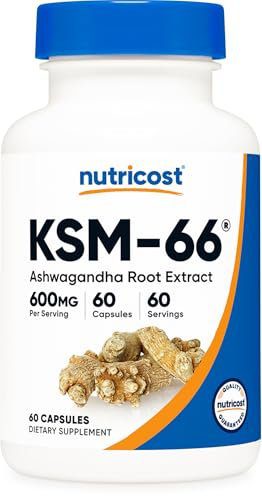
Nutricost Ashwagandha KSM-66 earns the pick for ashwagandha because it uses KSM-66, the extract with the strongest published trial record, at a disclosed 5% withanolide standardization. Skip if you are looking for Sensoril extract or need a certified-organic product.
Now Foods Rhodiola Rosea is a reasonable budget-accessible option with standardization labeling. Check the product label for rosavin and salidroside percentages before purchasing; the extract ratio matters for comparability to the Darbinyan and Olsson trial interventions (3% rosavins, 1% salidrosides). Skip if you want a third-party-tested certificate of analysis included in the product listing.
Gaia Herbs Magnolia Bark uses a phytochemical quality testing program and discloses their extraction method, which is more than most magnolia bark brands offer. Given the limited human RCT evidence for magnolia bark generally, buy-in should be proportionate to the evidence tier. Skip if you expect clinically meaningful anxiolysis backed by Phase III trials.
As an Amazon Associate, I earn from qualifying purchases. Product recommendations are based on real reviews and independent research.

Frequently asked questions {#faq}
Can adaptogens replace melatonin for shift workers?
No. Melatonin directly acts on the circadian timing system and has the most consistent evidence for helping shift workers fall asleep during day hours. Adaptogens address downstream stress physiology, not the master clock. The two are not competing in the same category, and using melatonin alongside rhodiola or ashwagandha is not contraindicated for most people.
How long before rhodiola starts working for night-shift fatigue?
In the Darbinyan 2000 trial, improvements in cognitive fatigue were measured after two weeks of daily dosing. Some participants in the Olsson 2009 trial reported subjective fatigue improvement at week two to three. If you see no effect after four weeks of standardized SHR-5-type rhodiola at the trial-comparable dose, it is unlikely to work for your fatigue pattern.
Is it safe to take ashwagandha before a day-shift sleep window?
The sleep-quality RCTs used twice-daily dosing rather than a single pre-sleep dose, so direct comparison is difficult. There is no clear harm signal from evening dosing in the trial data. For shift workers trying to sleep after a night shift, a dose at the start of your intended sleep opportunity is a reasonable experiment, provided you have no thyroid medication or sedative interactions.
Can I take rhodiola with my morning coffee on a day off?
Rhodiola has mild stimulating properties at typical doses. Adding it to an already-stimulated state from caffeine raises the risk of restlessness, elevated heart rate, or difficulty sleeping that night. On rest days, you may not need rhodiola at all, since the fatigue-reduction benefit is most relevant when you are actively working against your circadian clock.
Should shift workers cycle off adaptogens?
No clinical trial has tested cycling protocols specifically in shift-worker populations. Some practitioners suggest cycling rhodiola (five days on, two off) to avoid potential receptor downregulation, but this is not supported by human RCT evidence. If you take ashwagandha, clinical trials have used continuous dosing for up to 60 days without cycling.
Is magnolia bark sedating?
At doses used in small human studies (30mg to 100mg honokiol equivalent), magnolia bark appears anxiolytic without prominent sedation, which distinguishes it from melatonin or benzodiazepines. However, combining it with alcohol or other CNS depressants removes that margin. The sedation risk with combination use is real.
What is shift-work sleep disorder, and should I see a doctor?
Shift-work sleep disorder is a circadian rhythm sleep-wake disorder recognized by the American Academy of Sleep Medicine. Diagnostic criteria include significant insomnia or excessive sleepiness directly related to a shift-work schedule, with impaired functioning. If your symptoms fit, a sleep medicine evaluation is worth pursuing before reaching for supplements. Approved pharmacotherapy options exist that are not available over the counter.
Conclusion: the bottom line on adaptogens for shift workers {#conclusion}
The honest answer is that adaptogens are partial support, not solutions, for the physiological cost of working against your circadian clock. Rhodiola has the most directly relevant trial data for night-shift cognitive fatigue, with two reasonably well-designed RCTs showing real effects in physician night-duty populations. Ashwagandha has strong cortisol and sleep-quality evidence that maps usefully to daytime recovery sleep. Magnolia bark has a plausible mechanism and a real niche for pre-shift anxiety, but the human evidence floor is lower.
None of these replace the highest-leverage shift-work interventions: structured light management, consistent sleep scheduling, appropriately timed melatonin, and, if symptoms are severe, evaluation for shift-work sleep disorder.
If you choose to try these adaptogens, the drug interaction picture is specific and worth reading carefully, not skimming. Rhodiola plus caffeine, ashwagandha plus thyroid medication, and magnolia bark plus alcohol each carry real physiological risks that are not offset by the adaptogen's benefits.
Next steps:
- Read Best Adaptogens for Stress: A Practical Guide if you are still deciding whether adaptogens are worth trying for your stress pattern.
- If caregiver-related burnout compounds your shift-work fatigue, Adaptogens for Caregiver Stress addresses that overlap.
- See Morning vs Evening Adaptogens: When to Take Them for Maximum Effect for a more detailed breakdown of timing strategy beyond shift-work context.
- See Ashwagandha for Sleep: What the Evidence Actually Shows for a deeper dive into the sleep RCT data.
Related reading {#related-reading}
- Best Adaptogens for Stress: A Practical Guide
- Adaptogens for Caregiver Stress
- Morning vs Evening Adaptogens: When to Take Them for Maximum Effect
- Ashwagandha for Sleep: What the Evidence Actually Shows
This article is for informational purposes and not medical advice. Herbal adaptogens, even traditional ones, can interact with thyroid medication, antidepressants, anticoagulants, immunosuppressants, blood-pressure drugs, sedatives, and more. Shift-work sleep disorder is a recognized clinical diagnosis; if your symptoms significantly impair function or safety, consult a sleep medicine physician. Consult a licensed physician before starting any adaptogen, particularly if you are pregnant, nursing, taking prescription medications, or managing a chronic condition.
As an Amazon Associate, I earn from qualifying purchases. Product recommendations are based on real reviews and independent research.
This article is for informational purposes and not medical advice. Herbal adaptogens, even traditional ones, can interact with thyroid medication, antidepressants, anticoagulants, immunosuppressants, blood-pressure drugs, and more. Consult a licensed physician before starting any adaptogen, particularly if you are pregnant, nursing, taking prescription medications, or managing a chronic condition.
