
If you are typing "do adaptogens actually work" into a search bar, you are asking the right question. The honest answer is: some do, for specific outcomes, at specific doses, in specific populations — but the adaptogen category is broad enough that "adaptogens work" and "adaptogens don't work" are both technically defensible, depending on which herb and which claim you are evaluating. This master FAQ covers more than 30 questions real people ask — from basic definitions through drug interactions, specific herb profiles, stacking decisions, and what to look for on a supplement label. You will also get the answers that most adaptogen articles gloss over, including which interactions require a prescriber conversation, and why cycling protocols are based on plausible reasoning rather than controlled trials.
Affiliate disclosure: this article contains affiliate links. As an Amazon Associate, UsefulVitamins.com earns from qualifying purchases at no extra cost to you.
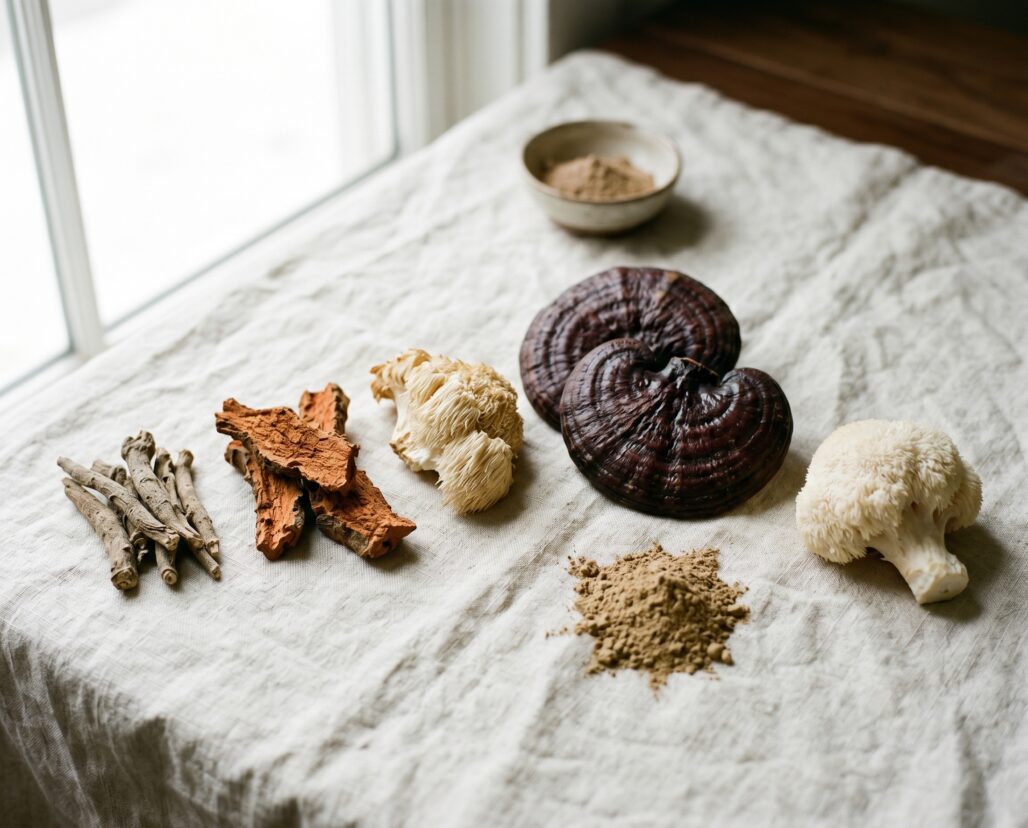
For a broader orientation to the field before diving into these Q&As, see our Complete Guide to Adaptogens: What the Evidence Actually Shows.
Summary / Quick Answer: should you take adaptogens?
Adaptogens are a real pharmacological category with meaningful RCT evidence for a handful of herbs — ashwagandha for chronic stress and cortisol, rhodiola for fatigue, lion's mane for mild cognitive support in older adults — but the marketing far outpaces the evidence for most products.
- Best for: Adults with chronic stress of three months or longer, documented fatigue without a resolved underlying cause, or interest in evidence-based cognitive support for aging; people who have already optimized sleep and caffeine habits and want to layer in herbal support
- Not ideal for: Anyone on thyroid medication, immunosuppressants, anticoagulants, or antidepressants without first consulting their prescriber; pregnant or nursing women; people expecting supplement-speed results (adaptogens typically require 4-8 weeks minimum)
- What to look at before buying: Extract standardization (KSM-66 or Sensoril for ashwagandha; SHR-5 for rhodiola; fruiting-body percentage for medicinal mushrooms); third-party testing certificate; absence of proprietary blend concealment
- Decision shortcut: If an adaptogen label lists only a genus name ("ashwagandha root, 500mg") without an extract name or marker-compound percentage, you cannot verify you are getting the dose used in clinical trials.
What you'll find here
- Definitions: what adaptogens are and aren't
- Safety and drug interactions
- Specific adaptogen profiles: ashwagandha, rhodiola, lion's mane, and more
- Combinations and stacking
- Quality and buying guidance
- Lifestyle and use-case guidance
Definitions: what adaptogens are and aren't {#definitions}
What is an adaptogen?
An adaptogen is a plant-derived compound (or compound mixture) that research suggests can modulate the stress-response axis — primarily the hypothalamic-pituitary-adrenal (HPA) axis — without disrupting normal physiological function. The concept was formalized in the 1940s-1960s by Soviet pharmacologist Nikolai Lazarev and later Brekhman and Dardymov, who defined three criteria: nontoxic at therapeutic doses, nonspecific in mechanism (works across stress types), and normalizing (reduces excess stress-response or lifts depressed function). Modern regulatory agencies like the FDA classify most adaptogens as dietary supplements, not drugs, meaning pre-market efficacy evidence is not required under the DSHEA framework.
Are adaptogens the same as nootropics?
No, though they overlap in marketing. Nootropics refer broadly to cognitive-enhancing compounds, including synthetics like piracetam or racetams. Adaptogens are a specific herbal subcategory emphasizing stress regulation. Some adaptogens — lion's mane, bacopa — have cognitive-support evidence and are marketed as nootropics. Most adaptogens (ashwagandha, rhodiola) are primarily stress and fatigue compounds with secondary cognitive benefits. The categories are not interchangeable.
Is an adaptogen the same as an herb?
Not exactly. All adaptogens are derived from botanicals (or fungi), but not all herbs are adaptogens. Ginger and turmeric are herbs with anti-inflammatory evidence; they are not classified as adaptogens under the Lazarev/Brekhman criteria because their primary mechanism is not HPA-axis modulation. Medicinal mushrooms (lion's mane, reishi, cordyceps) occupy a middle category — technically fungi, not herbs, but classified as adaptogens based on their stress-modulation mechanisms and traditional use in TCM as tonics.
What does "standardized extract" mean on a supplement label?
Standardization means the manufacturing process concentrates a specific active marker compound to a declared minimum percentage. For ashwagandha, the marker is withanolides; KSM-66 is standardized to minimum 5% withanolides from root only. For rhodiola, the markers are rosavins and salidrosides; SHR-5 is standardized to 3% rosavins and 1% salidroside. For lion's mane, the marker is beta-glucans from fruiting body. Standardization matters because raw root powder and mycelium-on-grain products have highly variable marker-compound concentrations — and trials used specific extracts at specific concentrations. Buying a non-standardized product and expecting trial-equivalent results is not a safe assumption.
What is the HPA axis and why do adaptogens target it?
The HPA axis (hypothalamic-pituitary-adrenal) is the hormonal feedback loop that governs the stress response. Under stress, the hypothalamus signals the pituitary, which signals the adrenal glands to release cortisol. In acute stress, this is protective. In chronic stress, the loop stays activated: cortisol stays elevated, which suppresses immune function, disrupts sleep architecture, impairs hippocampal volume, and contributes to insulin resistance over time. Adaptogens with HPA-axis evidence — primarily ashwagandha and rhodiola — appear to modulate the setpoint of this loop rather than simply suppressing cortisol output. Think of it like recalibrating a thermostat that is stuck on high: the goal is a better setpoint, not turning off the heater.
Safety and drug interactions {#safety-interactions}
Are adaptogens safe?
Most well-studied adaptogens — ashwagandha, rhodiola, lion's mane — have good short-term safety profiles at clinical-trial doses, with adverse events typically mild (GI upset, headache, occasional vivid dreams). But "herbal" does not mean "safe for everyone." The NCCIH ashwagandha fact sheet documents thyroid and autoimmune interaction risks that require prescriber awareness. Rhodiola can have additive stimulant effects. Licorice root at sustained doses can raise blood pressure meaningfully. Safety depends entirely on which adaptogen, what dose, what extract, and what your individual health context is.
Can adaptogens interact with prescription medications?
Yes, and this is the most underreported risk in adaptogen marketing. Key documented interactions include:
Ashwagandha: May suppress TSH (thyroid-stimulating hormone), creating a false-low reading that can lead to under-treatment of hypothyroidism. Per Memorial Sloan Kettering's integrative herbs database, withanolides can modulate immune function, creating interaction risk with immunosuppressants (tacrolimus, cyclosporine, biologics). May potentiate sedative medications.
Rhodiola rosea: May have additive effects with stimulants (caffeine, ADHD medications) due to monoamine reuptake inhibition. The NCCIH rhodiola overview notes theoretical interaction with antidepressants (SSRIs, MAOIs) via monoaminergic mechanisms.
Panax ginseng: Documented interaction with warfarin (INR fluctuation). May interact with diabetes medications (additive blood-glucose lowering). Avoid with MAOIs.
Holy basil (tulsi): May potentiate blood-thinning medications and affect blood glucose regulation. Thyroid interaction risk similar to ashwagandha.
Schisandra: Inhibits CYP3A4, the enzyme that metabolizes a large number of prescription drugs. This creates the potential for elevated blood levels of any CYP3A4-substrate medication.
For a full interaction reference, see Adaptogens and Medications: What You Need to Know Before Combining.
Actionable takeaway: If you take any prescription medication daily, consult your prescriber before starting an adaptogen. This is not a formality. The interactions above are documented, not theoretical.
Can I take adaptogens if I'm pregnant or breastfeeding?
Most adaptogens lack adequate human safety data for pregnancy. Ashwagandha in particular has uterotonic effects documented in animal studies — the NCCIH ashwagandha fact sheet advises against use in pregnancy. The same absence-of-data caution applies to rhodiola, lion's mane, cordyceps, and most medicinal mushrooms. Absence of evidence is not evidence of safety. The conservative position is to avoid adaptogens during pregnancy and lactation unless a prescriber with knowledge of your specific situation clears it.
Can I take adaptogens if I have an autoimmune condition?
With caution, and only after discussing with your managing physician. Ashwagandha (withanolides), astragalus (polysaccharides), and reishi (beta-glucans) have immune-modulating mechanisms that could theoretically interfere with immunosuppressant therapy — biologics, DMARDs, or corticosteroids. Lion's mane and rhodiola have less pronounced immunostimulant profiles, but prescriber clearance is still warranted.
Can children take adaptogens?
Clinical trials for most adaptogens have been conducted in adults. There are no well-designed pediatric RCTs for ashwagandha, rhodiola, or medicinal mushrooms. Without safety and dosing data for developing bodies, the default position is to avoid adaptogen supplementation in children. Some cultures use adaptogen-containing foods (reishi tea, astragalus broth) at low levels without reported harm, but concentrated extracts at adult doses are a different exposure profile.
Do adaptogens cause liver damage?
Isolated case reports of liver injury have been associated with ashwagandha use. A 2023 case series published in LiverTox (the NIH clinical toxicology database) documented idiosyncratic hepatotoxicity in patients taking ashwagandha supplements, typically resolving after discontinuation. The incidence appears low and the mechanism unclear, but it reinforces the point: "herbal" does not mean metabolically inert for the liver. If you develop jaundice, dark urine, or unexplained fatigue after starting an adaptogen, stop use and consult a physician.
Can adaptogens affect thyroid function?
Ashwagandha has shown TSH-suppressing effects in some studies. A 2017 RCT (Sharma et al., n=50) found that 600mg KSM-66 daily for 8 weeks significantly elevated T3 and T4 levels in subclinical hypothyroid patients — which is potentially helpful for some individuals but a risk for anyone already on levothyroxine or managing hyperthyroid conditions. Holy basil and eleuthero also carry thyroid interaction signals per MSK integrative herbs data. If you are on any thyroid medication, discuss with your prescriber before adding ashwagandha or holy basil.
How do I know if I'm having an adverse reaction to an adaptogen?
Stop the supplement and track which symptoms appeared after starting. Low-grade effects that typically resolve: GI upset, mild headache, vivid dreams. More serious signals that warrant physician contact: jaundice, unexplained liver-enzyme elevation, significant mood changes, allergic reaction (rash, throat tightening), or blood pressure changes. With multi-ingredient adaptogen stacks it is difficult to isolate the cause — another reason to start single-ingredient products.
Specific adaptogen profiles {#specific-adaptogens}
Does ashwagandha actually reduce cortisol?
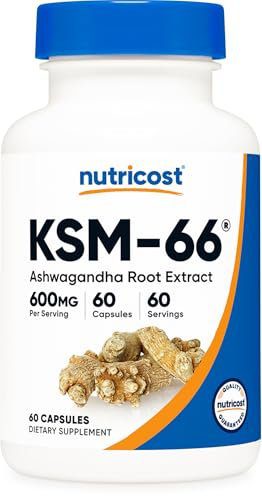
In clinical trials, yes — with the caveat that the data is strongest for KSM-66 at standardized doses. The reference trial is a 2012 placebo-controlled RCT (Chandrasekhar et al., n=64): adults with chronic stress given KSM-66 ashwagandha 300mg twice daily for 60 days showed a 28% reduction in serum cortisol versus a 7% reduction in placebo. A 2019 RCT (Salve et al., n=60) replicated the directional cortisol effect at 240mg/day. The real question is not whether ashwagandha reduces cortisol in RCTs — it does — it's whether the product you're buying delivers the extract used in those trials.
What is the difference between KSM-66 and Sensoril ashwagandha?
Both are proprietary ashwagandha extracts with clinical evidence, but they differ in plant part and withanolide content. KSM-66 uses root only, standardized to minimum 5% withanolides. Most cortisol and stress trials — including Chandrasekhar 2012 — used KSM-66. Sensoril uses both root and leaf, standardized to minimum 10% withanolides, and has evidence for sleep quality and memory. If your primary goal is stress and cortisol, KSM-66 has the stronger evidence base. For sleep support, Sensoril's evidence is comparable. Generic "ashwagandha root extract" without either brand name tells you nothing about what you are getting.
Does rhodiola actually work for fatigue?
One RCT has reasonably good evidence. A 2009 Phase III randomized controlled trial (Olsson et al., n=60) using the SHR-5 rhodiola extract (576mg/day for 28 days) showed statistically significant improvement on the Multidimensional Fatigue Inventory in adults with burnout-related fatigue compared to placebo. An important limitation: the study was industry-supported. A separate RCT in medical students found rhodiola reduced fatigue during examination stress at lower doses, supporting a fatigue-related benefit in cognitive-demand contexts. The evidence suggests rhodiola can meaningfully reduce fatigue related to prolonged cognitive demand — but traditional use is not the same as RCT evidence, and the evidence base is thinner than for ashwagandha.
What is lion's mane actually proven to do in humans?
The strongest human data is for mild cognitive support in older adults with early subjective memory decline. A 2009 randomized, double-blind, placebo-controlled trial (Mori et al., n=30) found that older Japanese adults taking 1,000mg of Hericium erinaceus fruiting body powder daily for 16 weeks performed significantly better on cognitive function scales than placebo, with benefits lost after supplementation stopped. A 2010 trial (Nagano et al., n=30) found reduced anxiety and depression in a menopause cohort. In animal models, lion's mane stimulates nerve growth factor (NGF) — but the human dose needed to replicate that mechanism is not confirmed. Lion's mane's NGF effect is more like fertilizer for an existing plant than a transplant: it does not regenerate damaged neurons; it may support maintenance and connectivity over time. Claims that it "reverses" dementia or "regrows" myelin are not supported by human trial data.
Is reishi worth taking for sleep?
The human evidence for reishi and sleep is limited. Most cited sleep claims trace to a 2019 animal study. The strongest human reishi trial is a 2005 RCT (Tang et al., n=132) showing reduction in neurasthenia symptoms (fatigue, insomnia, anxiety) with the Ganopoly extract — but neurasthenia is a broader clinical construct, not a validated sleep endpoint. If your primary goal is sleep quality, ashwagandha (KSM-66 has sleep-specific trial data in the Salve 2019 RCT) has more relevant human evidence than reishi. Reishi may be worth including in a broader immune-and-recovery context, not as a primary sleep supplement.
Does cordyceps actually improve exercise performance?
One small, well-controlled trial showed a meaningful effect. A 2017 randomized crossover trial (Hirsch et al., n=28) using Cordyceps militaris (not sinensis) at 4,000mg/day for 3 weeks found a significant increase in VO2 max compared to placebo. The trial used a synthetic Cordyceps militaris product, not the traditional Ophiocordyceps sinensis (which is a different species and far more expensive). Most cheap "cordyceps" products use mycelium grown on grain substrate, not fruiting body — the beta-glucan content and adenosine content, which are hypothesized to drive the performance effect, differ substantially. If you are evaluating cordyceps for exercise performance, the Hirsch 2017 trial used CS-4 (fermented Cordyceps militaris), not a random mycelium-on-grain extract.
How is eleuthero different from Panax ginseng?
Eleuthero (Eleutherococcus senticosus, often called Siberian ginseng) is not botanically related to Panax ginseng. The shared "ginseng" label is marketing, not taxonomy. Eleuthero's active compounds are eleutherosides, not ginsenosides, and they have a different mechanism. Eleuthero appears in the ADAPT-232 combination studied by Panossian and colleagues (PMID 20374974), showing cognitive and stress-reduction effects in a triple-herb combination with rhodiola and schisandra. Solo eleuthero human RCT data is thinner than for Panax ginseng. Both have thyroid and anticoagulant interaction concerns per NCCIH data, so the same medication precautions apply.
What is holy basil (tulsi) actually used for?
Primarily stress and glycemic regulation based on small human trials. One RCT in type 2 diabetic patients found holy basil leaf extract reduced fasting and postprandial glucose versus placebo. An earlier trial (Bhattacharyya 2008, PMID 19253862) in a larger cohort (n=158) showed stress-symptom reduction. Holy basil has meaningful blood-thinning and blood-glucose effects that interact with anticoagulants and diabetes medications. It also carries thyroid interaction risk (documented by MSK integrative herbs database). "Tulsi tea" from dried leaves is a lower-dose exposure than concentrated extracts, but concentrated-extract supplements should not be used alongside the medications above without prescriber clearance.
Combinations and stacking {#combinations-stacking}
Can I take multiple adaptogens at once?
Technically yes, but the rationale for doing so is often weaker than the marketing suggests. The best-studied combination is ADAPT-232, which combines rhodiola, eleuthero, and schisandra. Outside of specifically tested combinations, stacking assumes an additive or synergistic effect that has not been verified in human trials. More adaptogens also means more potential for drug interactions and harder-to-trace adverse effects if something goes wrong. A practical approach: start with the single adaptogen most relevant to your primary goal, use it for 8-12 weeks, then add a second if needed with a clear reason. That said, ashwagandha plus rhodiola is a common combination where the mechanisms are complementary (HPA-axis modulation versus monoamine-pathway fatigue reduction), and there are no documented negative interactions between them in healthy adults.
Can I stack adaptogens with caffeine?
Rhodiola has stimulant-like properties via monoamine reuptake modulation. High caffeine intake (more than 400mg/day) stacked with rhodiola can produce excess stimulation — jitteriness, elevated heart rate, impaired sleep. Ashwagandha's calming-cortisol profile is more compatible with caffeine; a morning combination is commonly used without adverse effects. If you already experience anxiety from caffeine, adding rhodiola or panax ginseng will likely worsen it.
Actionable takeaway: Rhodiola and panax ginseng are stimulant-adjacent. Ashwagandha and reishi are calming-adjacent. Evaluate each adaptogen's profile before stacking with caffeine.
Can I take adaptogens with a pre-workout supplement?
Check the pre-workout ingredient list first. Many pre-workouts contain panax ginseng, eleuthero, or rhodiola already — adding standalone adaptogens on top creates unknown combined doses with no human-trial precedent. Many pre-workouts also contain 200-400mg caffeine, which amplifies the stimulant-adjacent effects of rhodiola, ginseng, and eleuthero. The safest approach is to view adaptogens and pre-workouts as separate categories with separate timing windows: adaptogens as a sustained daily supplement taken at a consistent time, pre-workouts used only around training sessions.
Do adaptogens need to be cycled?
No human RCT has tested cycling protocols for adaptogens. The recommendation to cycle (e.g., 5 days on, 2 days off; or 8 weeks on, 2 weeks off) comes from traditional herbalist practice and the plausible reasoning that receptor downregulation occurs with sustained use. Whether this happens with standardized adaptogen extracts at clinical-trial doses has not been tested in controlled conditions. Some practitioners advise cycling as a precaution; others note that stress-reduction effects in trials were maintained over 8-12 weeks of daily use without tolerance signals. The honest answer is that cycling may or may not matter, and nobody has tested it rigorously.
Quality and buying guidance {#quality-buying}
How do I know if an adaptogen supplement is high quality?
Three things matter more than price or label design. First, is the extract named (KSM-66, Sensoril, SHR-5, Real Mushrooms fruiting body) and does it match the extract studied in clinical trials? Second, is the marker-compound percentage disclosed (withanolides %, beta-glucans %, rosavins %)? Third, is there a third-party certificate of analysis (COA) from an independent lab like NSF International, USP, or Informed Sport? Independent testing from ConsumerLab's adaptogen review has found wide variation in withanolide and beta-glucan content across ashwagandha and lion's mane brands — a product can pass a label claim of "500mg ashwagandha" and still contain negligible withanolides.
For lion's mane specifically, the critical question is fruiting body versus mycelium on grain. Most cheap lion's mane products use mycelium grown on oat grain substrate, which carries the grain's starch composition rather than the mushroom's active beta-glucans and erinacines. Buying mushroom supplements without checking fruiting-body content is like buying olive oil labeled "Mediterranean blend" — the label tells you everything except what's in it.
Actionable takeaway: Ask for the COA before purchasing any adaptogen. Any reputable company makes this available on its website or upon request. No COA is a signal to find a different brand.
What should I look for on the "Supplement Facts" label?
For ashwagandha: the extract name (KSM-66 or Sensoril), withanolide percentage (minimum 5%), and whether it is root-only or root-and-leaf. For rhodiola: the extract identifier (SHR-5 or equivalent), rosavins percentage (3%), and salidroside percentage (1%). For lion's mane: "fruiting body" in the description, beta-glucan percentage (preferably 30% or higher), and absence of "mycelium" language. For any supplement: avoid "proprietary blend" language that conceals individual ingredient doses. The term "proprietary blend" means the manufacturer is not required to disclose individual amounts — which makes it impossible to evaluate whether you are getting effective doses of any listed ingredient.
Why does the same adaptogen vary so much in price?
Primarily extract standardization costs and sourcing quality. KSM-66 is a licensed extract with specific processing requirements; lion's mane fruiting body requires longer cultivation than mycelium-on-grain; third-party testing adds overhead. A $9 and a $45 ashwagandha can both label "500mg root extract" — the difference is withanolide content and testing verification. Per Labdoor's adaptogen testing, significant labeling accuracy failures have been found in budget brands. Price alone does not guarantee quality, but implausibly cheap products almost never deliver the validated extracts.
Lifestyle and use-case guidance {#lifestyle-use-case}
When is the best time of day to take adaptogens?
Timing depends on the herb's effect profile. Ashwagandha, particularly Sensoril, has been studied in PM dosing for sleep support. KSM-66 has been studied in AM and split AM/PM dosing for stress. Most rhodiola trials used AM dosing (rhodiola's stimulant-adjacent properties make PM dosing potentially sleep-disruptive). Lion's mane has no clear timing dependency from trial data; most studies used consistent daily AM dosing. The practical rule: take stimulant-adjacent adaptogens (rhodiola, panax ginseng) in the morning; take calming-adjacent adaptogens (ashwagandha, reishi) in the evening or split between AM/PM.
How long before adaptogens work?
This depends on the herb and the outcome. In the Chandrasekhar 2012 ashwagandha trial, cortisol biomarker change was measured at 60 days. Subjective stress relief in some participants was noted by week 4. In the Olsson 2009 rhodiola trial, multidimensional fatigue scores showed improvement at 4 weeks. For lion's mane cognitive effects, the Mori 2009 trial ran 16 weeks before significant differences appeared, and benefits returned to baseline 4 weeks after stopping. The general expectation: 4 weeks for early subjective signal, 8-12 weeks for meaningful measurable effects, with the caveat that if you see nothing at 8 weeks on a standardized, trial-equivalent product, it is likely not going to work for you.
Can adaptogens help with burnout?
Burnout has overlapping features with the cortisol-dysregulation model that ashwagandha and rhodiola address: chronic fatigue, emotional exhaustion, cognitive fog, disrupted sleep. The rhodiola Olsson 2009 trial specifically recruited adults with burnout-pattern fatigue. That said, burnout has social, occupational, and psychological dimensions that no supplement addresses. Adaptogens may support the physiological recovery component — particularly if you have already made structural changes to the stressor itself. Using rhodiola or ashwagandha while continuing to work 70-hour weeks under the same conditions will likely produce modest results. The herb cannot outpace the stressor. For a deeper look at this dynamic, see Adaptogens for Burnout: Where the Evidence Starts and Stops.
Are adaptogens useful for people over 60?
The lion's mane cognitive data (Mori 2009) was conducted specifically in adults 50-80 with mild cognitive impairment, making it among the most directly relevant adaptogen evidence for this demographic. Ashwagandha has stress and sleep evidence in middle-aged populations. For adults over 60, the interaction profile matters most because polypharmacy is more common — anticoagulants, thyroid drugs, blood pressure medications, and diabetes drugs all have documented interaction risks with specific adaptogens. Adaptogens are not categorically off-limits for older adults, but the herb-by-herb interaction review with your prescriber is non-negotiable before starting.
Should I take adaptogens if I am just situationally stressed?
Probably not as a first step. The RCT evidence for ashwagandha and rhodiola was conducted in people with chronic stress (three months or longer) or documented occupational fatigue — not in people handling a work deadline or exam period. Situational stress resolves with the situation. That may be appropriate for occupational stress, but unnecessary for situational anxiety. Behavioral approaches (sleep, exercise, breathing) address acute stress faster than adaptogens, which require 4-8 weeks minimum to show measurable effects.
Related reading
- Complete Guide to Adaptogens: What the Evidence Actually Shows
- How to Buy Adaptogens: A Quality Checklist for Anyone Reading Labels
- Adaptogens and Medications: What You Need to Know Before Combining
- Adaptogens Side Effects Master List
- Are Peptides Safe? What the Clinical Evidence Says About Risk
As an Amazon Associate, I earn from qualifying purchases. Product recommendations are based on real reviews and independent research.
This article is for informational purposes and not medical advice. Herbal adaptogens — even traditional ones — can interact with thyroid medication, antidepressants, anticoagulants, immunosuppressants, blood-pressure drugs, and more. Consult a licensed physician before starting any adaptogen, particularly if you are pregnant, nursing, taking prescription medications, or managing a chronic condition.
As an Amazon Associate, I earn from qualifying purchases. Product recommendations are based on real reviews and independent research.
This article is for informational purposes and not medical advice. Herbal adaptogens, even traditional ones, can interact with thyroid medication, antidepressants, anticoagulants, immunosuppressants, blood-pressure drugs, and more. Consult a licensed physician before starting any adaptogen, particularly if you are pregnant, nursing, taking prescription medications, or managing a chronic condition.
