
Affiliate disclosure: this article contains affiliate links. As an Amazon Associate, UsefulVitamins.com earns from qualifying purchases at no extra cost to you.
Why people pair these two for sleep
Magnesium and melatonin do different jobs, which is why stacking them feels logical. Melatonin is the timing signal your brain uses to say "night is starting," so a small dose can nudge you toward sleep a bit earlier. Magnesium is a mineral your body uses in hundreds of reactions, and a few small trials suggest it may take some edge off restless nights.
The honest framing matters here. These are not two sleeping pills working through the same channel. They are a gentle timing cue plus a mineral that some people find calming, so the "interaction" most people notice is just being a little more relaxed and a little more ready for bed.
That is also why so many products bundle them. A typical nighttime capsule pairs a low dose of melatonin with a magnesium salt, and that combination is generally well tolerated. The cautions below are mostly about dose, form, and a handful of people who should check first.
What the research actually shows
For melatonin, the strongest signal is for sleep timing, not for fixing chronic insomnia. The 2017 American Academy of Sleep Medicine clinical practice guideline issued only a weak recommendation against using melatonin for ongoing insomnia, and pointed clinicians toward cognitive behavioral therapy as the first-line approach. So melatonin is a reasonable short-term nudge, not a cure.
Magnesium's sleep evidence is thinner and softer. A systematic review of older adults with insomnia found people fell asleep roughly 17 minutes faster on magnesium than placebo, but the authors called the overall evidence low to very low quality. Useful, possibly. Dramatic, no.
Put together, the realistic expectation is modest. If the combo helps you wind down and drift off a little sooner, that is a win worth keeping. If you are chasing a deep fix for months of broken sleep, the supplements are not the answer and a clinician is.

The side effects worth knowing about
Most issues people report come from one of the two ingredients, not from a true clash between them. Knowing which is which makes them easy to manage.
From melatonin
The classic complaints are vivid dreams, morning grogginess, headache, and dizziness, and per the Sleep Foundation's dosing guidance they show up far more often at higher doses than at the 0.5 to 1 mg most people actually need. Bigger is not better with melatonin.
If you wake up foggy, the usual fixes are to lower the dose or take it earlier in the evening. Slow-release formulas are more likely to leave a next-day hangover than a small immediate-release dose.
From the magnesium
Magnesium's signature side effect is loose stools or mild cramping, and that is dose- and form-dependent. The cheap forms like magnesium oxide and citrate pull water into the gut, which is why they can loosen things up. Magnesium glycinate and malate are gentler on the stomach, which is exactly why they get recommended for nighttime use.
From the two together
The real combined effect is additive drowsiness. That is the point at bedtime, but it becomes a caution the moment other sedating substances enter the picture (more on that below). On its own, in a healthy adult at sensible doses, the pairing rarely causes anything beyond the individual effects above.
Sensible doses and timing
Getting the doses and clock right removes most of the trouble before it starts. Here is a realistic starting protocol you can adjust.
| Step | What to take | When | Why |
|---|---|---|---|
| Magnesium | Magnesium glycinate, a modest dose with food | With your evening meal, 1 to 2 hours before bed | Food and a gentle form lower the chance of loose stools |
| Melatonin | Low-dose melatonin, around 0.5 to 1 mg | 30 to 60 minutes before lights out | Small doses cue sleep timing with less grogginess and fewer vivid dreams |
| Review | Same routine, then reassess | After 1 to 2 weeks | If it is not helping, more is not the fix; rethink the routine |
The single number to respect is the magnesium ceiling. The NIH Office of Dietary Supplements sets the tolerable upper intake level for supplemental magnesium at 350 mg/day for adults. That limit is built around the diarrhea threshold, and it applies to pills, not to the magnesium in your food.
To stay under it, read the elemental magnesium number on the label, not the total compound weight. A "500 mg magnesium glycinate" capsule may deliver far less actual magnesium than 500 mg, so the math is easy to misjudge. To pin down your own number rather than guess, run it through our magnesium dose calculator, which handles the elemental conversion for you.
Timing the dose is its own small skill. If you are unsure whether to take magnesium with dinner or right at bedtime, our guide on when to take magnesium for sleep walks through the trade-offs.

Who should check with a clinician first
This is where the "generally fine" answer gets specific. A few situations move this from a casual self-care choice to a conversation with a professional.
- You take sedatives or prescription sleep aids. Melatonin can add to the sedation of benzodiazepines, Z-drugs like zolpidem, opioids, and alcohol, as drug-interaction references flag. Combining them can mean more drowsiness, more cognitive fog, and a higher fall risk, so loop in a pharmacist.
- You have kidney disease. Your kidneys clear magnesium. With reduced kidney function, magnesium can build up toward hypermagnesemia, a genuinely dangerous state, so the 350 mg framing does not apply the same way and a doctor should weigh in.
- You take blood thinners or have epilepsy. NCCIH notes melatonin users in these groups should be under medical supervision.
- You are pregnant or breastfeeding. There is simply not enough safety research, so route this to a doctor rather than self-dosing.
- It is for a child. Pediatric melatonin should go through a clinician, partly because of a documented rise in accidental ingestions in kids.
None of this means the combo is dangerous for the average healthy adult. It means a handful of people have a real reason to ask first, and asking costs nothing.
A signal you should not ignore
Here is the part the supplement aisle will not tell you. If you find yourself reaching for melatonin and magnesium every single night for months just to fall asleep, that is information, not a routine to optimize.
The supplements treat the symptom, not the cause. Chronic trouble sleeping can point to stress, an irregular schedule, sleep apnea, restless legs, or another condition that a sleep aid quietly papers over. Per the NCCIH melatonin overview, major sleep guidelines do not endorse melatonin as a long-term insomnia treatment, and they favor behavioral approaches that actually fix the underlying problem.
A practical rule: if the combo helps for an occasional rough patch or jet lag, fine. If you have leaned on it nightly for a couple of months, that is your cue to see a doctor about the sleep itself.

Which form to buy
The product that makes this combo easy is mostly about form, not brand hype. For magnesium, the gentler glycinate matters more than the price on the tub. For melatonin, a genuinely low dose beats a high one, and many sold-together pills overshoot at 5 or 10 mg.
If you want to compare the two ingredients head to head before deciding what to stack, our breakdown of magnesium versus melatonin for sleep is the place to start, and our shortlist of the best melatonin supplement leans toward sensible, low-dose options.
A quick buying checklist:
- Magnesium: choose glycinate (or malate) for the gentlest stomach, and check the elemental dose.
- Melatonin: start at 0.5 to 1 mg; if a combo pill only comes at 3, 5, or 10 mg, that is too much for most people. Our look at whether 10 mg of melatonin is too much explains why.
- Combo products: convenient, but confirm both doses are reasonable rather than assuming the formulator got it right.
UsefulVitamins is reader-supported. We may earn a commission from purchases made through the links below, at no extra cost to you.


As an Amazon Associate, UsefulVitamins.com earns from qualifying purchases at no extra cost to you.
FAQ
Can I take magnesium and melatonin at the same time? For most healthy adults, yes, and they are often combined in one nighttime pill. Many people find it easiest to take magnesium with dinner and the melatonin closer to bedtime, but taking them together is generally well tolerated.
How much melatonin should I take with magnesium? A low dose of around 0.5 to 1 mg taken 30 to 60 minutes before bed works for most people. Higher doses raise the odds of vivid dreams and morning grogginess without reliably improving sleep.
Will the combination make me groggy in the morning? It can if the melatonin dose is too high or taken too late, since melatonin is the more likely culprit. Lowering the dose or shifting it earlier in the evening usually fixes the fog.
Is it safe to take this combo every night long-term? Short-term use looks safe for most people, but long-term data is limited and sleep guidelines do not endorse melatonin as an ongoing insomnia fix. Needing it nightly for months is a reason to see a doctor about the underlying sleep problem.
Can I take it with my prescription sleep medication? Not without checking first. Melatonin can add to the sedation of sleep meds, benzodiazepines, and alcohol, so a pharmacist or doctor should review the combination before you mix them.
Which magnesium form is least likely to upset my stomach? Magnesium glycinate and malate tend to be gentler than oxide or citrate, which are more likely to loosen stools. Taking magnesium with food also helps.
The bottom line
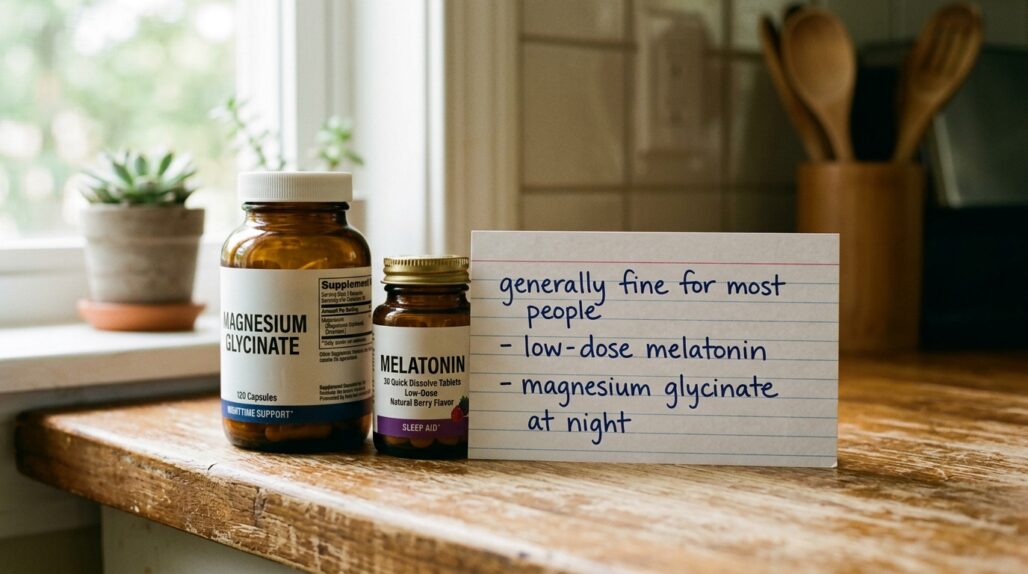
For a healthy adult, taking magnesium and melatonin together is generally fine, and pairing a gentle magnesium form with a small melatonin dose is a reasonable short-term sleep nudge. Keep supplemental magnesium under the 350 mg/day upper limit, keep melatonin around 0.5 to 1 mg, and treat the combo as a tool for rough patches rather than a permanent crutch.
The real cautions are narrow but worth respecting: sedatives, kidney disease, blood thinners, pregnancy, and children all deserve a professional's input first. And if you need this stack every night for months, that is your signal to stop optimizing the supplement and start asking why your sleep needs propping up.
This article is general education, not medical advice, and it is not a substitute for a diagnosis or guidance from your own clinician. Do not start, stop, or change any prescription or supplement without talking to a pharmacist or doctor, especially if you are pregnant, take other medications, or have a health condition.
Reviewed by the UsefulVitamins Editorial Team.
