
If you're looking at chaga for immune support, the honest answer is: the lab data is genuinely striking, but there is currently no published placebo-controlled RCT in healthy humans demonstrating that oral chaga supplementation improves immune function — and there is a serious safety risk most sellers bury in footnotes. This article breaks down what the in vitro and animal evidence actually shows, why that evidence does not automatically translate to human benefit, what the available human studies do and do not cover, and why people with kidney disease or a history of kidney stones need to know about chaga's exceptionally high oxalate content before they brew a single cup. You'll also get the drug-interaction profile and a clear-eyed look at what to ask before spending money on chaga products.
Affiliate disclosure: this article contains affiliate links. As an Amazon Associate, UsefulVitamins.com earns from qualifying purchases at no extra cost to you.
Summary / Quick Answer: does chaga support immune function?
The in vitro evidence for chaga's antioxidant and immune-modulating activity is strong; the human evidence for immune benefit in healthy adults is essentially absent as of 2026.
- Best for: Adults curious about chaga's evidence base who want an honest accounting; people researching functional mushrooms for general wellness who understand the limits of current data; anyone interested in chaga tea as a low-risk beverage (in the absence of the contraindications listed below)
- Not ideal for: People with kidney disease, a history of kidney stones (particularly calcium oxalate stones), or on anticoagulant therapy (warfarin/heparin); anyone substituting chaga for oncology treatment; anyone expecting immune-function benefits comparable to what in vitro data implies
- What to look at before buying: Whether the product discloses beta-glucan content and has third-party testing; whether the vendor acknowledges oxalate content; whether you have any of the contraindicated conditions
- Decision shortcut: If a chaga brand leads with "clinically proven immune support" without citing a specific human RCT in healthy adults, that claim is not supported by current published evidence — the clinical work that exists used chaga in cancer patients as an adjunct, not in healthy adults as a standalone intervention
What you'll find in this guide
- What chaga is and where the active compounds come from
- What in vitro and animal studies show
- Human studies: what was actually tested and in whom
- Who should avoid chaga entirely
- Side effects and drug interactions, including the oxalate kidney risk
- Dosing context from available studies
- Product picks
- Frequently asked questions
What chaga is, and where the active compounds come from {#what-chaga-is}
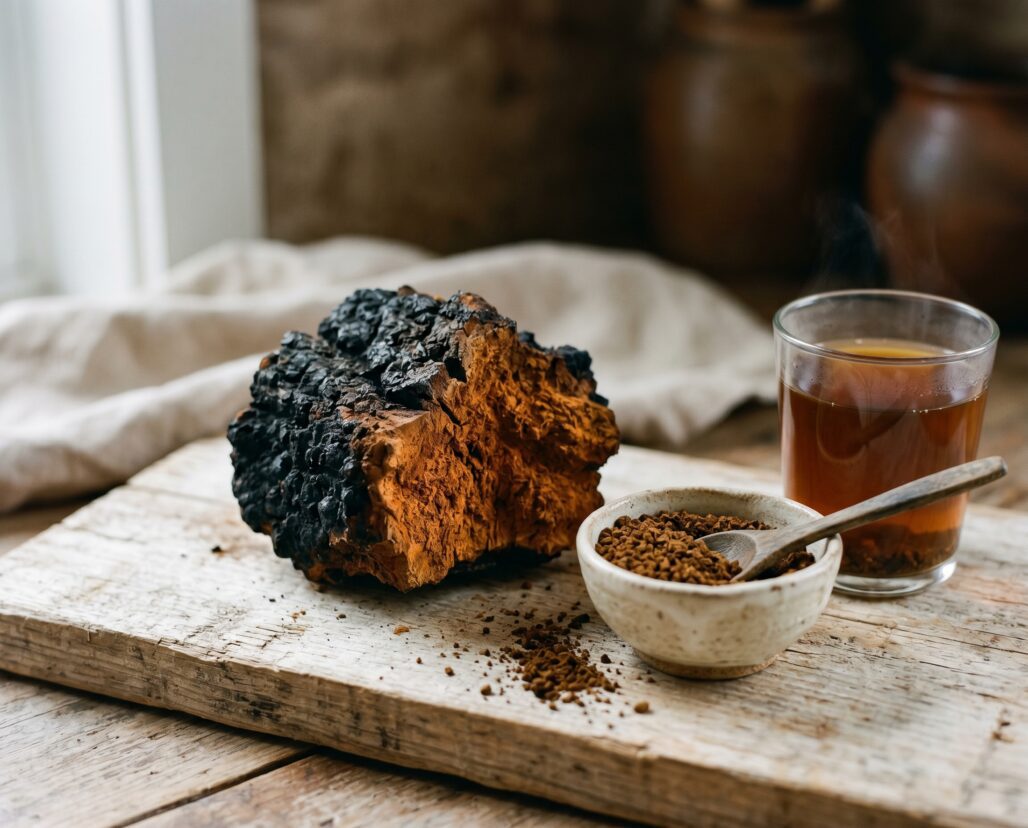
Chaga (Inonotus obliquus) is a parasitic fungus that grows predominantly on birch trees across northern boreal forests — Siberia, Canada, Scandinavia, and Alaska. What looks like a black woody canker on the tree exterior is not the fruiting body (the reproductive structure that produces spores); it is a sterile mycelial mass called a sclerotium. The true fruiting body of chaga is rarely encountered and seldom used commercially. This distinction matters for anyone comparing chaga to medicinal mushrooms like lion's mane or reishi, where the "fruiting body vs mycelium" debate is central to quality assessment. With chaga, essentially all commercial products use the sclerotium.
The primary active compounds that researchers have focused on are:
- Betulinic acid and betulin: Derived from the birch bark chaga parasitizes. Both have been studied for cytotoxic activity in cell cultures.
- Beta-D-glucans: Polysaccharides with documented immune-modulating activity in controlled studies using other medicinal mushrooms; chaga contains beta-glucans but at variable concentrations depending on growing substrate and extraction method.
- Inotodiol and other lanostane-type triterpenoids: Associated with antioxidant and anti-inflammatory activity in cell cultures.
- Melanin-derived pigments: Responsible for chaga's near-black coloration; high ORAC antioxidant values in vitro are partly attributable to these pigments.
Think of the relationship between these compounds and immune function the way you'd think about a promising laboratory reagent and a clinical drug: the reagent may behave exactly as predicted in a controlled cell culture, and still have no meaningful activity when swallowed, absorbed through the gut, and distributed through the bloodstream at the concentrations a realistic oral dose delivers. The gap between those two contexts is where chaga's evidence base currently sits.
Actionable takeaway: Ask any chaga product whether it discloses beta-glucan content specifically. A product labeled "chaga extract" without a beta-glucan percentage is giving you no usable information about the active fraction you are actually consuming.
What the in vitro and animal studies show {#in-vitro-animal-evidence}
The laboratory evidence for chaga's biological activity is substantial. A 2010 study published in Bioresource Technology (Zheng et al., 2010) characterized chaga polysaccharides and found significant antioxidant activity in cell-free assays. A 2005 study in Phytomedicine (Kim et al., 2005) reported that chaga-derived polysaccharides enhanced natural killer (NK) cell activity and macrophage function in mouse models.
On the antitumor side, betulinic acid and chaga extracts have shown cytotoxic activity against several cancer cell lines in vitro. A 2009 study in World Journal of Gastroenterology (Géry et al., 2018) found antiproliferative activity in colorectal cancer cell lines. These findings are cited by nearly every chaga brand in existence.
Here is the critical framing that the supplement industry routinely omits: in vitro cytotoxicity means a compound kills cells in a dish. Cancer research uses in vitro cell lines as an early screening tool, not as evidence of clinical efficacy. The vast majority of compounds that kill cancer cells in vitro fail in animal models; most that work in animal models fail in human trials. This is not a weakness specific to chaga — it is the base rate of biomedical research.
The real question is whether swallowing a capsule or drinking chaga tea delivers sufficient concentrations of bioavailable compounds to human immune compartments to produce measurable effects. That is the question the existing literature has not answered for healthy adults.
Human studies: what was actually tested, and in whom {#human-evidence}
The published human evidence for chaga is narrow and should be read carefully. Two studies are frequently cited by chaga vendors and deserve a direct look.
A 2015 pilot study (Mishra et al., 2015, PMID 26098538) examined chaga in patients with inflammatory bowel disease. The study was small, uncontrolled, and used a combination herbal formula; it cannot be used as evidence that chaga alone improves immune function in healthy adults.
The other commonly cited body of work involves chaga as an adjunct in cancer patients undergoing conventional treatment. Polysaccharide extracts from Inonotus obliquus administered alongside chemotherapy showed changes in cytokine markers in one Russian study. The population was oncology patients, outcome measures were surrogate markers, and the design lacked controls needed to isolate chaga's contribution from chemotherapy effects.
No published double-blind, placebo-controlled RCT has tested chaga extract against a placebo in healthy adults for any immune-function endpoint as of 2026. The NCCIH fact sheet on chaga confirms this directly, noting that human evidence is limited and that most claims about immune benefit are not supported by clinical evidence.
This is not a case where strong evidence exists but is hard to find. The evidence gap is real. A 2021 systematic review in the Journal of Ethnopharmacology (Balandaykin and Zmitrovich, 2021) summarizing ethnomycological and biological data on chaga concluded that clinical evidence in humans remains sparse and methodologically limited.
Preliminary human data suggest chaga's polysaccharides may influence certain immune markers, though larger, well-controlled trials are needed before any general immune-support claim can be supported.
Actionable takeaway: The evidence floor for chaga in healthy adults is cell culture and animal studies, plus adjunct cancer research in patients. If a brand is selling you chaga specifically for daily immune maintenance, that specific claim lacks human RCT support. That does not mean chaga is useless; it means the evidence has not caught up to the marketing.
Who should avoid chaga, or use it only with medical oversight {#who-should-avoid}
This section carries more clinical weight for chaga than for most adaptogens, because the kidney risk is under-discussed and can cause serious harm.
Kidney disease and high-oxalate history
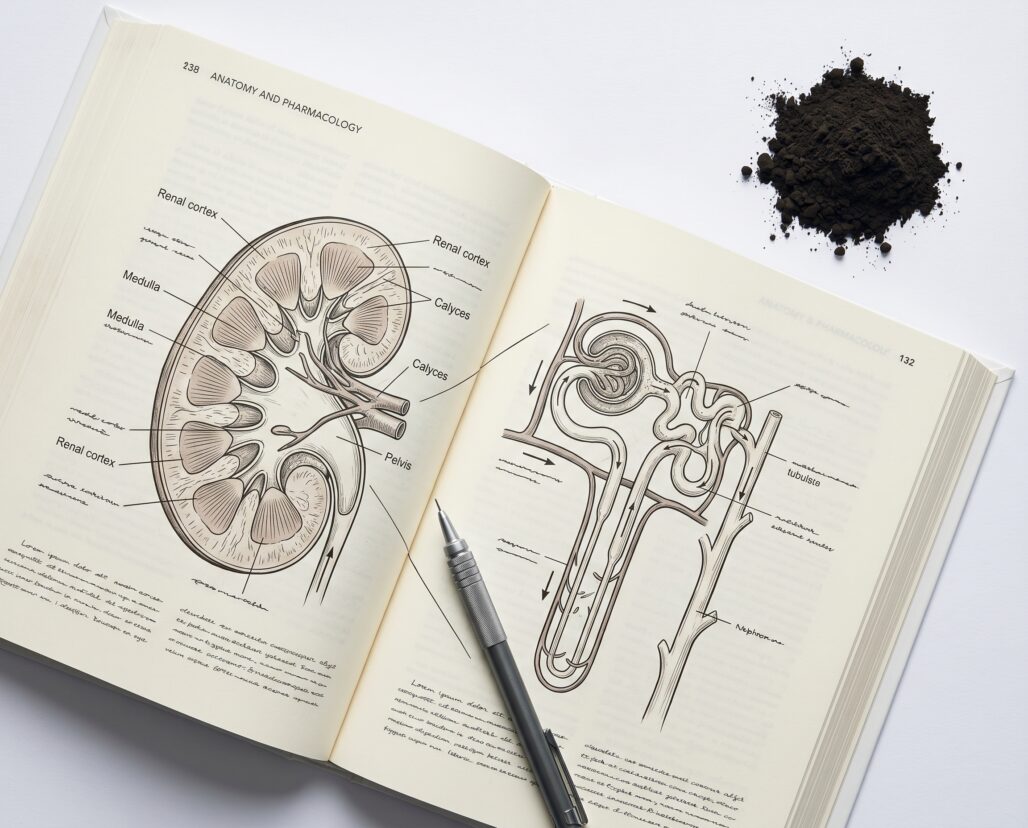
Chaga is exceptionally high in soluble oxalates. A 2020 case report in the journal American Journal of Kidney Diseases (Kikuchi et al., 2021, PMID 33189521) documented oxalate nephropathy in a patient who had consumed chaga tea daily for six months. The patient developed progressive renal failure requiring dialysis. This was not an isolated incident: at least two additional case reports in peer-reviewed literature describe similar oxalate nephropathy attributed to chronic chaga use, with kidney damage confirmed on biopsy.
To put the oxalate content in context: chaga's oxalate concentration has been measured at roughly 4.4 to 7.8 grams of oxalate per 100 grams of dried material in independent food chemistry analyses — far exceeding commonly high-oxalate foods like spinach (approximately 0.97g per 100g) or rhubarb (approximately 0.86g per 100g). Daily chaga tea consumption can deliver gram-level oxalate doses, which is significant even for people with normal kidney function.
Anyone with chronic kidney disease, a history of calcium oxalate kidney stones, or primary hyperoxaluria should not use chaga without explicit guidance from a nephrologist. This is not a precautionary "check with your doctor" boilerplate; the case reports document irreversible kidney damage.
Cancer patients under treatment
Chaga should not substitute for or be added to oncology treatment without oncologist approval. The betulinic acid content and immune-modulating polysaccharides can theoretically interact with immunosuppressive regimens used during transplant-conditioned chemotherapy protocols. The Memorial Sloan Kettering integrative herbs database notes that chaga has not been shown to treat cancer in humans and should not be used as a substitute for conventional oncology care.
Side effects and drug interactions {#side-effects-interactions}
Oxalate nephropathy (see above)
The kidney risk deserves emphasis again because it is underappreciated. Chronic daily use in people with baseline kidney vulnerability is associated with documented cases of progressive renal failure. Even in people without known kidney disease, daily high-dose chaga consumption without monitoring is not a risk-free practice.
Anticoagulants (warfarin, heparin, direct oral anticoagulants)
Chaga contains compounds that may inhibit platelet aggregation and enhance anticoagulant effects. Per Memorial Sloan Kettering's integrative herbs database, patients taking warfarin or other anticoagulants should not use chaga without monitoring INR levels with their prescriber. A case report in the literature describes elevated bleeding time in a patient combining chaga with warfarin.
Diabetes medications and hypoglycemic agents
Chaga polysaccharides have shown hypoglycemic activity in animal models. People taking insulin or oral hypoglycemic agents (metformin, sulfonylureas, GLP-1 agonists) should be aware that additive blood-sugar lowering could occur, though this has not been rigorously documented in human trials. Monitor blood glucose and consult a prescriber before adding chaga to a diabetes management regimen.
Immunosuppressants (tacrolimus, cyclosporine, biologics)
Chaga's beta-glucans and polysaccharides are immune-modulating compounds. Combining an immune-activating supplement with drugs designed to suppress immune function creates theoretical antagonism. Patients on tacrolimus, cyclosporine, mycophenolate mofetil, or biologic therapies (adalimumab, etanercept, etc.) should not take chaga without their transplant physician or rheumatologist's knowledge.
Pregnancy and breastfeeding
No controlled safety data exist for chaga in pregnant or breastfeeding women. Given the high oxalate content and immune-modulating activity, avoidance during pregnancy is the conservative position.
| Risk group | Recommendation |
|---|---|
| Chronic kidney disease (any stage) | Avoid; nephrotoxicity documented in case reports |
| History of calcium oxalate kidney stones | Avoid; high soluble oxalate content |
| On warfarin or other anticoagulants | Consult prescriber; INR monitoring required |
| On immunosuppressants post-transplant or for autoimmune disease | Consult prescriber; potential immune-drug antagonism |
| On insulin or hypoglycemic agents | Monitor blood glucose; theoretical additive effect |
| Cancer patient under active treatment | Only with oncologist approval; do not substitute for treatment |
| Pregnant or breastfeeding | Insufficient safety data; avoid |
Dosing context from available studies {#dosing-context}
Because no human RCT has established an effective dose of chaga for immune support in healthy adults, any dose range here is extrapolated from traditional use and limited human study data.
Traditional Siberian use involves brewing a tea from 5 to 10 grams of dried chaga per liter of water consumed daily. Commercial capsule products typically label 400 to 1,500mg per day of dried extract. The cancer-adjunct research cited above used standardized polysaccharide fractions, making direct comparison to whole-chaga products difficult.
The more relevant question for most readers is not "how much to take for immune benefit" but "is the potential benefit worth the oxalate exposure." For someone with normal kidney function and no contraindicated medications, occasional chaga tea is unlikely to cause harm. Daily high-dose supplementation over months is where the risk profile changes materially.
Product picks {#product-picks}
With chaga, third-party testing for beta-glucan content and purity is the primary quality criterion, ahead of brand reputation or marketing claims.
As an Amazon Associate, I earn from qualifying purchases. Product recommendations are based on real reviews and independent research.
What to look for in any chaga product:
- Beta-glucan percentage disclosed on the label or available Certificate of Analysis. "Chaga extract" alone is not a quality marker.
- Source and substrate transparency: Wild-harvested birch chaga (Siberia, Canada, Scandinavia) is the traditional form. Some products grow chaga on laboratory substrate rather than birch; the active compound profile differs significantly.
- Third-party testing (NSF, USP, Informed Sport, or a published COA) for heavy metals and purity. Chaga grown on wild birch can accumulate heavy metals from the wood.
- Clear oxalate disclosure. Any brand that discusses chaga's kidney risk honestly is demonstrating more scientific integrity than those that don't mention it.
Frequently asked questions {#faq}
Does chaga actually boost the immune system?
In cell culture and animal studies, chaga polysaccharides and beta-glucans stimulate measurable immune activity, including NK cell activation and cytokine production. In healthy humans, no published placebo-controlled RCT has demonstrated this effect at oral supplement doses. The NCCIH's chaga overview reflects this gap directly. "Boost" language significantly overstates what the current evidence supports.
Is chaga tea safe to drink every day?
For most people with normal kidney function and no contraindicated medications, occasional chaga tea is unlikely to cause harm. Daily consumption over months is a different risk profile, particularly for oxalate-sensitive individuals. Published case reports document irreversible kidney damage from chronic daily chaga tea use. If you want to drink chaga tea regularly, know your kidney function and oxalate tolerance before committing to a daily habit.
Can chaga help with cancer?
Cell culture and animal studies have shown chaga extracts have antiproliferative and cytotoxic effects on cancer cells in vitro. No clinical trial has demonstrated that chaga prevents or treats cancer in humans. It should not be substituted for evidence-based oncology treatment. Patients undergoing treatment should discuss any supplement with their oncologist before adding it.
How does chaga compare to turkey tail for immune support?
Turkey tail (Trametes versicolor) has substantially stronger human evidence. The polysaccharopeptide (PSP) from turkey tail has been studied in multiple human trials as a cancer-adjunct therapy. A 2012 study published in ISRN Oncology (Torkelson et al., 2012, PMID 22973546) found PSK (polysaccharide K, a related compound from turkey tail) demonstrated immunostimulatory effects in breast cancer patients. For evidence-based mushroom immune support, turkey tail has a deeper human evidence base than chaga. The trade-off for turkey tail is a different active-compound profile and a generally lower beta-glucan density than chaga, but the clinical data is more developed.
What is the oxalate content of chaga compared to other foods?
Chaga's measured soluble oxalate content (approximately 4.4 to 7.8g per 100g dried material) is multiple times higher than the highest-oxalate common foods. For reference, spinach — which kidney stone nutritionists flag as a high-oxalate food — contains roughly 0.97g per 100g. A daily cup of strong chaga tea brewed from 5 to 10g of dried material can deliver 220 to 780mg of soluble oxalates, which is meaningful for anyone with kidney vulnerability.
Should I cycle chaga rather than take it daily?
No human RCT exists to guide a cycling protocol. Given the oxalate accumulation risk with chronic daily use, periods of use followed by breaks seem more prudent than uninterrupted supplementation, but that is precautionary reasoning rather than evidence-based protocol. Anyone using chaga regularly should have baseline kidney function tests and monitor for early signs of oxalate accumulation: reduced urine output, flank pain, or changes in urine color.
Does chaga interact with blood thinners?
Yes. Chaga compounds appear to have antiplatelet activity, and at least one case report describes a clinically relevant interaction with warfarin. If you take warfarin, heparin, rivaroxaban, apixaban, or any other anticoagulant, do not add chaga without telling your prescriber and arranging appropriate monitoring.
Conclusion: the bottom line on chaga for immune support
Chaga has compelling laboratory biology and a long traditional history. It also has an evidence gap that the supplement industry routinely papers over, and a kidney-safety profile that deserves direct acknowledgment rather than fine-print disclaimers.
The in vitro data on antioxidant activity and immune-cell modulation is real. The translation from a cell culture to a living human immune system taking a daily oral supplement is where the evidence currently stops. No published placebo-controlled RCT has demonstrated immune-function benefit in healthy adults. The human evidence that exists comes from cancer-adjunct settings, in small studies with methodological limitations.
The oxalate nephropathy risk is documented in peer-reviewed case reports, not theoretical. People with any kidney vulnerability — reduced function, a history of calcium oxalate stones, or primary hyperoxaluria — should not use chaga. Drug interactions with anticoagulants, immunosuppressants, and hypoglycemic agents are plausible and in some cases documented.
For healthy adults with normal kidney function who are not on contraindicated medications, occasional chaga tea is unlikely to cause harm. Daily high-dose supplementation with a commercially compressed extract is a different calculation.
Next steps:
- If you're exploring medicinal mushrooms for immune support, review the complete evidence guide to medicinal mushrooms before choosing a specific species
- If you're specifically interested in mushroom immune support with a stronger human evidence base, read the turkey tail evidence review next
- If you are on warfarin or have any kidney history, speak with your prescriber before adding chaga in any form
Related reading
- Medicinal Mushrooms: A Complete Guide to the Evidence Behind the Hype
- Turkey Tail for Immune Support: What the Clinical Trials Actually Show
- Best Mushroom Coffee: Honest 2026 Picks and What the Labels Don't Tell You
- Mushroom Tincture vs Powder: Which Form Delivers More Active Compounds?
This article is for informational purposes and not medical advice. Chaga mushroom contains unusually high concentrations of soluble oxalates and has been associated with oxalate nephropathy and irreversible kidney damage in published case reports; individuals with kidney disease, a history of kidney stones, or reduced kidney function should not use chaga without guidance from a nephrologist. Chaga may also interact with anticoagulants (warfarin, heparin, direct oral anticoagulants), immunosuppressants, and blood-glucose-lowering medications. It is not a substitute for cancer treatment. Consult a licensed physician before starting any supplement regimen, particularly if you are pregnant, nursing, taking prescription medications, or managing a chronic condition.
As an Amazon Associate, I earn from qualifying purchases. Product recommendations are based on real reviews and independent research.
This article is for informational purposes and not medical advice. Herbal adaptogens, even traditional ones, can interact with thyroid medication, antidepressants, anticoagulants, immunosuppressants, blood-pressure drugs, and more. Consult a licensed physician before starting any adaptogen, particularly if you are pregnant, nursing, taking prescription medications, or managing a chronic condition.
