
If you are searching for the best adaptogens for cortisol, the honest answer is: ashwagandha is the strongest candidate in the RCT literature, with replicable cortisol reductions at 60 days, but "cortisol-lowering adaptogen" is a category where marketing runs years ahead of the clinical evidence for most herbs. This article ranks six adaptogens by evidence tier for serum cortisol specifically, explains what cortisol dysregulation actually means in chronic stress, and gives you the drug-interaction profile for every herb on the list. You will also learn why one popular "adrenal adaptogen" — licorice root — works in the opposite direction on cortisol metabolism, and why that matters before you buy anything labeled "adrenal support."
Affiliate disclosure: this article contains affiliate links. As an Amazon Associate, UsefulVitamins.com earns from qualifying purchases at no extra cost to you.
Summary / Quick Answer: which adaptogens actually move cortisol in clinical trials?
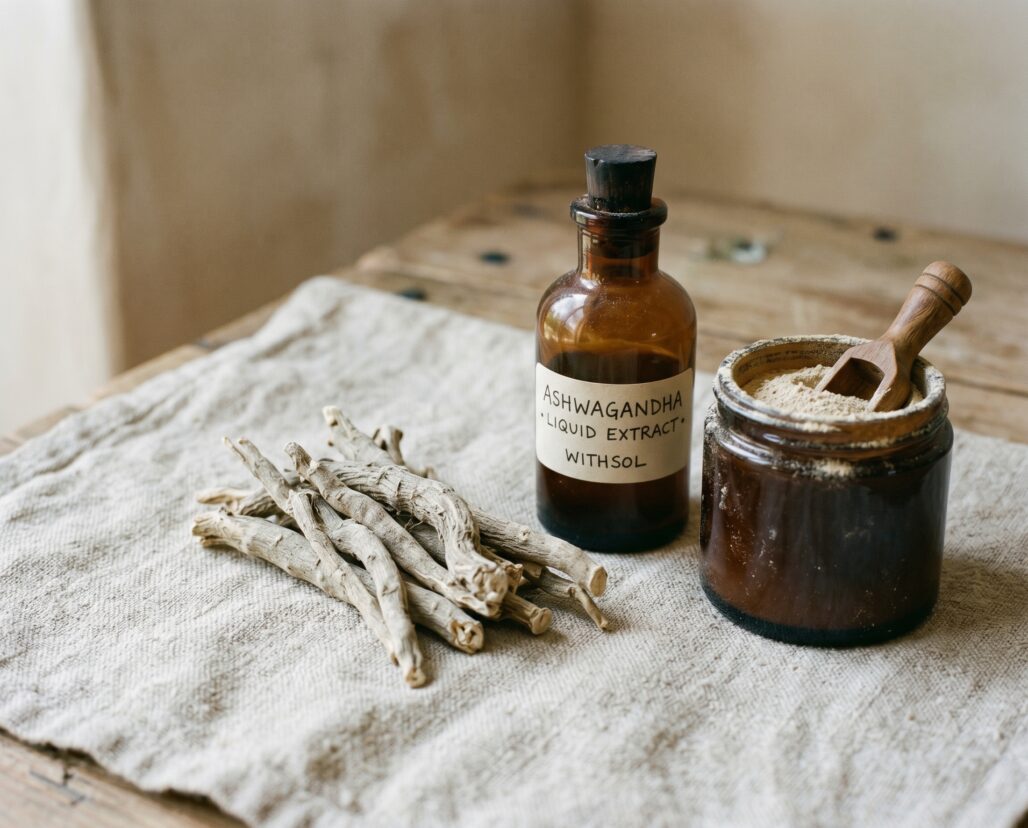
Ashwagandha (KSM-66 or Sensoril extract) is the only adaptogen with replicated placebo-controlled RCT data showing meaningful serum cortisol reductions; phosphatidylserine has solid evidence specifically for post-exercise cortisol blunting; the rest of the field ranges from single small trials to no human cortisol data at all.
- Best for: Adults with documented chronic stress (three months or longer), subjective wired-tired fatigue, and no thyroid or immunosuppressant prescriptions; athletes wanting to blunt post-workout cortisol spikes
- Not ideal for: Anyone on levothyroxine or liothyronine (ashwagandha can suppress TSH); people taking immunosuppressants (tacrolimus, cyclosporine, biologics); those with autoimmune thyroid conditions such as Hashimoto's; pregnant women (most adaptogens lack pregnancy safety data)
- What to look at before buying: Whether the ashwagandha product specifies KSM-66 or Sensoril extract and the withanolide percentage; whether phosphatidylserine is soy-derived or sunflower-derived; whether a label says "adrenal support" without citing which adaptogens and at what standardized dose
- Decision shortcut: If a product prominently features licorice root as a cortisol reducer, that framing misrepresents the mechanism — licorice inhibits cortisol breakdown, which raises cortisol persistence in tissue, not reduces circulating levels. Avoid any stack that conflates "adrenal support" with cortisol lowering without making that distinction.
What you'll find in this guide
- Why cortisol context matters before picking an adaptogen
- Tier 1: ashwagandha — the strongest cortisol RCT data
- Tier 2: phosphatidylserine, holy basil, and magnolia
- Tier 3: adaptogens with weak or no cortisol-specific human data
- The licorice root problem
- Side effects and drug interactions
- Product picks
- Frequently asked questions
Why cortisol context matters before picking an adaptogen {#cortisol-context}
Cortisol is a glucocorticoid hormone released by the adrenal cortex in response to signals from the HPA axis — the hypothalamic-pituitary-adrenal feedback loop. In short bursts, elevated cortisol is protective: it mobilizes glucose, suppresses non-urgent functions, and sharpens attention. The problem emerges when the stressor does not resolve. Chronic activation keeps cortisol elevated, which over months disrupts sleep architecture, suppresses immune function, impairs hippocampal volume, and contributes to the accumulation of visceral fat. For a closer look at that last mechanism, see Cortisol Belly Fat Supplements: What Actually Helps and What's Hype.
The phrase "cortisol-lowering supplement" needs precision. There are two distinct effects:
- Reducing cortisol output: The HPA axis produces less cortisol at the source. Ashwagandha's evidence points here.
- Slowing cortisol clearance: The enzyme 11-beta-HSD converts active cortisol to inactive cortisone. Licorice blocks this enzyme, so cortisol lingers longer in tissues — the opposite of what most people mean when they say "adaptogen for cortisol."
Cortisol works like a thermostat. When it is stuck on high, you get the wired-tired feeling — exhausted but unable to sleep, alert at midnight and foggy at noon. Adaptogens that interact with the HPA axis act on the thermostat setpoint; they do not turn off the heater entirely, nor should they. The goal is recalibration, not suppression.
Actionable takeaway: Before choosing a supplement, distinguish whether your cortisol issue is chronic-stress-driven HPA overactivation (ashwagandha and phosphatidylserine have evidence here) or acute situational stress (no supplement has good evidence for that, because situational stress resolves with the situation).
Tier 1: ashwagandha — the strongest cortisol RCT data {#tier-1-ashwagandha}
Chandrasekhar 2012 — the reference trial
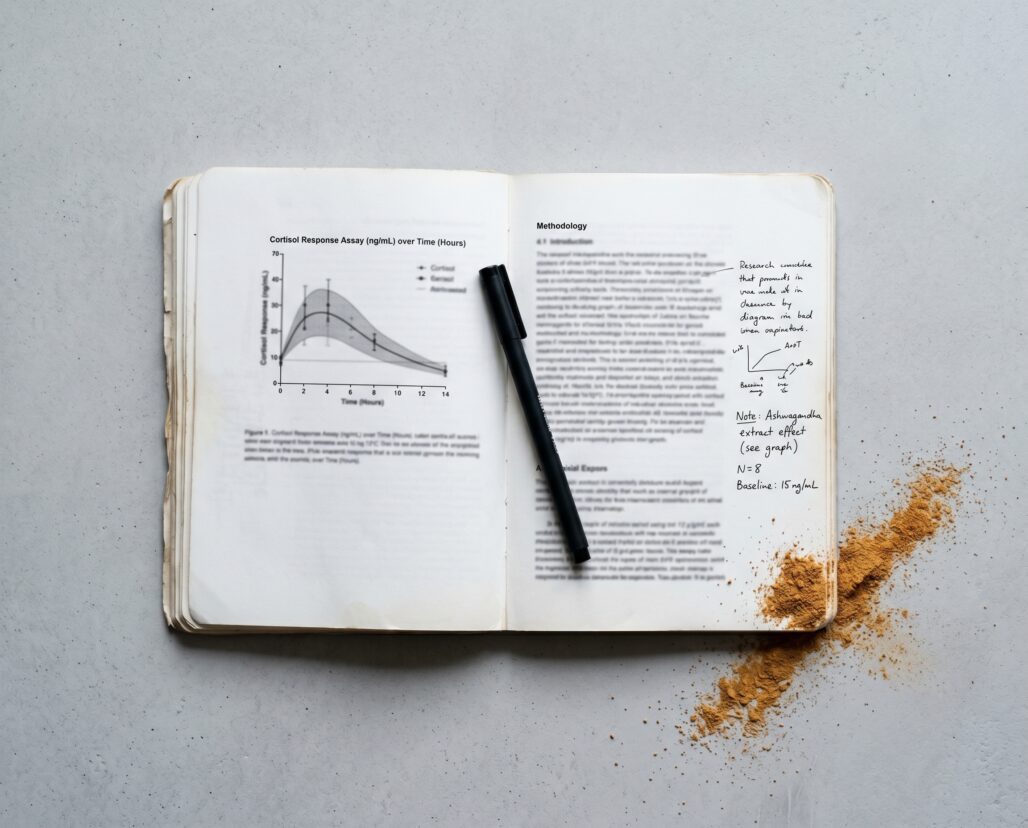
The strongest cortisol-specific evidence for any adaptogen comes from a 2012 double-blind, placebo-controlled RCT (Chandrasekhar et al., n=64). Adults with a history of chronic stress were given 300mg KSM-66 ashwagandha root extract twice daily for 60 days. The primary outcome was the Perceived Stress Scale; cortisol was a secondary biomarker. At 60 days, the treatment group showed a 28% reduction in serum cortisol versus a 7% reduction in placebo (p<0.05), alongside a 44% reduction in PSS scores. The trial was small (n=64) and funded by KSM-66's manufacturer, Ixoreal Biomed — a limitation worth noting when interpreting the magnitude of effects.
Salve 2019 and Lopresti 2019 — replication attempts
A 2019 RCT (Salve et al., n=60) administered KSM-66 at 240mg per day for 60 days and reported AM cortisol reductions in the treatment arm compared to placebo, with secondary improvements in sleep quality scores. The smaller dose and different standardization percentage from the 2012 trial makes direct comparison difficult, but the directional cortisol effect replicated.
A separate 2019 trial (Lopresti et al., n=60) used a different KSM-66 protocol in overweight adults and found significant reductions in cortisol and improvements on the Depression Anxiety Stress Scale at 8 weeks. Methodological quality was comparable to Chandrasekhar 2012.
Taken together, three placebo-controlled trials in humans show directional cortisol reductions with KSM-66 ashwagandha. That does not mean the effect is large enough to matter for every person, or that it will generalize to non-standardized root powder products. But traditional use is not the same as RCT evidence — and for cortisol specifically, ashwagandha has the RCT evidence. No other single adaptogen herb can say the same with the same consistency.
Why extract standardization matters
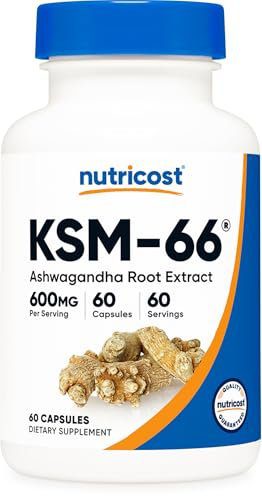
The real question is not whether "ashwagandha" reduces cortisol, but whether the product you are buying contains a validated extract at a validated dose. KSM-66 (standardized to minimum 5% withanolides, root-only) and Sensoril (standardized to 10% withanolides, root and leaf) are the two proprietary extracts with the cleanest clinical evidence. "Ashwagandha root powder 500mg" without withanolide disclosure is a different product entirely. An adaptogen brand can have impressive marketing and still miss third-party testing for the active marker compound.
Actionable takeaway: Look for KSM-66 or Sensoril on the label, not just "ashwagandha root extract." If the withanolide percentage is absent, treat it as unknown standardization.
Tier 2: phosphatidylserine, holy basil, and magnolia {#tier-2-mid-evidence}
Phosphatidylserine — post-exercise cortisol
Phosphatidylserine (PS) is a phospholipid found in neural cell membranes. Its relevance to cortisol is specifically post-exercise. A 2008 double-blind RCT (Starks et al., n=16) gave athletes 600mg PS per day for 10 days and measured cortisol response after intense resistance exercise. The PS group showed a significant attenuation of post-exercise cortisol rise compared to placebo, without impairing testosterone response. An earlier trial by Fahey and Pearl found similar blunting at 800mg over 10 days in cyclists.
The limitation is specificity: PS evidence for cortisol is exercise-context data. The mechanism — PS appears to blunt ACTH signaling from the pituitary, reducing adrenal cortisol release in response to physical stress — may not generalize to chronic psychological stress. For athletes who want to optimize recovery cortisol dynamics, PS has real supporting data. For someone with work-related burnout, the evidence does not transfer cleanly.
Holy basil (Ocimum tenuiflorum) — stressed adults, limited cortisol data
Holy basil, or tulsi, has a 2008 randomized controlled trial (Bhattacharyya et al., n=158) in stressed adults that showed improvements in cognitive function and anxiety-related symptoms versus placebo. The trial did not measure serum cortisol as a primary or secondary endpoint, which is the critical limitation for a "cortisol" ranking.
Mechanistic work suggests holy basil's eugenol and ursolic acid components interact with cortisol receptors and may modulate the HPA axis, but human biomarker evidence remains a gap. One small open-label study reported reductions in cortisol in overweight adults given a specific tulsi extract, but without a placebo arm it cannot be separated from regression to the mean.
For perceived stress outcomes, holy basil has moderate preliminary support. For serum cortisol specifically, the evidence is suggestive but weaker than ashwagandha — this should be reflected in any product choice.
Magnolia bark (Honokiol) — anxiety and cortisol blunting
Magnolia officinalis bark extract, specifically the honokiol fraction, has been investigated in combination with phosphatidylserine in a 2012 double-blind RCT (Kalman et al., n=56) focused on perceived stress and weight management. The honokiol-PS combination reduced salivary cortisol significantly versus placebo at 6 weeks. However, the study used a multicomponent formulation (Relora, a branded magnolia and phellodendron extract), not isolated honokiol — making it impossible to attribute the cortisol effect to magnolia alone.
Honokiol has documented GABAergic activity in animal models, which provides a plausible anxiolytic mechanism. But the real question is whether the human dose proves out for cortisol specifically, and as of 2026, it has not in a well-powered isolate trial.
Actionable takeaway: Tier 2 options are worth considering for specific use cases — PS for athletes, holy basil for perceived stress with mild serotonergic concerns about stronger herbs — but none have replicated cortisol data at the quality of the ashwagandha RCT series.
Tier 3: adaptogens with weak or no cortisol-specific human data {#tier-3-limited-data}
Rhodiola rosea
Rhodiola has excellent RCT data for cognitive fatigue and burnout (Olsson et al., n=60, PMID 19016404), but serum cortisol is rarely the primary outcome in rhodiola trials. Mechanistic literature suggests rhodiola may modulate the stress-protein response upstream of cortisol secretion. That mechanism-level reasoning has not been translated into placebo-controlled biomarker data in humans.
If your primary goal is mental fatigue reduction rather than cortisol specifically, rhodiola is a reasonable Tier 1 choice for that outcome. But it is not a cortisol-first adaptogen based on the existing evidence.
Eleuthero (Siberian ginseng) and schisandra
Both have been studied primarily as fatigue adaptogens and in combination formulas (ADAPT-232 studied by Panossian et al., PMID 20374974). Neither has cortisol biomarker data from standalone human RCTs as of 2026.
Gaia Herbs Adrenal Health (multi-herb formula)
Multi-herb adaptogen formulas present a different evidence challenge. A proprietary blend cannot be evaluated the way a standardized single extract can. If the primary active component is ashwagandha at a disclosed dose, the ashwagandha evidence applies. If the blend substitutes generics for standardized extracts without disclosure, you are paying for a concept, not a studied formulation. Multi-herb formulas can also complicate interaction screening.
The licorice root problem {#licorice-problem}
Licorice root (Glycyrrhiza glabra) is commonly marketed alongside other adaptogens as an "adrenal support" herb, and it does interact with cortisol biology — but in a direction that most people using adrenal supplements do not intend.
Glycyrrhizin, the active compound, inhibits 11-beta-hydroxysteroid dehydrogenase type 2 (11-beta-HSD2), the enzyme that converts active cortisol to inactive cortisone in peripheral tissues. The result is that cortisol remains active for longer in tissues, raising apparent tissue cortisol exposure even without increasing adrenal output. This is the opposite of what ashwagandha does at the HPA level.
For people with hypoadrenalism under medical supervision, this mechanism can be clinically appropriate — and that is exactly the population for which licorice has genuine traditional and clinical use. For healthy adults with chronic stress wanting to reduce cortisol, licorice is contraindicated on mechanistic grounds. It can also raise blood pressure via aldosterone-mimetic effects at moderate doses, a risk documented across multiple studies reviewed by NCCIH's licorice fact sheet. For a full breakdown of licorice's actual mechanism and when it might be appropriate, see Licorice Root and Cortisol: What the Evidence Says.
More herb is not always more useful — especially when the herb works on cortisol in a direction that conflicts with your goal.
Side effects and drug interactions {#side-effects-interactions}
Ashwagandha
- Thyroid medication (levothyroxine, liothyronine, armour thyroid): Per Memorial Sloan Kettering's integrative herbs database, withanolides can stimulate thyroid hormone synthesis, potentially suppressing TSH. Case reports of TSH over-suppression in patients taking thyroid replacement plus ashwagandha exist. If you are on any thyroid medication, do not add ashwagandha without prescriber consultation.
- Immunosuppressants (tacrolimus, cyclosporine, biologics): Withanolides modulate T-cell activity and can reduce the effectiveness of immunosuppressive therapy. This is a hard contraindication for organ transplant recipients.
- Sedatives and benzodiazepines: Ashwagandha has GABAergic activity. Additive sedation is a theoretical risk; clinical reports are limited but worth flagging.
- Hypoglycemic agents: Some trials found modest glucose-lowering effects with ashwagandha. Monitor blood sugar if combining with insulin or oral antidiabetics.
- Adverse effects from trials: GI upset (nausea, loose stool) at higher doses; rare hepatotoxicity case reports have emerged in post-market surveillance. The NCCIH ashwagandha fact sheet tracks the evolving liver safety signal.
Holy basil
- Serotonergic drugs (SSRIs, SNRIs, MAOIs, triptans): Holy basil contains eugenol, which has monoamine-related activity. Theoretical serotonin syndrome risk when combined with serotonergic medications — low probability but worth disclosing to a prescriber. Per NCCIH, interaction data in humans are limited.
- Thyroid medication: Some animal data suggest holy basil may lower T4; human data are insufficient to quantify the risk, but the thyroid interaction flag applies here as well.
- Anticoagulants: Eugenol has mild anti-platelet activity. At supplemental doses, the clinical significance is unclear, but flag to prescribers if on warfarin or newer anticoagulants.
Phosphatidylserine
PS has a relatively favorable interaction profile compared to the herbal adaptogens. The main caution is additive effect with anticoagulant therapy, as PS influences platelet aggregation at high doses. No significant drug-drug interactions are documented in the NCCIH supplement database at typical supplemental doses of 200–400mg.
Pregnancy and breastfeeding
Safety data for ashwagandha, holy basil, magnolia bark, and licorice during pregnancy are insufficient. Licorice consumption in pregnancy has been associated with adverse fetal outcomes in Finnish cohort studies. Most adaptogens should be avoided during pregnancy and nursing unless specifically reviewed with a prescriber.
| Adaptogen | Thyroid med warning | Serotonergic warning | Immunosuppressant warning | Pregnancy caution |
|---|---|---|---|---|
| Ashwagandha | Yes | No | Yes | Yes |
| Holy basil | Yes (limited) | Yes | No | Yes |
| Phosphatidylserine | No | No | No | Yes (insufficient data) |
| Magnolia / Honokiol | No | No | No | Yes |
| Licorice root | No | No | No | Yes (avoid) |
Product picks {#product-picks}
Product cards below are placeholders for PA-API lookup. Recommendations are based on standardization disclosure, third-party testing signals, and alignment with studied extract forms.
Top Pick — ashwagandha: Our pick for most adults is the Nutricost KSM-66 option because it specifies the validated proprietary extract, includes the withanolide percentage, and comes at a cost per effective dose that does not require a premium budget. Skip if you are on any thyroid medication or immunosuppressant.
Post-exercise cortisol — phosphatidylserine: Pure Encapsulations PS is soy-free (sunflower-derived), third-party tested, and uses a form consistent with the RCT literature. Best for athletes or those sensitive to soy-derived PS. Skip if you want broad stress support rather than exercise-specific cortisol management.
Multi-herb caution note: The Gaia Herbs Adrenal Health formula contains multiple adaptogens including holy basil, ashwagandha, and rhodiola. The individual doses are not fully disclosed on the label, which makes it impossible to confirm whether the ashwagandha component reaches the RCT-validated dose range. It may be appropriate for someone wanting a broad adaptogen blend, but it cannot be evaluated against the specific cortisol data from the Chandrasekhar trials.
Frequently asked questions {#faq}
How long before ashwagandha reduces cortisol?
In the Chandrasekhar 2012 RCT, the 28% serum cortisol reduction was measured at 60 days. Subjective stress improvements were reported by some participants at 4 weeks. If you are using KSM-66 at 300mg twice daily and see no effect at 8 weeks, it likely will not work for you at that dose.
Can I take ashwagandha every day?
Most clinical trials used daily dosing continuously for 8–12 weeks. Some practitioners suggest cycling (5 days on, 2 off) to reduce the risk of receptor downregulation, though no human RCT has tested cycling versus continuous use for cortisol outcomes. If you take any thyroid medication, consult your prescriber before daily use.
Does cortisol belly fat respond to adaptogens?
Chronically elevated cortisol promotes visceral fat accumulation via glucocorticoid receptor activity in abdominal fat tissue. Ashwagandha RCTs that measured cortisol have also found modest reductions in body weight and waist circumference in some trials. However, no adaptogen trial has been designed to test visceral fat loss as a primary endpoint. For a full review of the fat-cortisol mechanism and supplement evidence, see Cortisol Belly Fat Supplements: What Actually Helps and What's Hype.
Should I take adaptogens in the morning or evening?
Cortisol follows a diurnal rhythm: highest in the first 30–60 minutes after waking (the cortisol awakening response), declining through the day. The morning-versus-evening timing question for adaptogens is under-studied. In the Chandrasekhar 2012 trial, the 300mg dose was split twice daily — one AM, one PM. For a detailed breakdown of timing strategy by adaptogen type, see Morning vs Evening Adaptogens: Timing Your Stack by Cortisol Rhythm.
What's the difference between ashwagandha side effects and cortisol-related symptoms?
Ashwagandha side effects include GI upset (nausea, loose stool at higher doses) and potential sedation. Cortisol-reduction effects that overlap with side effects include improved sleep depth and reduced alertness — which can feel sedating if your baseline was artificially cortisol-elevated. Separating these requires at least 4 weeks of consistent use. For a detailed breakdown of the full adverse event profile, see Ashwagandha Side Effects: What Clinical Trials Actually Reported.
Are adaptogens the right first step for high cortisol?
That depends on whether you have verified elevated cortisol. Chronic stress subjectively resembles elevated cortisol but the two are not identical. Lifestyle factors — sleep, caffeine reduction, aerobic exercise — have better evidence for HPA normalization than any supplement. Adaptogens are a reasonable adjunct, not a primary intervention.
Conclusion: the bottom line on adaptogens and cortisol
Ashwagandha is the only adaptogen with replicated placebo-controlled RCT data specifically for serum cortisol reduction. The evidence is real but limited to small trials using standardized KSM-66 or Sensoril extracts at 240–600mg per day over 60 days. Phosphatidylserine has solid exercise-specific cortisol data. Holy basil has stress-outcome data but sparse cortisol biomarker evidence. Magnolia honokiol has one multicomponent trial with cortisol signal. Rhodiola, eleuthero, and schisandra have minimal to no standalone cortisol data in humans.
If you are considering adaptogens for stress and best adaptogens for stress is your broader question, see Best Adaptogens for Stress: A Practical 2026 Guide for the full comparison across multiple stress outcomes, not only serum cortisol.
Next steps:
- If you are already on thyroid medication, start with the interaction review in Section 8 above before choosing any adaptogen
- If you want post-exercise cortisol management, phosphatidylserine is the most evidence-aligned starting point
- If you want the broadest chronic-stress evidence, KSM-66 or Sensoril ashwagandha at the trial-used dose is the starting point
As an Amazon Associate, I earn from qualifying purchases. Product recommendations are based on real reviews and independent research.
Related reading
- Best Adaptogens for Stress: A Practical 2026 Guide
- Licorice Root and Cortisol: What the Evidence Says
- Morning vs Evening Adaptogens: Timing Your Stack by Cortisol Rhythm
- Cortisol Belly Fat Supplements: What Actually Helps and What's Hype
- Ashwagandha Side Effects: What Clinical Trials Actually Reported
This article is for informational purposes and not medical advice. Herbal adaptogens — even traditional ones — can interact with thyroid medication, antidepressants, anticoagulants, immunosuppressants, blood-pressure drugs, and more. Consult a licensed physician before starting any adaptogen, particularly if you are pregnant, nursing, taking prescription medications, or managing a chronic condition.
As an Amazon Associate, I earn from qualifying purchases. Product recommendations are based on real reviews and independent research.
This article is for informational purposes and not medical advice. Herbal adaptogens, even traditional ones, can interact with thyroid medication, antidepressants, anticoagulants, immunosuppressants, blood-pressure drugs, and more. Consult a licensed physician before starting any adaptogen, particularly if you are pregnant, nursing, taking prescription medications, or managing a chronic condition.
