
If you're searching for the best mushroom supplement form, the short answer is: it depends on the species, because the active compounds in lion's mane and reishi are not equally extractable by the same solvent. The tincture-vs-powder debate isn't about which bottle looks more premium on your shelf. It's a chemistry question. This article breaks down what hot-water extraction, dual-extraction, and raw powders actually do to the active compounds you're paying for. You'll also get a clear guide to when each form is the right call, what the "20x more bioavailable" marketing claim actually means (not much), and brief drug-interaction notes that vary significantly by species.
Affiliate disclosure: this article contains affiliate links. As an Amazon Associate, UsefulVitamins.com earns from qualifying purchases at no extra cost to you.
Quick answer: which form should you buy?
For most people buying lion's mane: a hot-water extract powder standardized to beta-glucan content (10%+) is the better starting point. For reishi, a dual-extract is needed if you want triterpenes alongside beta-glucans.
Best for: People who want the evidence-supported active compounds without overpaying for dual-extraction when the species doesn't need it.
Not ideal for: Anyone assuming a "tincture" is automatically stronger than a powder, or assuming a capsule tells you anything about the form inside.
What to look at before buying: The extraction method listed on the label, not the delivery format (tincture vs capsule vs powder are packaging choices, not chemistry choices).
Decision shortcut: Check whether the product discloses an extraction method (hot-water, dual-extract, or "raw/dried fruiting body"). If it doesn't disclose, you're likely buying raw dried material with low beta-glucan bioavailability regardless of what the label implies.
What you'll find in this guide
- What hot-water extraction actually delivers
- When dual-extraction matters (and when it doesn't)
- Why capsules tell you almost nothing on their own
- Raw powder: what you're actually getting
- Species-by-species: which form fits each mushroom
- The "20x more bioavailable" marketing claim
- Drug interactions by species
- Product picks
- Frequently asked questions
Hot-water extraction: the standard for beta-glucans {#hot-water-extraction}
Beta-glucans are the primary active compound in most medicinal mushrooms. They are polysaccharides found in the cell walls of fungal fruiting bodies, and the research linking mushrooms to immune modulation runs primarily through beta-glucan activity.
The structural detail that matters: fungal cell walls are made of chitin, a rigid polymer that human digestive enzymes cannot break down without help. A hot-water extraction process essentially performs that breakdown in advance, liberating beta-glucans into a form your gut can absorb. Raw dried mushroom powder, by contrast, leaves the beta-glucans largely trapped inside intact chitin cell walls.
In a 2015 in vitro analysis of commercially available mushroom products, researchers found that hot-water extracts yielded 3-8x higher soluble beta-glucan content compared to raw dried powders of the same species. This is not a negligible difference. The relevant comparison is not tincture-vs-capsule; it is extracted-vs-raw, with the solvent determining which compounds survive.
Hot-water extract powders can be encapsulated, added to coffee blends, or consumed directly. The form factor (capsule, powder, drink) is a delivery preference, not a chemistry distinction.
Actionable takeaway: When evaluating any mushroom product, look for "hot-water extract" or "water extract" on the label, and check whether beta-glucan percentage is disclosed. A product that lists "mushroom powder" without specifying an extraction process is almost certainly raw dried material.
Dual-extraction: when alcohol is necessary {#dual-extraction}
Some mushroom active compounds are not water-soluble. Reishi (Ganoderma lucidum) is the clearest example: its triterpenes, particularly ganoderic acids, require an alcohol-based extraction step to become accessible. Water alone does not dissolve them.
A dual-extract uses both solvents in sequence (typically hot water first for beta-glucans, then ethanol for triterpenes) and combines the resulting concentrates. This is why the tincture format became associated with premium mushroom supplements: alcohol extraction is a real chemistry step, and tinctures historically used alcohol as the solvent. The logic holds for reishi. It does not generalize to all species.
A 2012 study published in the International Journal of Medicinal Mushrooms characterized ganoderic acid content in Ganoderma lucidum extracts and found that alcohol extraction was necessary to recover meaningful quantities of the triterpene fraction. Water-only extracts of reishi contain beta-glucans but essentially zero ganoderic acids.
For lion's mane (Hericium erinaceus), the situation is different. The two neuroactive compound families, hericenones and erinacines, are primarily water-soluble or extractable by standard hot-water methods. A 2009 placebo-controlled trial (Mori et al., n=30) used a hot-water extract from fruiting body at 3 g/day for 16 weeks and showed statistically significant improvement on a mild cognitive impairment scale compared to placebo. The study did not use a dual-extract. This matters: buying an alcohol-based tincture for lion's mane is not necessarily buying a better product. It may be buying an unnecessary complexity with no evidence premium.
Actionable takeaway: Dual-extraction earns its cost premium specifically for reishi. For lion's mane, chaga, and turkey tail, hot-water extraction alone captures the relevant active compounds. An adaptogen brand can have impressive marketing around tinctures and still be overcomplicating the product for the wrong species.
Capsules and the form-confusion problem {#capsules-and-form-confusion}
A capsule tells you almost nothing about what is inside it. A gelatin or vegetable capsule is a delivery container. It may hold a hot-water extract standardized to 30% beta-glucans, or it may hold raw dried mushroom powder with trace beta-glucan content. The label format (capsule vs powder vs tincture) is not a proxy for extraction quality.
Think of capsule labeling like olive oil labeled "Mediterranean blend": the label tells you everything except what's in it.
This is where standardization labels matter more than pretty branding. The meaningful marker compound for most species is beta-glucan percentage. A few brands, including Real Mushrooms and Host Defense, now disclose this on label or lab certificate. Many do not.
The NCCIH overview of medicinal mushrooms notes that product quality varies substantially and that standardized extraction is not yet required under US dietary supplement regulations. This is a structural problem: the DSHEA framework classifies mushroom supplements as dietary supplements, not drugs, so pre-market quality review is not required.
A 2020 quality analysis reviewed by ConsumerLab found substantial variation in beta-glucan content across mushroom products making similar immune-support claims. Several products contained primarily alpha-glucans (starch-based carbohydrates from mycelium grown on grain substrate) rather than the beta-glucans responsible for immune-modulating effects.
Raw powder: what you're actually getting {#raw-powder}
Raw dried fruiting body powder and raw mycelium powder both exist on the market. Neither delivers beta-glucans in a meaningfully bioavailable form without extraction, because chitin enclosure limits gastrointestinal access.
Raw powder does retain a broader compound profile, including compounds that may degrade during aggressive extraction processes. Some practitioners prefer it for this reason. The practical problem: there is almost no clinical evidence for raw powder formats. The RCT evidence base for lion's mane, reishi, and turkey tail is almost entirely from hot-water or dual-extracts.
Buying raw mushroom powder expecting clinical-trial-equivalent outcomes is buying the wrong form. The evidence does not transfer.
Species-by-species: which extraction matches which mushroom {#species-guide}
The extraction-form question is not universal across species. Here is the practical breakdown:
Lion's mane (Hericium erinaceus): Hot-water extract from fruiting body is the evidence-supported format. In the 2009 Mori RCT (PMID 18844328) and the 2010 Nagano study on anxiety in menopausal women (Nagano et al., n=30), fruiting-body hot-water extracts were used. Hericenones and erinacines are largely water-soluble. A dual-extract adds cost without proven benefit for this species.
Reishi (Ganoderma lucidum): Dual-extraction is strongly preferred if ganoderic acids are part of the goal. A 2005 RCT of a reishi preparation (Ganopoly) for fatigue in neurasthenia (Tang et al., n=132) showed improvement over placebo, using a polysaccharide-rich extract. However, for full-spectrum reishi benefit including triterpene content, a dual-extract is necessary. Hot-water alone misses the ganoderic acid fraction.
Turkey tail (Trametes versicolor): The primary active compounds are polysaccharopeptides (PSP and PSK) and beta-glucans, both water-soluble. Hot-water extraction is appropriate. The evidence basis for turkey tail and immune support includes human studies of PSK (krestin) in cancer adjunct therapy from Japanese research, though these used pharmaceutical-grade preparations. Consumer-grade hot-water extracts are not equivalent.
Chaga (Inonotus obliquus): Chaga's key compounds include polysaccharides (water-soluble) and betulinic acid derivatives (require some non-polar solvent). A dual-extract is technically more complete, but the human RCT evidence for chaga remains thin regardless of form. Most chaga research as of 2026 is in vitro or animal models. Spending extra on a dual-extract of chaga is outpacing the evidence.
Cordyceps (Cordyceps militaris): The principal active compound, cordycepin, is water-soluble. In a 2017 RCT (Hirsch et al., n=28), Cordyceps militaris supplementation improved exercise tolerance; the study used a water-based mycelial biomass product. Hot-water extract from Cordyceps militaris (the cultivable species) is the evidence-consistent format.
| Species | Primary active compounds | Best extraction | Dual-extract needed? |
|---|---|---|---|
| Lion's mane | Hericenones, erinacines | Hot water, fruiting body | No |
| Reishi | Beta-glucans + ganoderic acids | Dual-extract | Yes (for triterpenes) |
| Turkey tail | PSP, PSK, beta-glucans | Hot water | No |
| Chaga | Polysaccharides + betulinics | Dual-extract if available | Weak evidence for either |
| Cordyceps | Cordycepin, polysaccharides | Hot water | No |
The "20x more bioavailable" marketing claim {#bioavailability-claims}
You will see bioavailability multiplier claims on mushroom supplement packaging. "20x more concentrated," "10x more potent," and similar figures appear frequently. These are almost universally unsupported by published pharmacokinetic data in humans.
A mushroom extract that is "10x concentrated" relative to raw powder means the manufacturer used 10 grams of raw material to produce 1 gram of extract, and the label reflects that concentration ratio. It says nothing about how much of the active compound reaches circulation, how it distributes, or whether it crosses relevant physiological barriers.
The real question isn't whether a mushroom extract is 20x more potent in a concentration ratio. It's whether the specific human dose proves out in a controlled trial with a measured outcome.
Standardization claims (e.g., "standardized to 30% beta-glucans") are more meaningful than multiplication claims, because they tell you something real about the active-compound content of the dose you're taking. Even standardization claims require third-party verification to be trusted, since supplement manufacturers are not required to validate their own label claims.
Drug interactions by species {#drug-interactions}
Medicinal mushrooms are generally considered low-risk compared to classic adaptogens like ashwagandha or ginseng, but meaningful interaction profiles exist for several species. This section is a brief reference; for full interaction data, the Memorial Sloan Kettering integrative herbs database and NCCIH mushroom supplement page are the appropriate sources.
Reishi (Ganoderma lucidum): The most significant interaction risk in the medicinal mushroom category. Per the MSK integrative herbs database, reishi has antiplatelet and potential anticoagulant properties. Concurrent use with warfarin, aspirin, clopidogrel, or other anticoagulants/antiplatelets may increase bleeding risk. Reishi may also lower blood pressure; use caution with antihypertensives. Immunosuppressant interactions (tacrolimus, cyclosporine) are theoretically possible due to immune-modulating polysaccharides, though clinical case data are limited.
Lion's mane (Hericium erinaceus): Lower documented interaction risk. The NCCIH and MSK databases note no major interactions as of 2026. Isolated case reports exist of allergic reactions. Patients with mushroom allergies should approach with caution.
Cordyceps: Some evidence of mild blood-glucose-lowering effect in animal models. Patients on diabetes medications (metformin, sulfonylureas, insulin) should monitor glucose and consult their prescriber before adding cordyceps. No definitive human RCT establishes the magnitude of this effect.
Chaga: Chaga contains oxalates in significant quantities. High-dose chaga supplementation in a patient with a history of kidney stones has been reported. Concurrent anticoagulant use warrants caution, as some chaga polysaccharides show in vitro antiplatelet activity.
Turkey tail: The most comprehensive safety data among consumer-grade mushroom supplements due to its use as a cancer adjunct therapy in Japan. At typical supplement doses, interaction risk appears low. Theoretical immune-system interactions are possible in patients on biological immunosuppressants (checkpoint inhibitors, biologics for autoimmune disease), but published case reports are sparse.
All species: Pregnancy and breastfeeding safety data are insufficient for any of these mushrooms at supplement doses. Consult a licensed physician before use during pregnancy or while nursing.
Product picks {#product-picks}
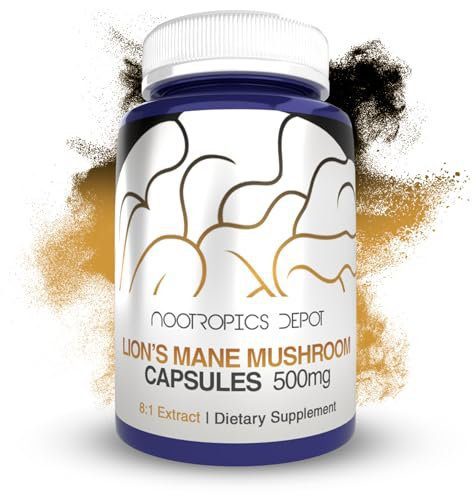
For a broader look at how these products fit into a supplement routine, see Medicinal Mushrooms: A Complete Guide to Choosing and Using Functional Fungi.
Frequently asked questions {#faq}
Is a mushroom tincture better than a capsule?
Not automatically. Tinctures use alcohol as a solvent, which is appropriate for reishi's triterpene fraction but unnecessary for lion's mane, turkey tail, or cordyceps. A capsule filled with a standardized hot-water extract can outperform a tincture of raw mushroom material. The extraction method matters more than the delivery format.
What does "fruiting body vs mycelium" mean for extract forms?
Fruiting body is the above-ground mushroom structure, which is naturally richer in beta-glucans and the compound families studied in most clinical trials. Mycelium grown on grain substrate (a common commercial production method) contains significant starch from the grain, which can dilute or obscure the beta-glucan fraction. When a product's Supplement Facts panel lists "mycelium on grain" or similar, that is a quality signal worth noting.
How do I know if a mushroom supplement actually has the beta-glucans on the label?
Look for a Supplement Facts disclosure of beta-glucan percentage, not just total polysaccharides. Total polysaccharides can include alpha-glucans (starch) which are nutritionally neutral. Third-party certificates of analysis from brands like Real Mushrooms make this distinction. The ConsumerLab mushroom supplement review has tested several brands for actual vs. labeled beta-glucan content.
Can I take multiple mushroom species together?
The clinical trial data for most species is from single-species studies. Stacking is common in the market but not well-studied. Interaction risk between species is theoretically low, but combining reishi (with its antiplatelet profile) alongside other compounds affecting clotting is worth discussing with a prescriber, particularly pre-surgery.
How long before mushroom supplements show an effect?
This varies significantly by compound and outcome. The Mori 2009 lion's mane trial saw cognitive improvement over 16 weeks of daily use. Immune-modulating effects of beta-glucans in turkey tail and reishi research showed changes at 4-12 weeks. Expect at least 8 weeks of consistent use before drawing conclusions about efficacy.
Is chaga safe to take daily?
Chaga's oxalate content is a real concern at high doses for susceptible individuals, particularly those with a history of calcium oxalate kidney stones. The clinical evidence for chaga is thinner than for lion's mane or reishi, so the risk-benefit calculus is less clear. If you have any kidney history, consult your physician first.
As an Amazon Associate, I earn from qualifying purchases. Product recommendations are based on real reviews and independent research.
Related reading
- Medicinal Mushrooms: A Complete Guide to Choosing and Using Functional Fungi
- Chaga Mushroom for Immune Support: What the Evidence Actually Shows
- Turkey Tail Mushroom and Immune Support: Separating Signal from Hype
- Best Mushroom Coffee Supplements: Tested and Ranked
- Lion's Mane Fruiting Body vs Mycelium: Which Form Has the Evidence?
This article is for informational purposes and not medical advice. Medicinal mushroom supplements, including reishi, lion's mane, chaga, turkey tail, and cordyceps, can interact with anticoagulants, antiplatelets, antihypertensives, immunosuppressants, and diabetes medications. Interaction profiles differ by species. Consult a licensed physician before starting any mushroom supplement, particularly if you are pregnant, nursing, taking prescription medications, managing a chronic condition, or scheduled for surgery.
As an Amazon Associate, I earn from qualifying purchases. Product recommendations are based on real reviews and independent research.
This article is for informational purposes and not medical advice. Herbal adaptogens, even traditional ones, can interact with thyroid medication, antidepressants, anticoagulants, immunosuppressants, blood-pressure drugs, and more. Consult a licensed physician before starting any adaptogen, particularly if you are pregnant, nursing, taking prescription medications, or managing a chronic condition.
